
© Steve Cary, February 2026
Winters will never be the same. In past Santa Fe winters, it was cold for a few months with an occasional warm spell. Now it is mild for a few months with an occasional cold spell. Winter begins late and ends early. It used to snow; now it rains but not often. Our apricot trees are already shedding blossom bud covers two weeks into February.
Many of you have seen butterflies through this recent winter, and not just the usual hibernators like Mourning Cloaks and commas, and not only in Las Cruces. Simon reported two American Snouts flying in Albuquerque. I saw a Dainty Sulphur in Santa Fe two weeks ago. On February 9, I saw a Painted Lady flying north at the intersection of Cerrillos Road and St. Francis Drive (no it did not stop at the red light). And by late February, iNaturalist has New Mexico sightings of Southwestern Orangetip, Mylitta Crescent, azures and Sandia Hairstreaks.
This post has three parts. First, here is a link to an excellent, uplifting story from the Institute for Applied Ecology: Sowing the Sky Islands: Restoring habitat for New Mexico’s rarest butterfly – Institute for Applied Ecology
and here’s a beauty from Lisa Tannenbaum: https://everydaymagic.substack.com/#333: My Fluttery Friends
Then Kelly Ricks shares a surprising backyard tale. And we close with Thomas Bulger’s featured piece about biased butterflyers – imagine! Happy reading . . .
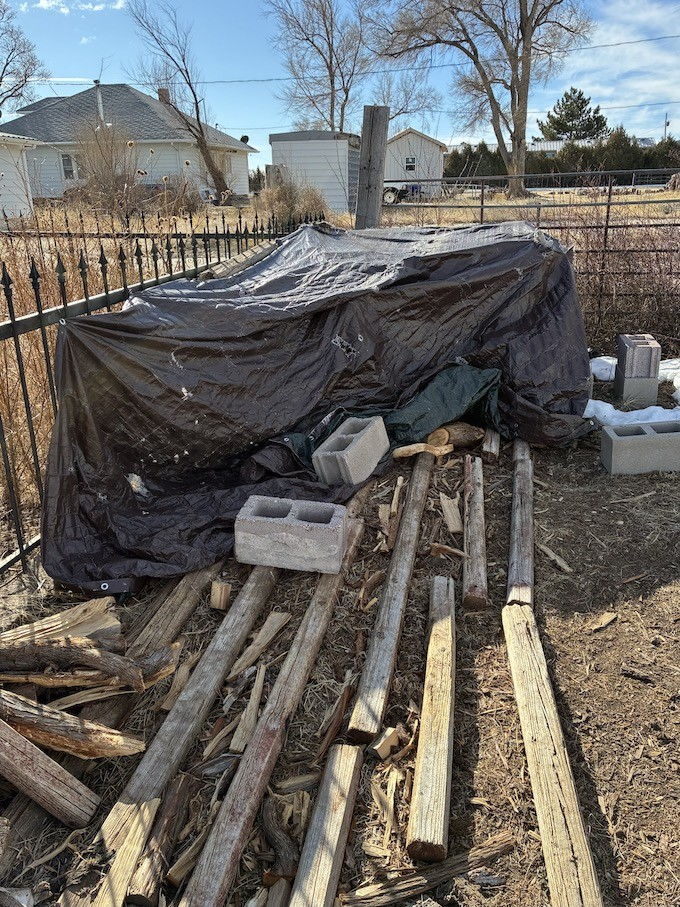
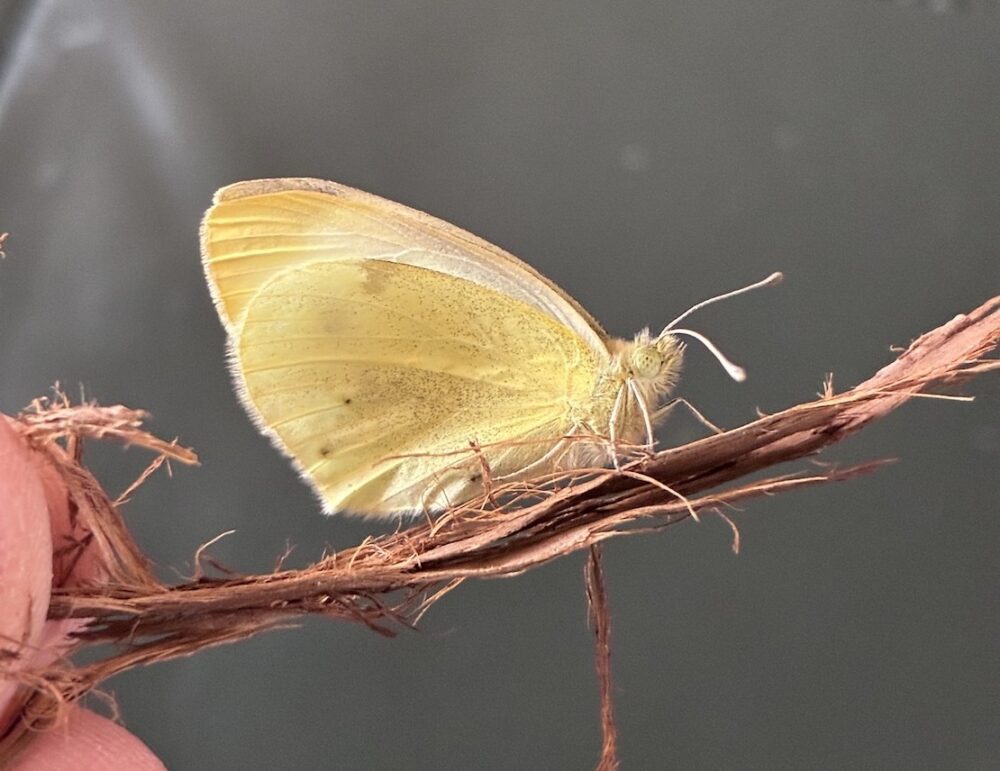
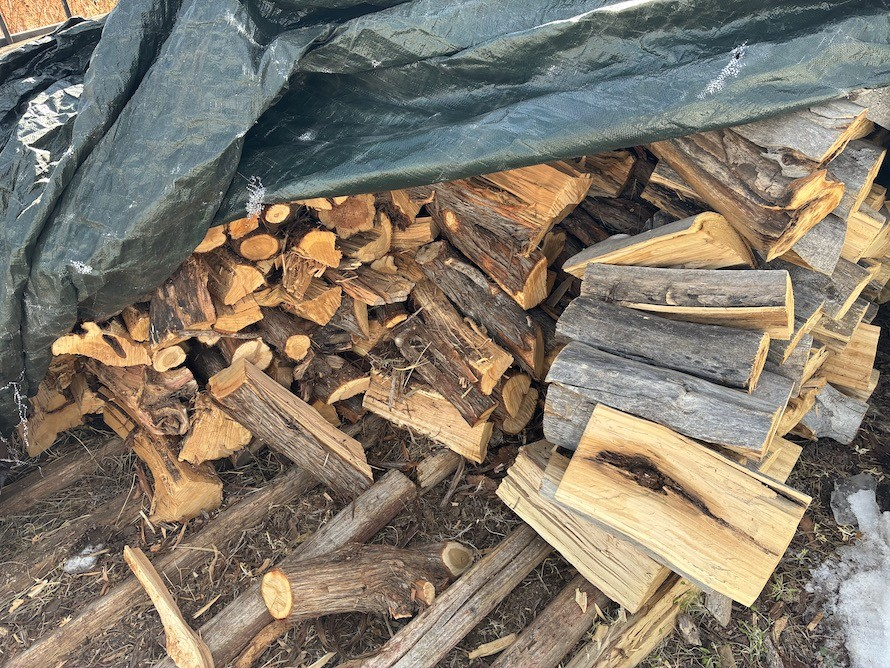
Kelly Ricks reports from Des Moines: January 31, 2026. I reached to get more wood to start the wood stove for the day and caught a fleck of whitish yellow out of the corner of my eye. Upon closer inspection, I saw it was a butterfly laying on its side. Assuming it was dead, a leftover from warmer autumn days, I reached to pick it up with a plan to remove its wings and laminate it onto a decorative card to send to one of my overseas pen pals. Then I saw movement. It was grasping a shredded piece of bark and had just readjusted one of its legs when I’d disturbed it. But how could that be? Yes, it has been a much warmer and drier season than normal, but we’d been consistently deep freezing overnight, and only 5 days ago, temperatures had dropped well below zero.
It stayed still as I gently parted its wings. A Cabbage White. Common, yes, but not a known hibernator, and also not long lived; up to three weeks as an adult if they’re lucky. It started moving a bit more as I warmed it up indoors, at one point falling to the floor and flapping aimlessly over the rug. I didn’t want my cat to hone in on its flailing (deciding it would be her next favorite toy) and also didn’t want to put it back outside. It was still freezing out there and even if it was on its last legs, the thought made me queasy. So I picked it up again and placed it into the dense camouflaging leaves of a spider plant I have in a south-facing window upstairs. Greenery and sunlight—at least its passing could be as comfortable as possible.
Later that afternoon I was surprised to discover it fluttering up against the window…and attracting the attention of a tiny spider tucked away in the corner. Over and over the butterfly would disturb its silk, the spider would rush forward, realize its target was more formidable than it thought, and finally run back to take shelter from the White’s vigorous flapping. By that point it was 51º out and sunny, so I cracked the window and guided the butterfly to freedom. It flew out, seemingly as strong as it would be on any warm-ish day, and presumably flew out in hopes of finding a mate. It got down into the 20s that night. I doubt it was successful.
So how did a Cabbage White manage to emerge as an adult and survive in such cold conditions on the high plains of northeastern New Mexico? If my research is correct, depending on temperature, Whites can spend anywhere from 2 – 3 weeks as a caterpillar, and then 1 – 2 weeks in chrysalis. Placing those spans at their maximum, we might assume this individual was a caterpillar during our unseasonably warm early to mid-November. It would have enjoyed daytime highs regularly reaching the mid-upper 60s (a monthly high of 75ºF) and endured overnight temperatures primarily hovering just above and below freezing (a monthly low of 15ºF). Perhaps it fashioned its chrysalis to the underside of a log—far enough back in the pile that I hadn’t yet brought it indoors to the woodstove. Perhaps it emerged on November’s warmest days. December was less forgiving, but still unseasonably mild with daytime highs generally in the 40s and 50s (a monthly high of 60ºF). Overnight lows were harsher. An early cold front plunged overnight temperatures well below 0º, and another late in the month dropped to a low between -10º and -15º F. A welcome mid-month snowfall also dropped about 10 inches. Perhaps this is just one more indicator of a warming climate.
Steve replies: Kelly, this is a surprising observation and all your thoughts about the hows and whys are completely reasonable. Since you asked, here is what I think. First, woodpiles covered in black tarps will stay warmer than one might think. Also, woodpiles are great places for adult butterflies to hibernate, but that would not normally include Cabbage Whites, or so we thought. Then I think you are right about the rest of the story. In October a female placed eggs on the exotic Brassicaceae that grows green in your yard. As per your time estimates, this individual ate the foliage, made it through larval stages, crawled into the woodpile, pupated, and then eclosed while autumn weather was still mild (which most of NM experienced). In the cool darkness under the tarp, flight would have been highly unlikely. When the cold arrived it entered diapause (became dormant), probably capable of surviving winter in that stage if needed. When you liberated it indoors it behaved as one might expect of a healthy, freshly emerged adult: warming, coming out of diapause, and ready to get on with business. Cabbage Whites just keep cycling through their life history as long as conditions allow. I had never thought much about how they spend winter, but thanks to your observations we now understand they may be sufficiently versatile to overwinter in any life stage. This species, like other butterflies that are so widespread and common, have many adaptations that keep them out of difficulty. I suspect we do not know the half of it. Yes, the warming climate probably set the stage for this story, with many more exciting stories to come. Thanks helping us learn from your experience!
Going the Extra Kilometer: Identifying and Curbing Bias in Butterfly Occurrence Data, by Thomas Bulger
New Mexico is home to 8 ecoregions, 53 mountain ranges, a diverse group of land managers, and more than 300 species of butterflies. Getting across New Mexico can be a challenge due to its size, geographic barriers, and lack of infrastructure, which is great for wildlife but bad for scientists and community members documenting our wildlife. Despite a tight-knit group of passionate butterflyers working to document our wildlife, there are not enough of us to cover all of New Mexico adequately. Manmade and natural barriers along with the lack of people can lead to sampling bias, which is concerning. Sampling bias occurs when certain land areas are consistently over- or under-sampled. Our group went on to examine if bias exists in New Mexico’s insect records, sampling and collections with a special focus on butterflies.
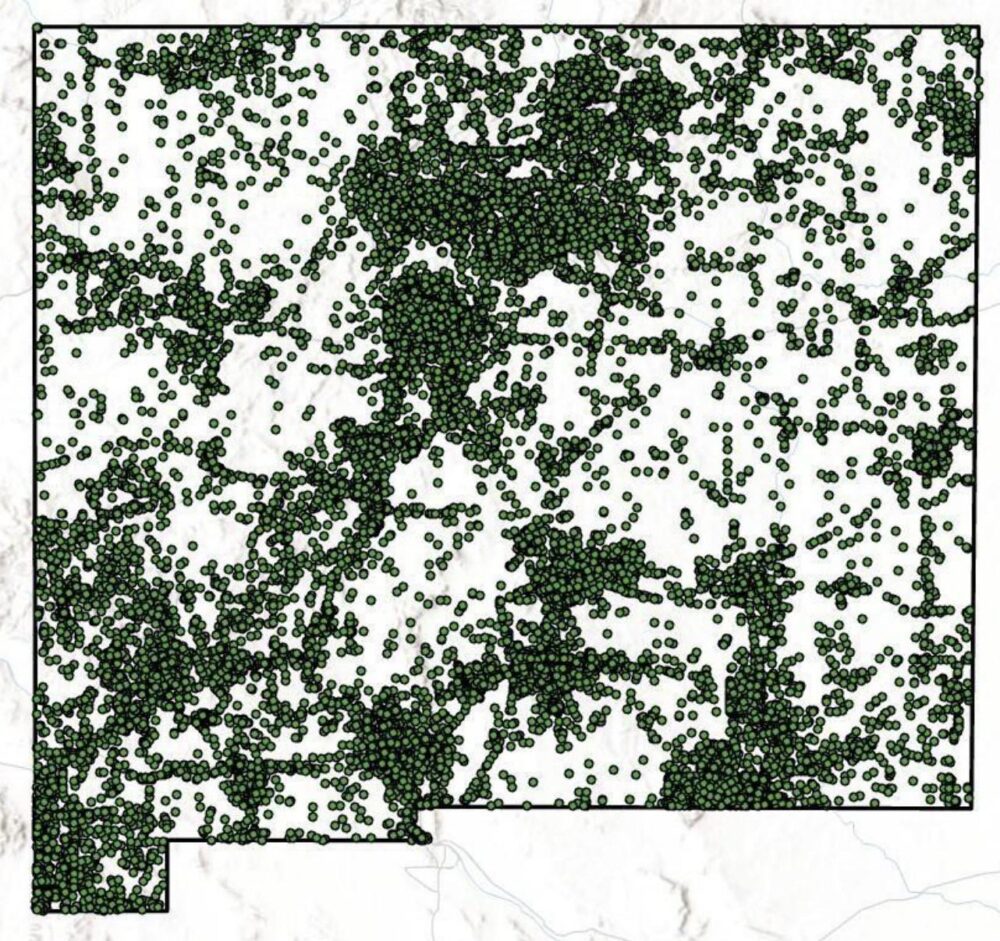
Our study examined the relationship between sampling frequency and New Mexico’s mountain ranges, ecoregions, land managers, and roads. We found that nearly 80% of all butterfly records occur within 1 kilometer of a road (Fig. 1). If you are familiar with Albuquerque, the walk from Frontier to Golden Pride is more than 1 kilometer. In Santa Fe, the walk from the Georgia O’ Keeffe Museum to the Capital Building is more than 1 kilometer. In Sacramento Mountain Checkerspot Butterfly surveys, the walk from upper to lower Bailey meadow is more than 1 kilometer. This is concerning as only 38% of New Mexico occurs within 1 kilometer of a road. Often in New Mexico, going that little extra bit from a road could result in going off a cliff or canyon, but with how habitat-specific our rare species are, extra effort may reveal a new colony or host plants or some other incredible discovery.
There is significant bias in New Mexico’s butterfly collecting and sampling across mountain ranges (Fig. 2). We saw the greatest oversampling bias in ranges near urban areas such as the Sandias near Albuquerque and the Organ mountains near Las Cruces. This is not surprising because those areas are easy for many people to reach. The greatest undersampling bias occurs in large mountain ranges near New Mexico’s borders and far from our population centers, also in large private land holdings. Some mountain species are of conservation concern because effects of climate change may disproportionally affect them. Monitoring montane populations is important in understanding how climate change affects our butterflies. Conveniently, mountains are usually among the prettiest hikes New Mexico has to offer.
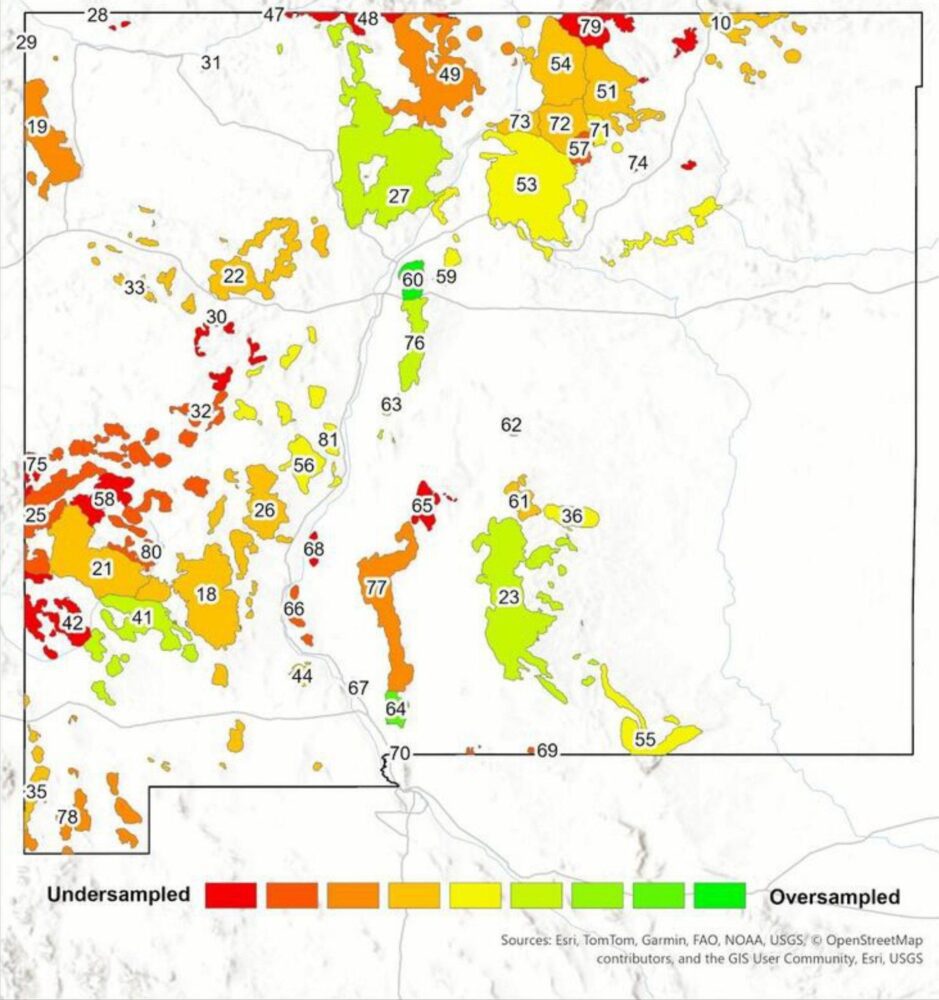
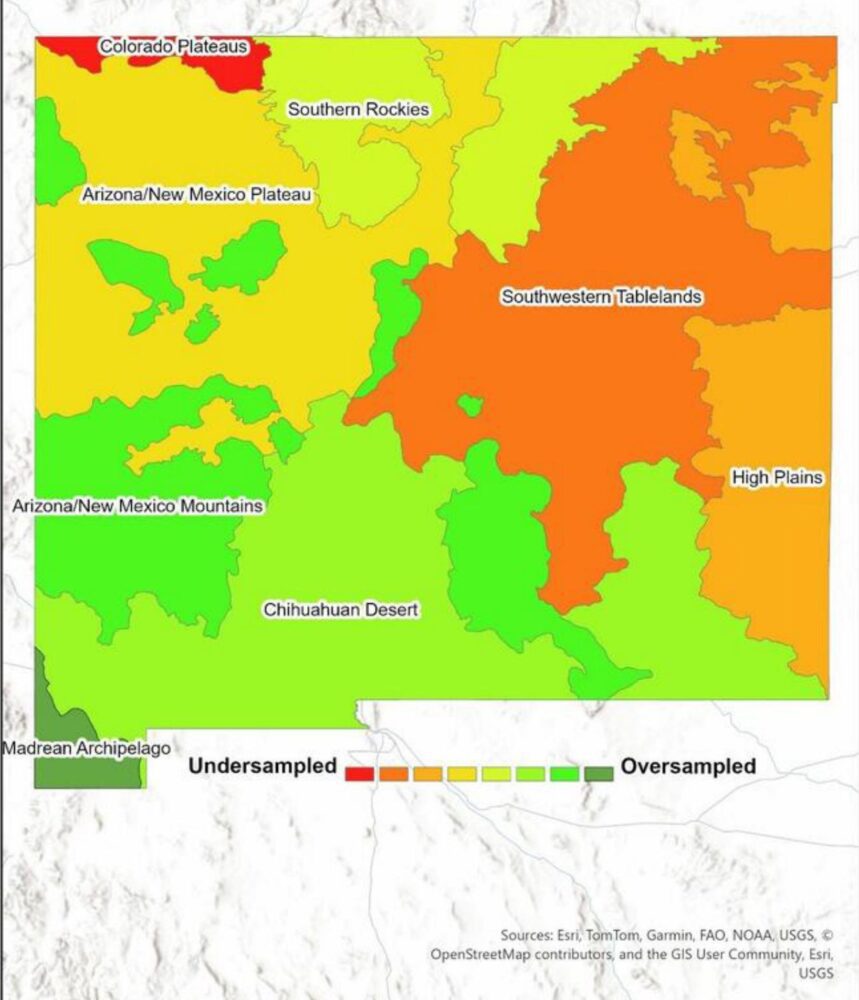
There is bias in New Mexico’s butterfly collection across ecoregions (Fig. 3). Two major targets for further surveying in New Mexico are the Turkey Mountains and Fra Cristobal Range (numbers 74 and 68 in Fig. 2), but there are many other places that need attention. These are our recommendations for curbing bias in our butterfly data. Our individual and collective biases will not be overcome in one field season because land accessibility is a hurdle for butterfly sampling in many areas and developing the necessary partnerships will take time.
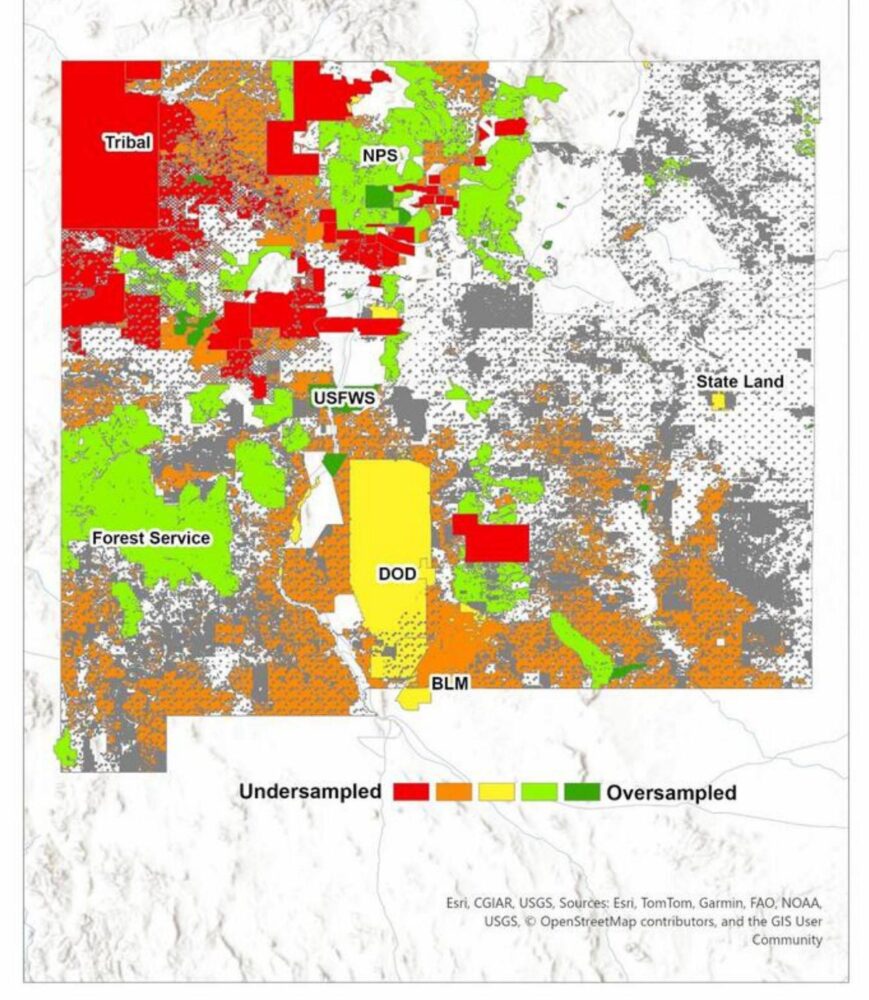
Among agencies managing large areas of land in New Mexico, we found the greatest oversampling bias in lands managed by the US Forest Service, National Park Service, and the Fish and Wildlife Service (Fig. 4). The largest areas in New Mexico with fewest public butterfly records are White Sands Missile Range, Navajo Nation lands, and privately owned lands in eastern New Mexico. The greatest under-sampling bias among public records is in land managed by Tribal authorities and by the Bureau of Land Management. Biodiversity surveyors may have greater difficulty gaining legal access from the Department of Defense, Department of Energy, or Tribal agencies compared to the Forest Service which usually does not require permits for insect collecting.
Collection biases in New Mexico interact with each other in a variety of ways. Agencies with easy land access result in mountain ranges on those lands and ecoregions being sampled more often. Areas near cities have more people observing and collecting. We can compensate for New Mexico’s intertwined collection biases with conscious, strategic efforts to increase sampling across undersampled ecoregions, mountain ranges, and land managers. Our state of knowledge would benefit from doing more surveying in areas that are rarely sampled for one or more reasons. To accomplish this, scientists and butterflyers need to create positive connections and constructive relationships with these respective land managers.
We found that nearly 80% of all butterfly records occur within 1 kilometer of road. This is concerning and alarming because only 38% of New Mexico lies within 1 kilometer of a road. If you are familiar with Albuquerque, the walk from Frontier to Golden Pride is more than 1 kilometer. In Santa Fe, the walk from the Georgia O’ Keeffe Museum to the Capital Building is more than 1 kilometer. In Sacramento Mountain Checkerspot Butterfly surveys, the walk from upper to lower Bailey Meadow is more than 1 kilometer. Often in New Mexico, going that little extra bit from a road could result in going off a cliff or into a canyon, but many of our rare species are very habitat-specific and extra effort may reveal a new colony, new hostplants or some other important discovery. Fig. 1 shows many large areas with no butterfly data whatsoever. Building more roads is probably not the answer either.
Minimizing bias in butterfly sampling will require intentionally going out of our way to the vast grasslands, the remote mountain ranges, creating new partnerships, and going the extra kilometer. However, I am not suggesting that you shouldn’t keep going to your favorite spots to see your favorite species. The window to see some of these butterflies is already so short. The best way to curb bias and unlock a greater understanding of New Mexico is to include more people. Even if they don’t know it, most people like seeing butterflies. Creating new partnerships to improve land access may start with your neighbor. Finding ways to bring in a wealth of ideas and excitement about New Mexico butterflies serves conservation. It will take diversity to document New Mexico’s biodiversity.
The full published article, Land accessibility shapes bias in insect sampling efforts of New Mexico by Thomas Bulger, Quinlyn Baine, Steve Cary, David Lightfoot, Roxanne Márquez, Simon Doneski and Kelly Miller, can be viewed in the peer-reviewed Southwestern Naturalist journal.
Thomas Bulger is a research technician at the University of New Mexico. He can be reached at tbulger@unm.edu for questions and comments.
Steve comments: Thomas, many thanks for sharing your eye-opening research on this topic! I agree wholeheartedly that better documenting our state’s biodiversity will require diversification of the researchers and building partnerships with private, tribal, state and federal land managers.
Dear Readers, you can help, too. If you want to assist by visiting some data-poor areas and looking for butterflies, feel free to contact Thomas, as noted above, or me at sjcary1@outlook.com.
Spring is coming, ready or not. May you be blessed with many butterflies.
Just cabbage whites seen here in the North Valley: daily since 14 Feb 2026.
Found this new posting when I was using the Butterflies of New Mexico to figure out which kind of butterfly I had photographed on a walk today. I enjoyed reading about both the butterflies found this mild winter and about the sampling problems in NM. Thanks, again, for sharing your Blog—each entry is always interesting reading!
Tim and I were only mildly surprised this warm day to see three species of butterflies on our short walk–one Mourning Cloak (maybe more as we either saw the same one several times or more than one flew by), what I think was a Mylitta Crescent, and a white–probably a Cabbage White–that didn’t land for a portrait.
Intriguing variety of articles Steve! Thanks for pulling these together for us.