
© Steve Cary, December 31, 2025
A couple heads-ups for you . . .
In Pursuit of the Monarch’s Magnetic Sense: In Pursuit of the Monarch’s Magnetic Sense – The New York Times https://www.nytimes.com/2025/12/23/science/neuroscience-monarch-butterflies-migration.html
and the latest on the Sarcamento Mountains Checkerspot: The Race to Save the Sacramento Mountains Checkerspot Butterfly – The New York Times
As the 2025 winter solstice and 2025 as a whole, diminish in our rearview mirrors (yes, please take it away!), butterflyers remain on duty over much of the central and southern parts of New Mexico. Weather this autumn eased very slowly into winter and still remains mild enough to (a) minimize winterkill and (b) support flight, feeding, basking by butterfly species that remain in the adult life stage. Reports have come in this month from Los Alamos, Santa Fe, Albuquerque, Clines Corners, the Black Range, Socorro, Alamogordo and especially from the Las Cruces area, where daytime temps have been consistently above 70F for a week or more. Thank you all for being out there and for sharing some of your observations, which include many new late dates. Particular kudos to our Las Cruces area comrades, who suffered through some of the worst drought-driven butterfly conditions imaginable during the first several months of 2025, when you were lucky to spot even one on any given day.
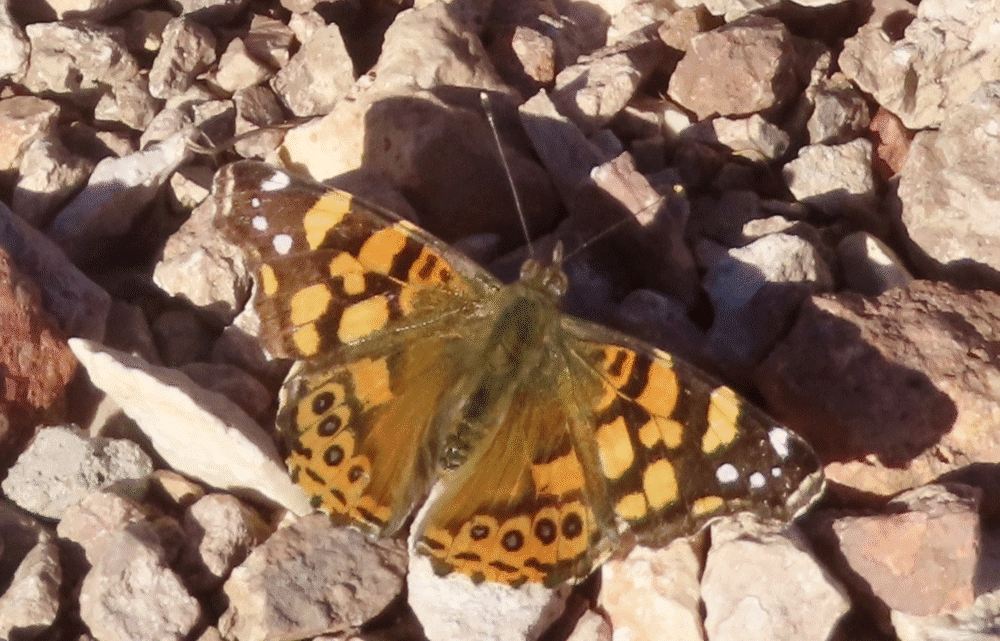
Let’s begin with Gordon, who visited Picacho Peak, a favorite Las Cruces area hilltop, on November 27. Remarkably, he photographed all four Vanessa species: that’s an Admiral and three Ladies. Hilltops can be very rewarding places! While none of Gordon’s observations proved to be new late dates, he showed Los Cruceños that there were still butterflies out there to be observed. That opened the floodgates.
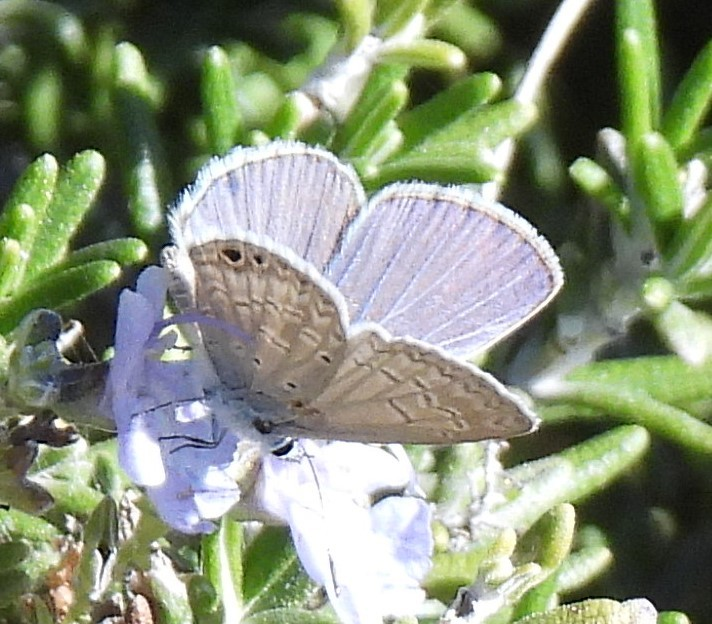
In particular, CJ Goin took the challenge seriously and made almost daily visits to attractive flower gardens at the Fabian Garcia Center in Las Cruces. In late November, he reported Monarchs and West Coast Ladys, but especially a little male Ceraunus Blue. It attracted CJ back to Fabian Garcia every couple days and eventually CJ was able to push NM’s late flight date for this bug all the way to December 28. I half expect it to re-appear in January.
December 12 was a typical day for CJ. He went to the Fabian Garcia gardens, photographed a Tailed Orange, a Southern Dogface, and a Queen. That date was a new late date for all three of these species. He returned the next day and had to revise the new late date for Tailed Orange.
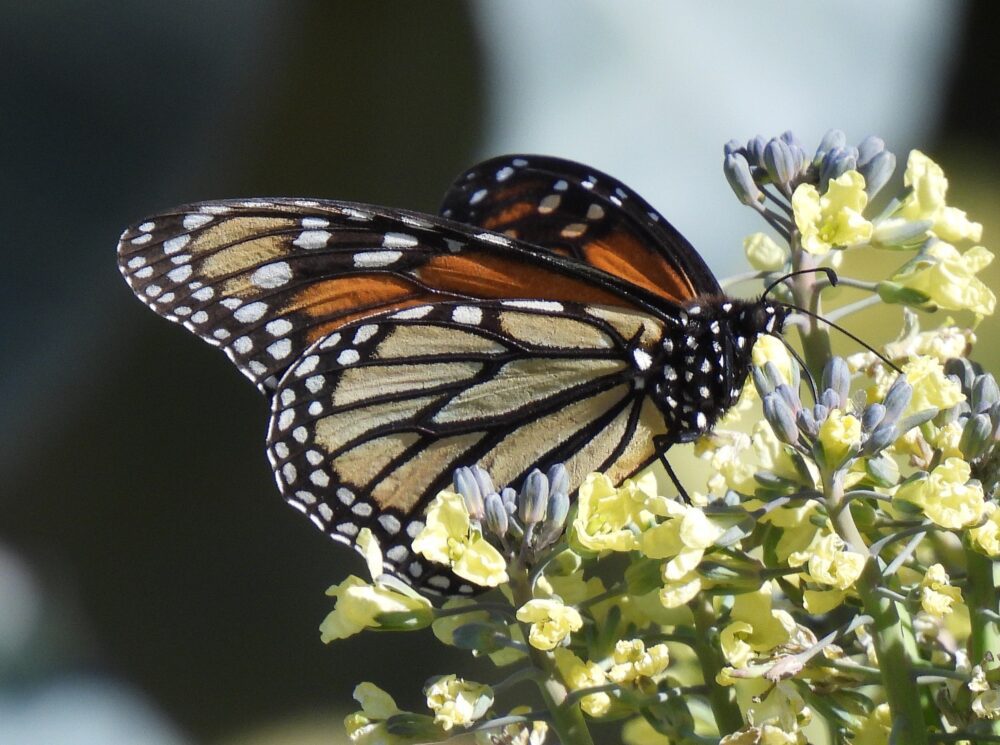
To my knowledge, this was the first New Mexico Monarch adult ever observed in December. Rob Wu saw another about a week later, which gave me delusions of an overwintering population in New Mexico someday, but that is very unlikely. Actually, the late autumn season is a big challenge for Monarchs in New Mexico. Many eggs are placed in autumn, but can the immatures develop fast enough (often on senescing milkweeds), pupate, then eclose and get the heck outta there before winter?
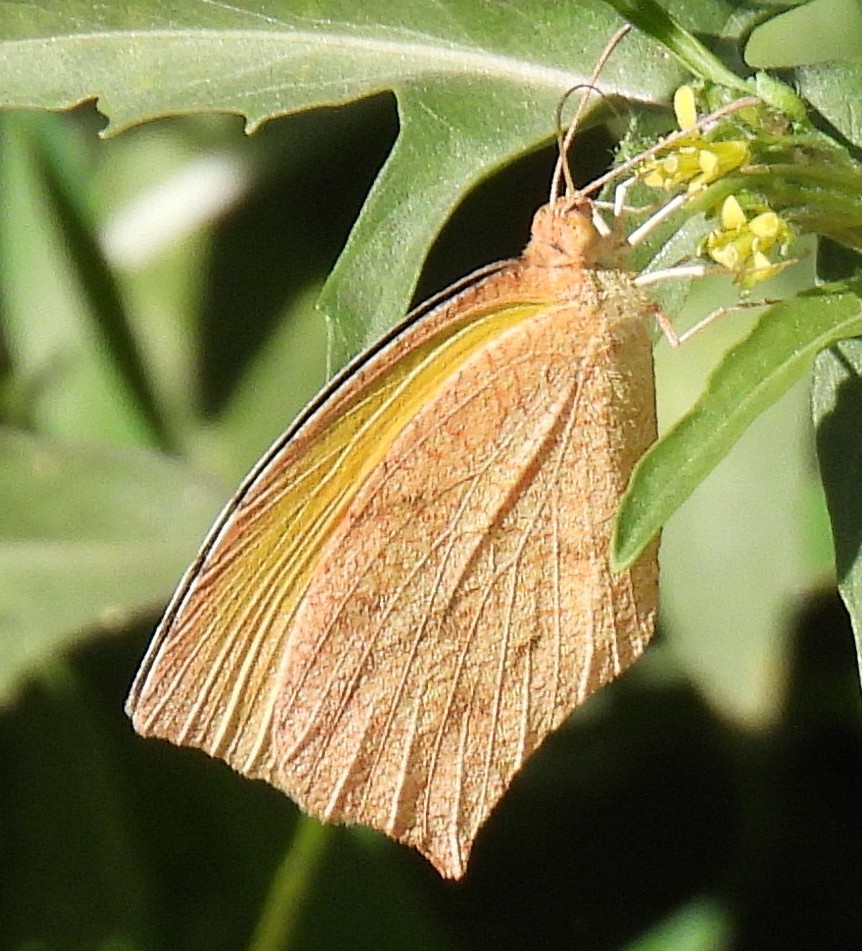
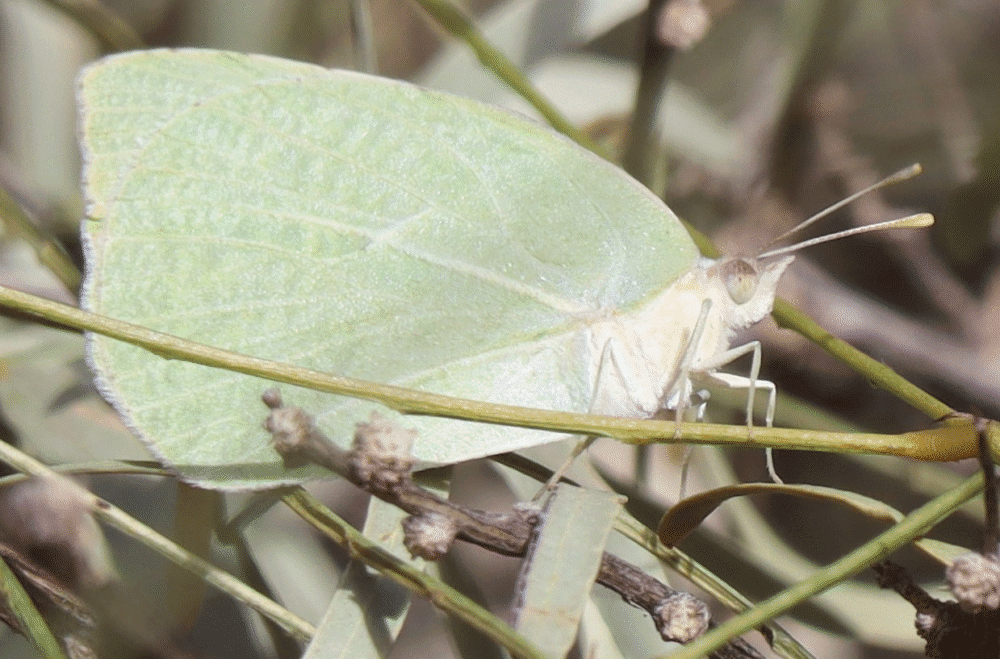
Jim Von Loh made some very productive outings in Dona Ana County in December. He photographed a fresh Lyside Sulphur (below) for a new late date. A couple other observations of species that were “late” when Jim made them, were subsequently leapfrogged by his indefatigable colleagues.
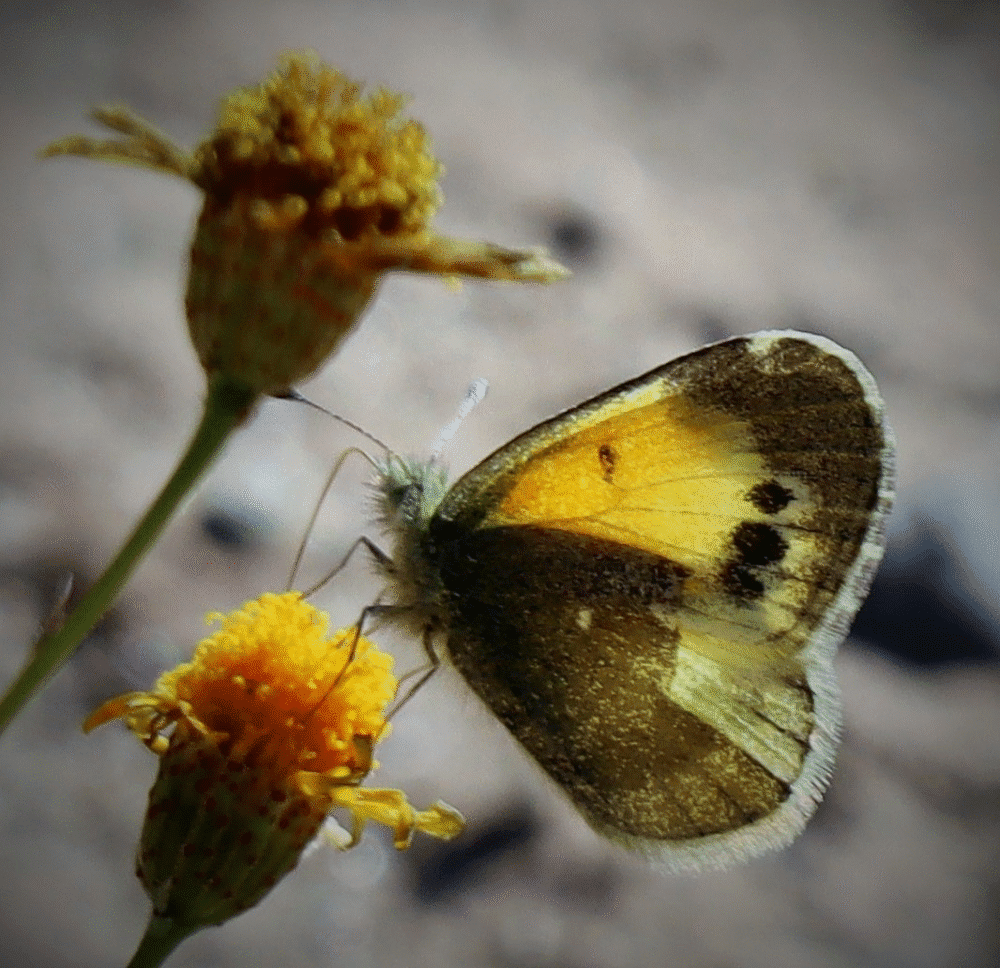
Jim also took one of my favorite photos, the Dainty Sulphur below. Dainty Sulphur is so routine and widespread that it has to work pretty hard to get my attention, but check out this image below. I have never seen one this dark ventrally. Dark undersides are semi-routine among sulphurs that fly during our cold season, but this one takes the cake.
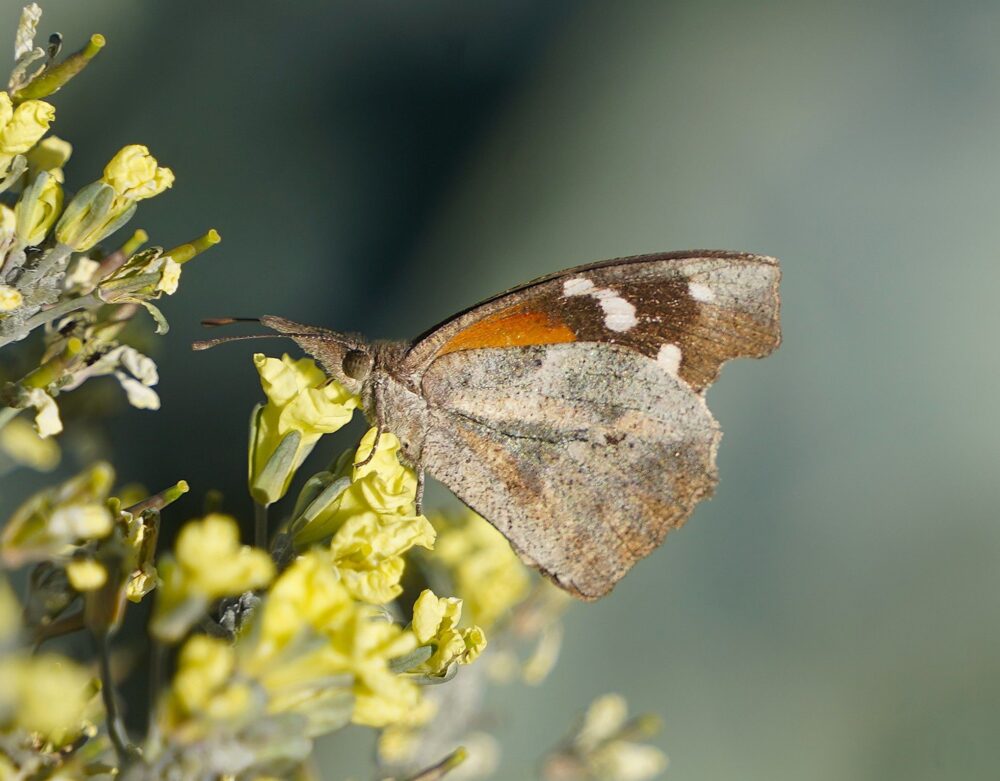
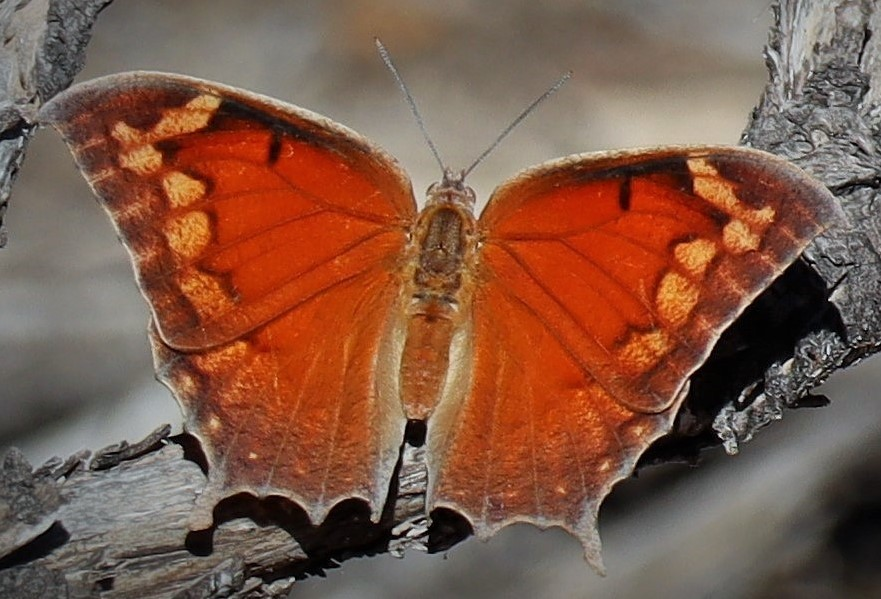
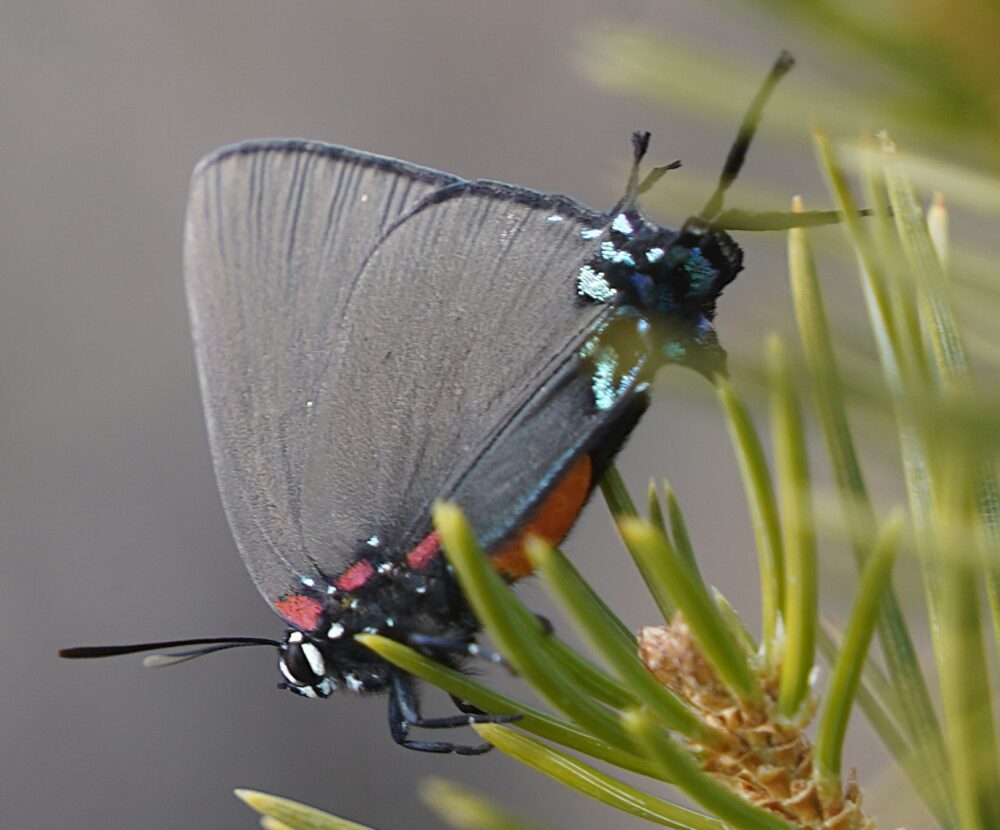
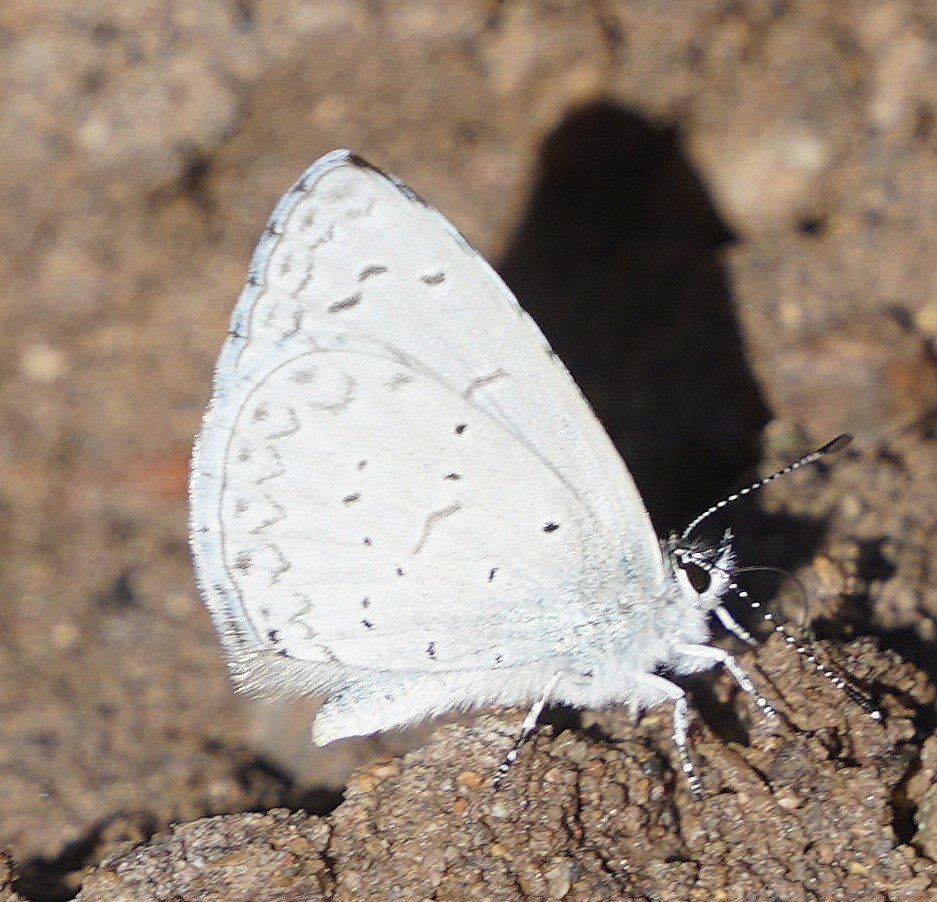
But let’s go back to that Lyside Sulphur, which made me think . . . . At least one other was seen down south, both in excellent condition. Several American Snouts also were seen, also in excellent condition. At least two Tropical Leafwings were seen, also in excellent condition. What about the fresh Mexican Azure on December 18. Marta’s New Year’s Eve Great Purple Hairstreak (below) also is very fresh. These are not your standard winter butterfly species, and it makes me wonder if these species will get an early start in 2026.
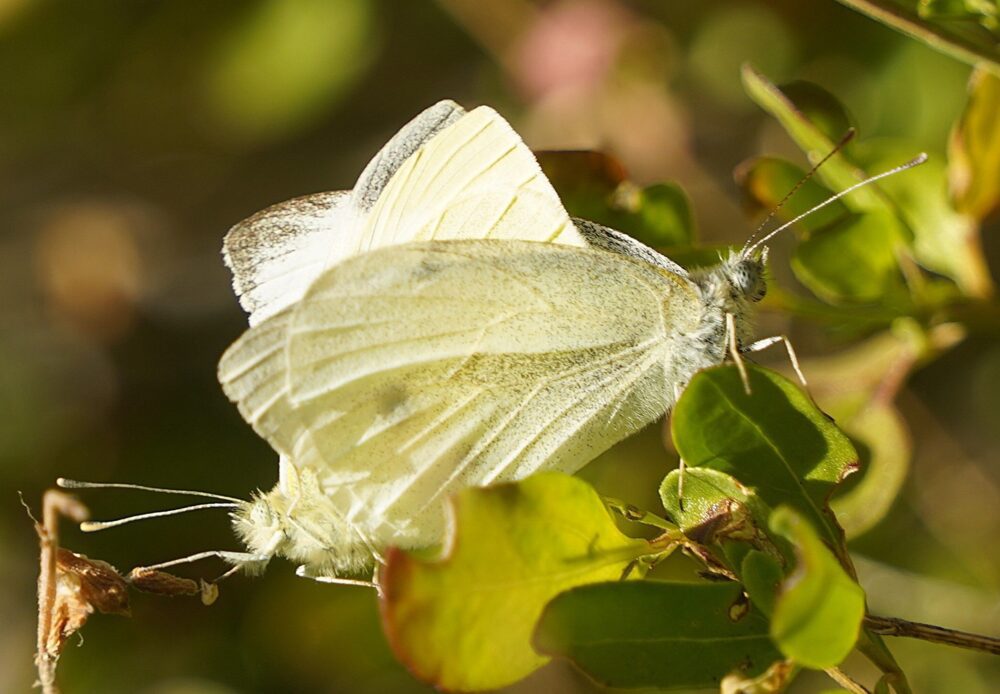
And leave it to our familiar exotic Cabbage Whites to give new meaning to the term “staying active” over winter.
Our tracking of early and late flight dates for butterflies probably began as a way to understand when each species flies, so we know when to look for it. Some species have very specific flight seasons, like Desert Orangetip, for example. Other species, like many of those shown above flying well into December, are continuously-brooded. They never stop cycling through generations, one after another, regardless of month or season, unless momentarily interrupted by weather (e.g., drought or winter cold). These are the species one can see almost anytime, almost anywhere: Checkered White, Cabbage White, Dainty Sulphur, Reakirt’s Blue, Sleepy Orange, checkered-skippers, you know the list. Eventually every one of these species will be recorded on every day/date of the year, so there really is no “early” date or “late” date for them; they are year-round, weather permitting, of course. Documenting such late flight dates could be considered a semi-trivial exercise, but heck, it’s the middle of winter, it’s good to get outside, and this is as good a reason as any.
To butterflies, there is nothing special about Decmber 31 or January 1. Both dates are simply in the middle of winter, which tends be cool or cold, dark, with no plants for caterpillars to eat and no nectar for adults to sip.
The dates are a simple result of how our calendar is organized. We celebrate each New Year on January 1, but that is completely arbitrary; we have our reasons, so not capricious, but still arbitrary. And our human brains (for some of us anyway) like to organize information in certain ways. Think about the southern hemisphere, when the New Year is celebrated smack dab in the middle of summer butterfly season! [Speaking of Orangetips, some west coast mustard feeding species can, after the occasional very wet early autumn, actually begin their flight in December. Their host mustards are sprouting so they need to eclose and get on with it, then they continue to fly into January and February. They attend to seasonal conditions, not to the calendar.]
Believe it or not, butterfliers in southern NM recorded about 25 species during December! Not a bad month at all, for the middle of winter. Final tallies showed CJ with 14 new late dates, Marta with 7 new late dates, and several others with 1 each, including Jim, Natalie, and some iNaturalist and BAMONA contributors unknown to me. I’m not sure how this became so competitive, but NASCAR has nothing on you guys. I have a sore neck from watching you all be lapped by each other! Within BONM, I’ve changed late flight dates for several species, several times. I hope I have them correct. CJ, when all was said and done, you were “the Man.”
For those of you who read to the end of this post, here is a surprise feathered reward:
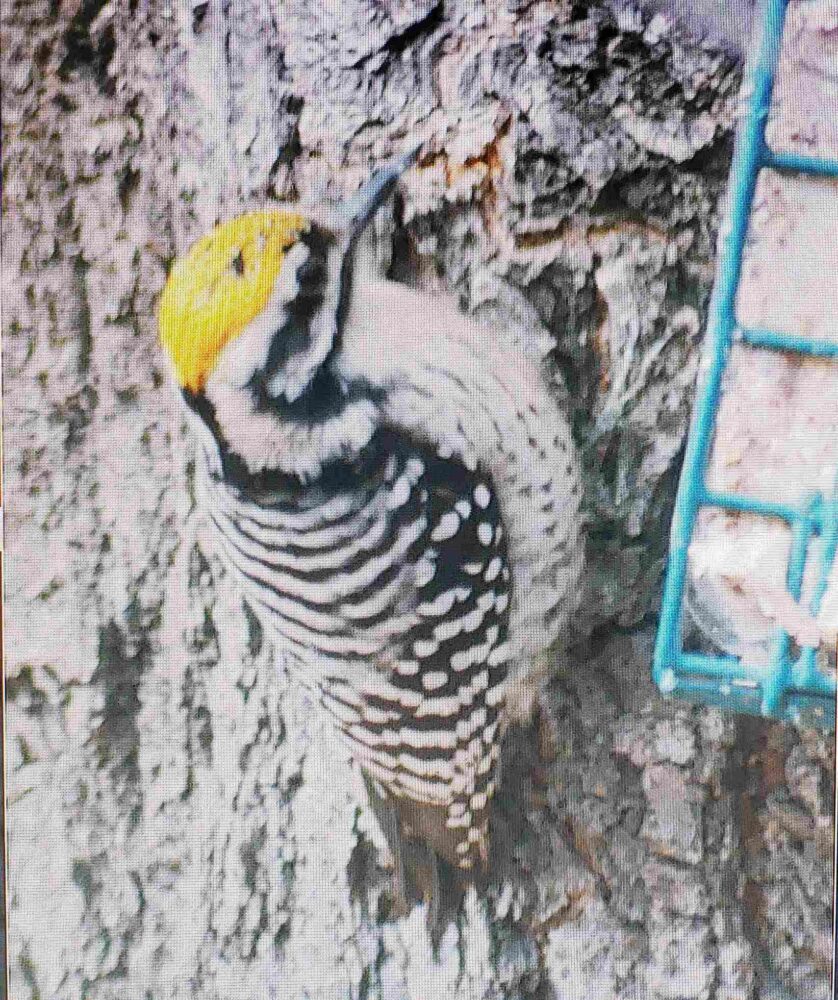
A Christmas Day appearance at the suet block in our backyard of a rare yellow-crowned variant of Ladderback Woodpecker, normally red-crowned. I am told by birder colleagues that one was seen here in Santa Fe last year, too. Maybe the same one?
Thanks to all and best wishes for a happy and prosperous 2026!
I observed (but unfortunately was not able to photograph) a dainty sulphur at the highest point of Capulin Volcano on December 30th. This was particularly surprising because we had a storm on the 28th that brought windchills at the volcano top to -10 to -15 degrees. I’ve gone out every day since with no luck. An interesting one-off perhaps.
Hi Steve and thanks – your ability to educate through humor-laced detail is appreciated (it’s always easier to learn with a smile on your face). True late season pros, CJ and Marta were on top of their games while documenting species/late-dates with impressive resolve!
I particularly liked this analogy: “…NASCAR has nothing on you guys. I have a sore neck from watching you all be lapped by each other!”…I think it’s great that old-school, naturally-aspirated V8s are still in the lead pack (where there is also plenty of room for that upcoming wave of turbocharged V6s)!!
I STILL have butterflies hovering around dried-up flower beds in Albuquerque. January 4, 2026.
Conditions are very similar over here in Tucson, AZ. Plenty of rain and warm temperatures and still quite a few lingering butterflies along with a fresh batch of azures. I’ve never had an azure in the yard on New Year’s Day before. Our area should be good for marlbles and orangetips this spring since there are hundreds of mustard seedlings that have germinated just on my property alone. Streptanthus carinatus and Descurainia mainly along with the non-native London rocket (Sisymbrium).
Steve…I think your discussion on what is late in the season or early is interesting. You said “middle of winter” as December and in a way that is correct gauging to the opposite of June and the winter solstice. On the calendar separating seasons, the middle of winter would be late January to early February…about half way thru the winter part of the calendar. You are not alone in NM (and JB in Arizona). Andy Warren found one of those very dark ventral hind-winged N. iole south of Denver on December 31 (the latest record to be had for sure !) and two days later after the New Year he caught two Pontia protodice at the same location (!)…early or late records? After Jan. 1st, its a new season in the new year so those have to be considered early records…all of his likely to hold for a hundred years! Take care all, Mike