
© Steve Cary, May 18, 2026
After a blistering March, spring has settled into a stretch of relatively normal weather. And after new early flight dates for many species last month, phenologies may be reverting to semi-normal. This month we have a cool story about Pygmy Blues from Greg Steiger, a couple of top-down hairstreak false head shots, and a report on some of my own recent ramblings. Enjoy the read.
Everything Has a Season, text and images by Greg Steiger. Our story begins one summer afternoon at the corner of a dirt road that I walked by heading home from a walk in the greenbelt in El Dorado south of Santa Fe. It was at this location that I observed my first Western Pygmy-Blue (Brephidium exilis). I returned with my Nikon to find her still feeding on the roadside flowers. I was rewarded for my efforts with my first photos of New Mexico’s smallest butterfly (and I think one of our most beautiful with the four black spots on their hindwings glimmering jewel-like with iridescence). That special day was July 31, 2025.
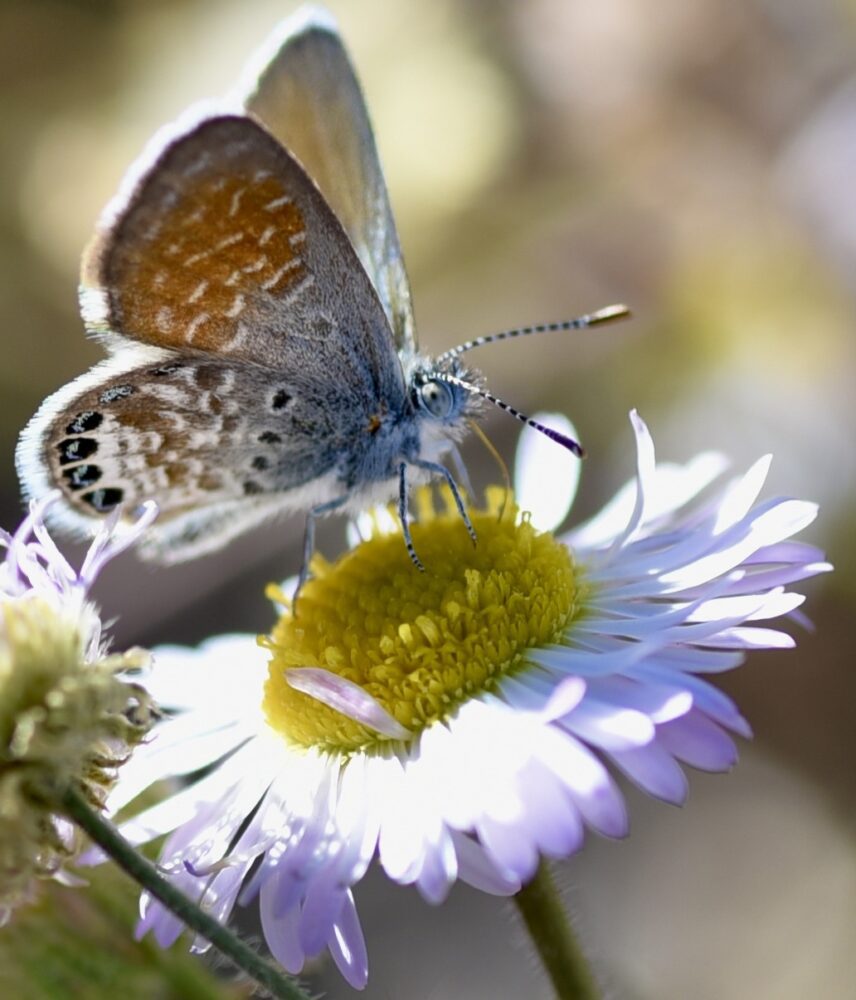
Fast forward to October 27, 2025. The daytime high that day was 66 F and that Monday morning I observed B. exilis feeding on flowers of spreading fleabane (Erigeron divergens) along the edge of my driveway. Of course I went inside, grabbed my Nikon and Tamron 90mm macro lens and took multiple portraits of these individuals. They returned the next day, and the next day and every day until November 20 (even some gorgeous Lupine Blues (Icaricia lupini) showed up to the party on November 12 through November 16). They would arrive at about 10:00 am and were gone by about 3:00 pm. It appeared they enjoyed the midday warmth. On any given day there would be at least one to as many as ten individuals flying from flower to flower, feeding. By now I had amassed an extensive photo archive of adult male and female B. exilis and I. lupini.
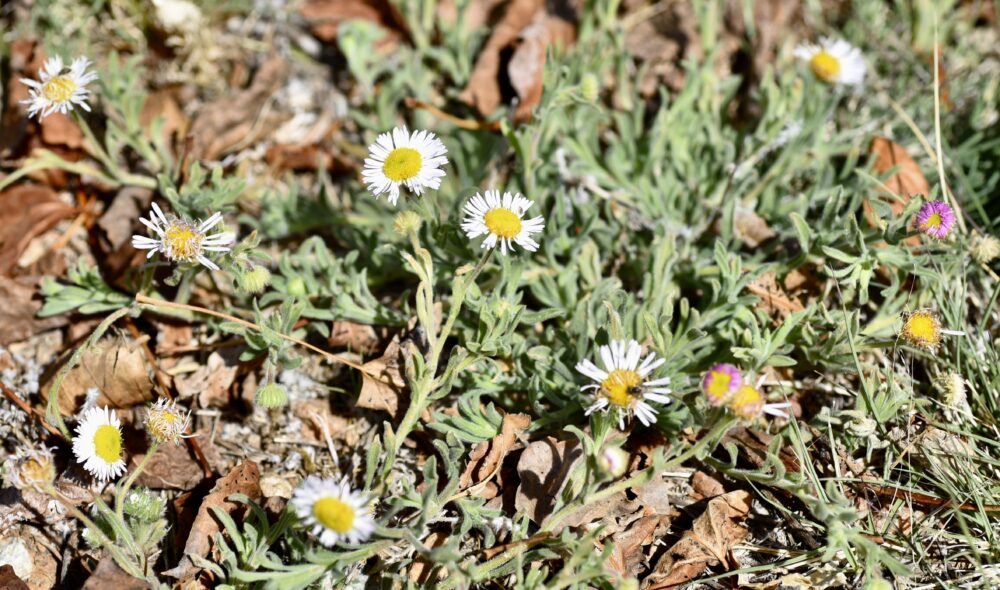
I figured that if I went out every day that B. exilis was visiting the E. divergens flowers, I would surely end up with a few decent quality images of B. exilis. My theory of obtaining quality photographic images is this, take hundreds of photos and at least one will turn out to be a winner. For as long as the butterflies are showing up, don’t stop taking photos until they are not. Bound to get that one great photo. I did just that and initially I thought that would be the storyline.
Then I read Steve Cary’s “Spring 2026 Arrives Early for Butterflies” on peecnature.org, and I realized a more important storyline. In his article Steve said, “Winters will never be the same. In past Santa Fe winters, it was cold for a few months with an occasional warm spell. Now it is mild for a few months with an occasional cold spell. Winter begins late and ends early.” I thought another way to phrase this is autumn is staying warmer later than it used to, ushering in winter at even later dates (and therefore butterflies are flying later as a side effect of this environmental warming trend). Autumns will also never be the same.
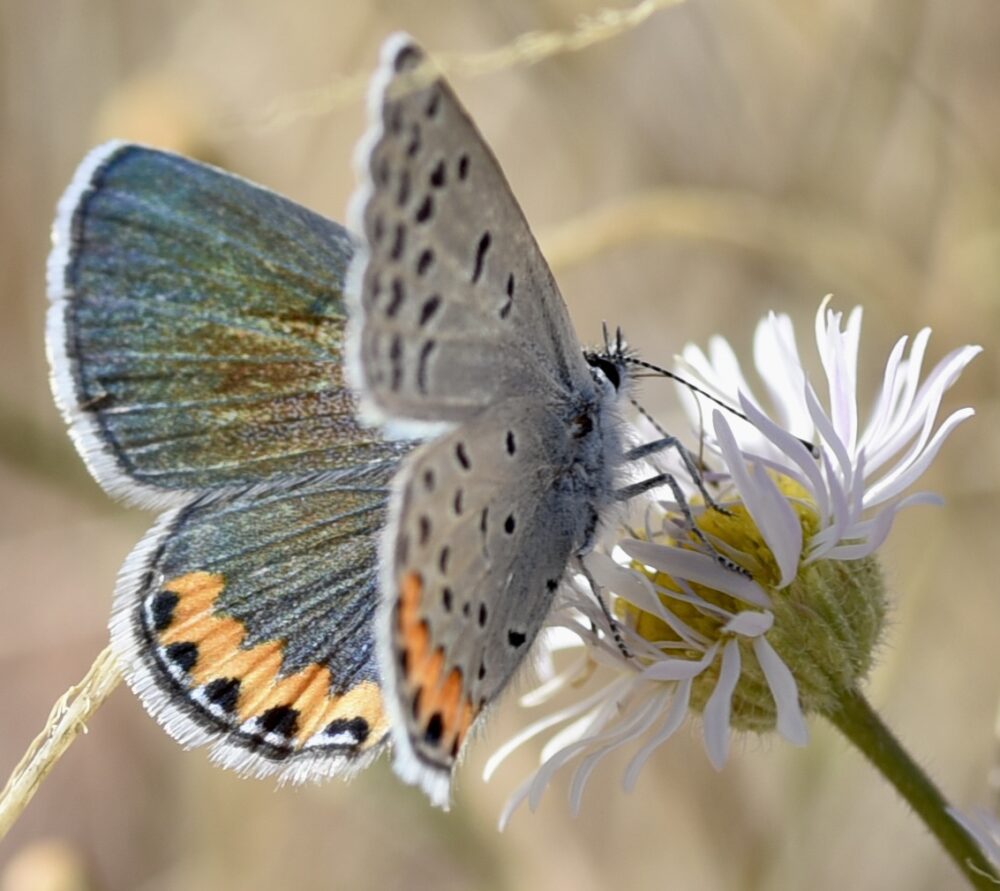
According to “Butterflies of New Mexico” on peecnature.org, “northern New Mexico observations probably represent stray or late season offspring. Summer wanderers to northern New Mexico may produce a round or two of offspring before the cold kills all.” This explained my observations of the October through November B. exilis visitors to the patches of E. divergens and I realized that my photos could document how long this late season brood of B. exilis would continue to feed at the E. divergens patch. I would continue photographing these butterflies every day that they returned to feed as evidence of their presence at this location. I wondered if below freezing overnight air temperatures would kill them all and what that date would be. This, it turns out, is the real storyline.
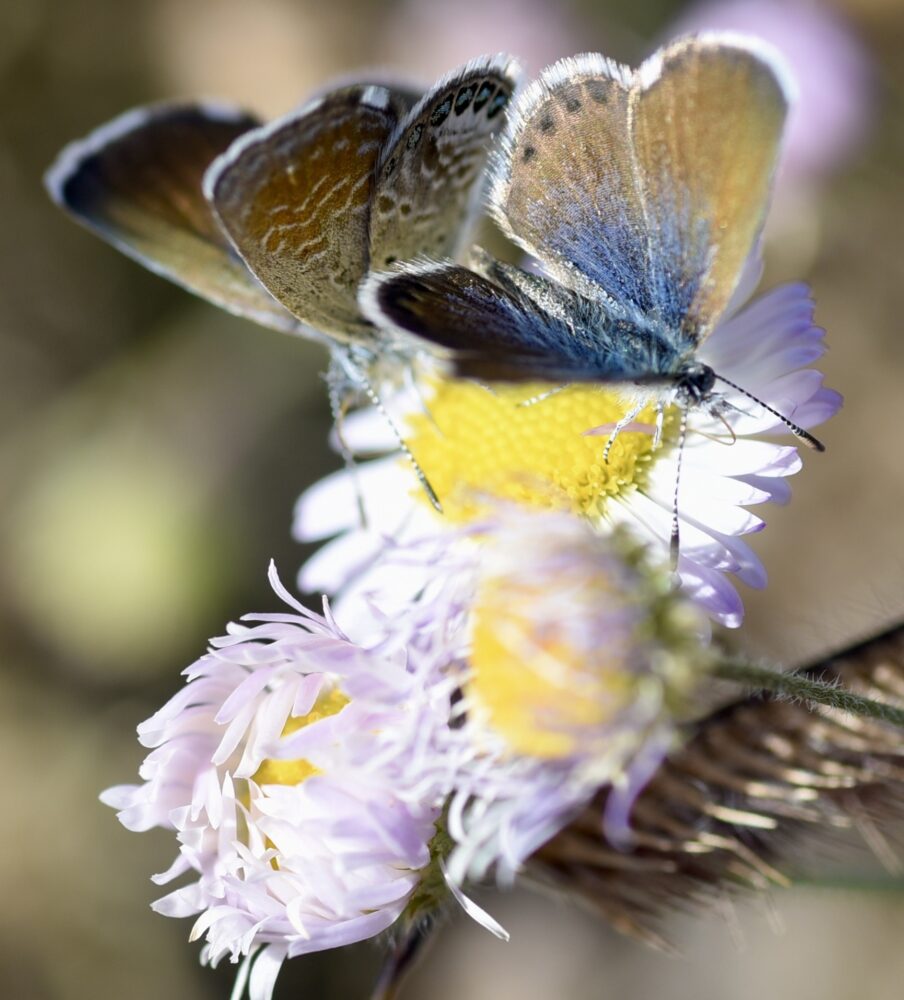
Eldorado at Santa Fe, New Mexico October 2025 average daytime temperature was 61 F and average nighttime temperature was 52 F. The November 2025 average daytime temperature was 52 F and the average nighttime temperature was 40 F. The 2025 overnight low in Eldorado didn’t get below freezing until just before dawn of November 21. I photographed B. exilis on November 19, but on November 20 it rained and no one showed up to the party. The forecast called for temperatures to drop just below freezing in the wee hours of the morning of November 21 and it did drop to 31 degrees F. That day I did not observe any B. exilis and figured that the party was finally over. But wait a minute, November 22 arrived and to my surprise I observed two individuals with tattered wings feeding at the flowers not yet killed by below freezing temperatures. But as forecasted, overnight temperatures again dropped below freezing. That next morning all the E. divergens flowers had died and my butterfly friends were not to be seen again. The party was now officially over.
Sadly, the freezing cold temperature did finally kill the last of the offspring of the B. exilis summer wanderers. I hope this year more B. exilis generations leapfrog north to the Santa Fe area and produce a round or two of offspring. There is some evidence that generational diffusion begins farther north each year due to warming winter temperatures and now B. exilis overwinters successfully in Albuquerque, at least in some winters. The journey to Santa Fe is shorter than it once was. I’ll be keeping an eye out for their return.
Thanks, Greg! and here is Greg’s entry into our hairstreak false head top view gallery:
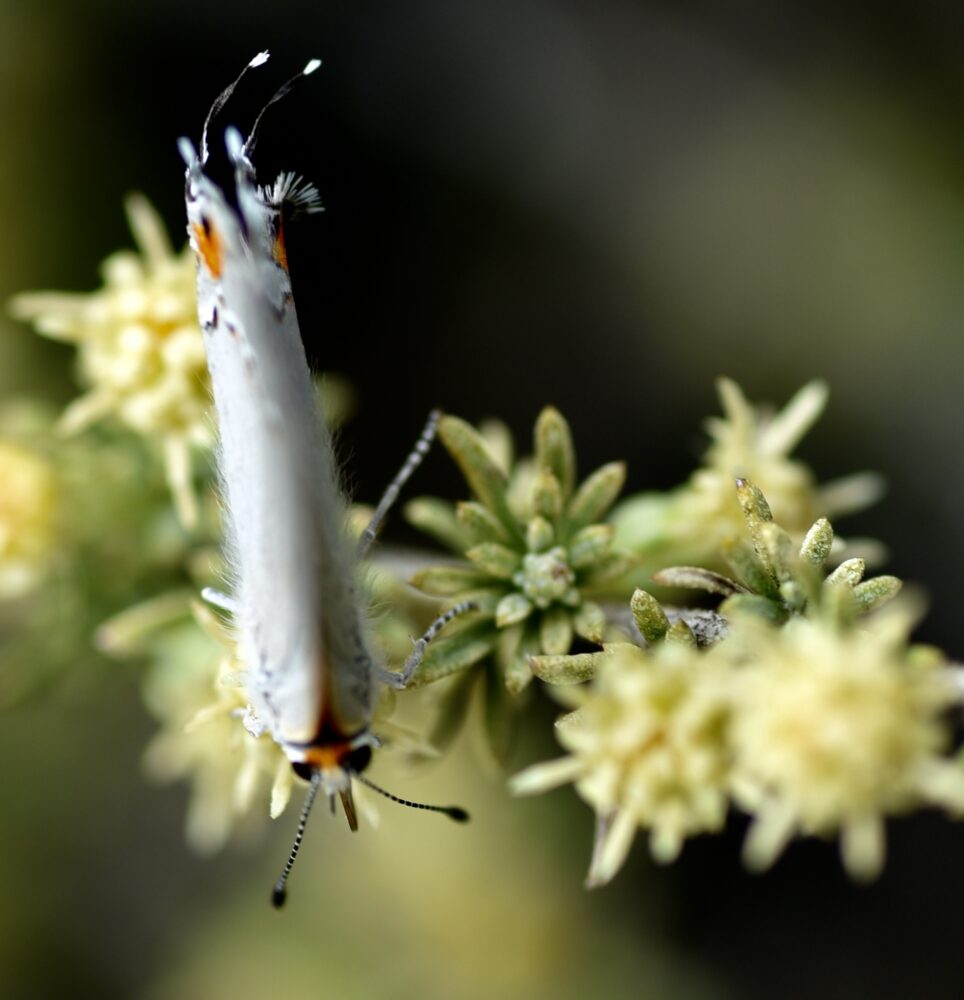
Speaking of false heads, Mike Toliver ran across this link and remembered our new perspective on hairstreak false heads: https://www.science.org/content/article/some-butterflies-adapted-have-second-heads-confuse-predators. Check it out!
Let me remind you of two other terrific blogs that often feature NM butterflies:
Lisa Tannenbaum’s “Everyday Magic”: https://open.substack.com/pub/everydaymagic/p/343-yet-more-butterflies?r=m6hb9&utm_campaign=post-expanded-share&utm_medium=web
Joe Schelling’s “Natural Moments”: to subscribe, go to https://joeschelling.wordpress.com/
Steve’s Spring Adventures (so far):
Whittington Center: On April 17, Kelly Ricks and I went to Whittington Center to search for orangetips. Conditions were dry, no surprise there, and orangetips were not to be found. But we did find a damp spot in a wooded canyon – that’s where all the butterflies were.
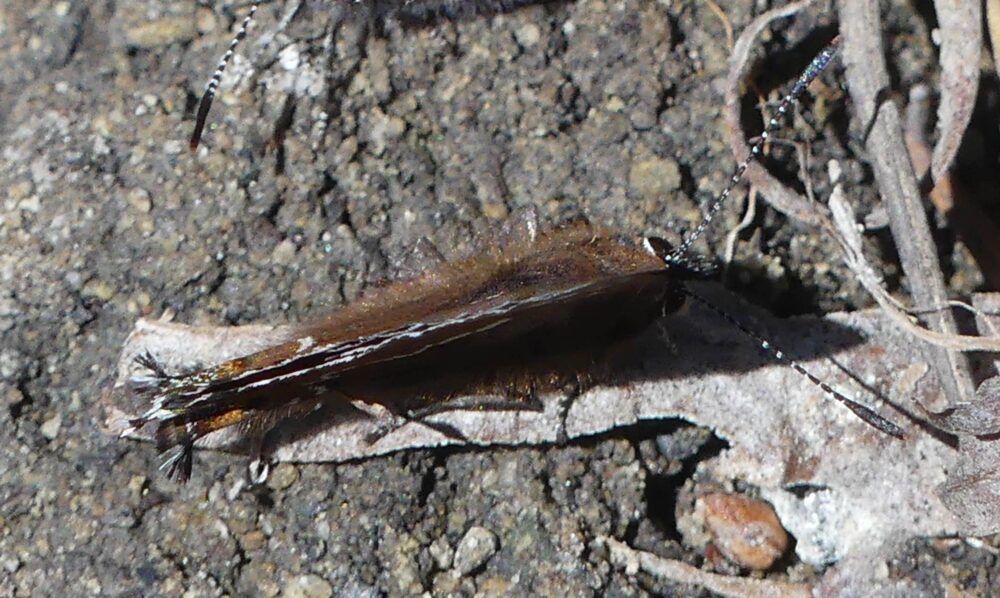
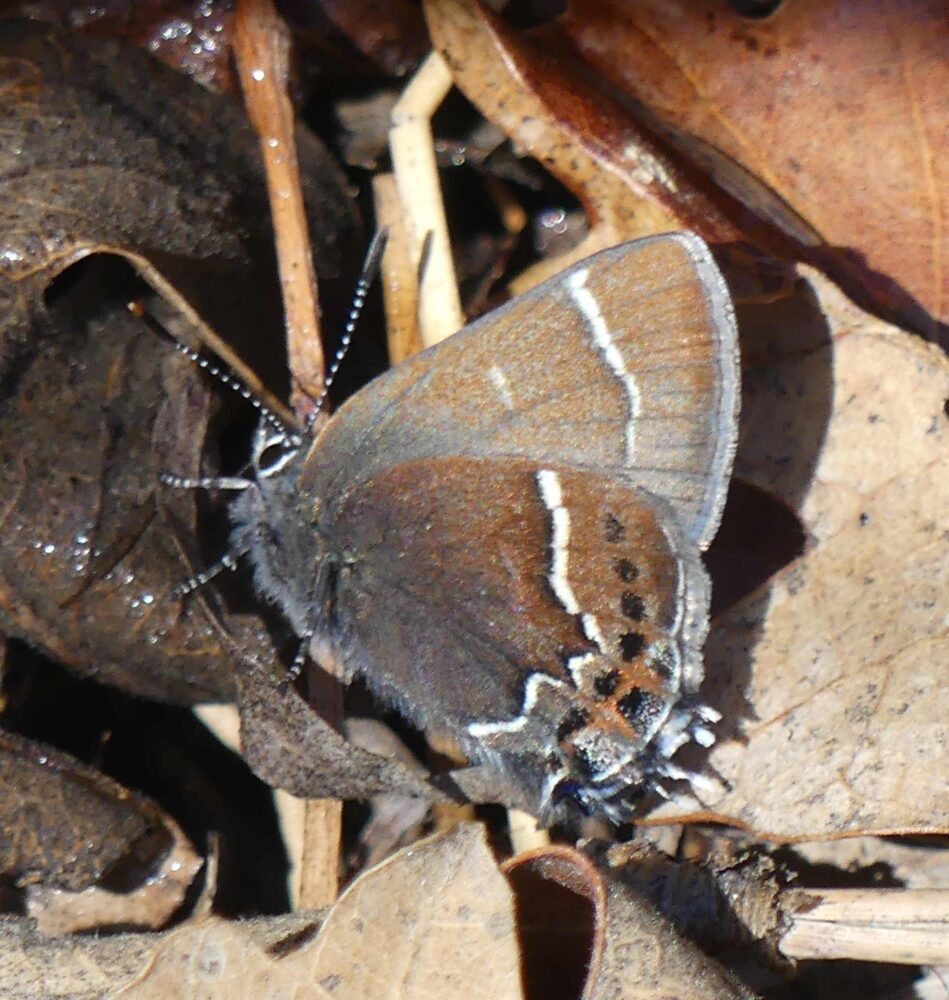
There were a couple Thicket Hairstreaks, so I tried to get one of those top-down photos that accentuate the false head at the back of many hairstreaks (see my previous post). My photo below is not terrible – you can see the hairy lobes at back end of the hindwing, fanning out to pretend it is a head. Overall, however, hindwing tails on this bug are on the short side. I also learned that any false head will not look particularly sharp against a background of mottled dead leaves on damp soil; for contrast, see Greg’s image above. This challenge will be harder than I thought!
I ended up settling for a decent lateral view plus a Hoary Elfin, which was out at the eastern edge of its known geographic range in northern NM. Geographic novelties always interest me!
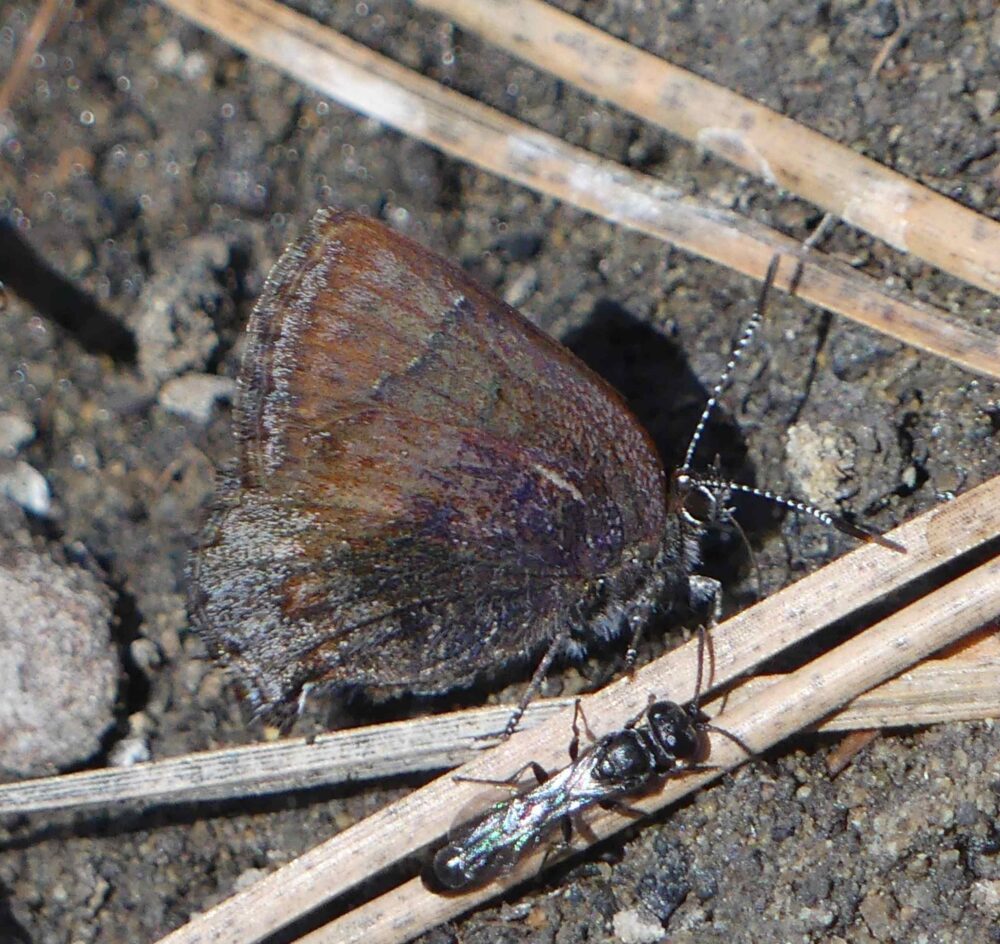
The Whittington Cetner is west of Raton along US 64 and it is open to a variety of public activities including butterflying. A modest day-use fee gets you into a large area that includes historic coal mining towns and some lovely butterfly habitats not unlike those at Sugarite Canyon State Park. I hope to return later this year.
In early May, Marcy and I volunteered for dog-sitting duty in southern California. We translated that into a few days in Palm Desert with my sister, Kitty, and a few days in San Diego for just the two of us – plus Roscoe and Lily, of course. In addition to some nice family time, I managed to squeeze in two days of butterflying. On May 3, south of Palm Desert, I walked the familiar Cactus Springs Trail, which noodles along at about 3700 ft elevation through interesting chaparral habitats along hillsides and crossing some small watercourses (usually dry). I’ve walked it several times in different seasons (never summer!) and almost always see a couple butterflies new to me without getting even a mile down the trail. This time was no different.
The dominant nectar source along the trail was a wild buckwheat which iNaturalist keyed out as California Buckwheat (Eriogonum fasciculatum). This knee-high shrub was all over the place and we saw it along roadsides during much of our stay. Clumps of small white flowers at branch ends attracted most of the 12 species I saw over a couple of hours. I knew there should be a dotted blue using this plant as a larval host and it seemed likely to be flying when the plant was in bloom, so eggs could be placed and cats could munch on nutritious flowers and developing seeds. It had to be there, but it was danged hard to find and to see as I squinted into the hot, dry wind. Finally, I was able to focus on one – they were tiny, but I finally caught onto their flight pattern and nectaring posture as flowers danced in the breeze. It was my first ever spring-flying dotted-blue. New Mexico has one spring-flying species, Stanfords’ Dotted-Blue, but I have not yet seen that one.
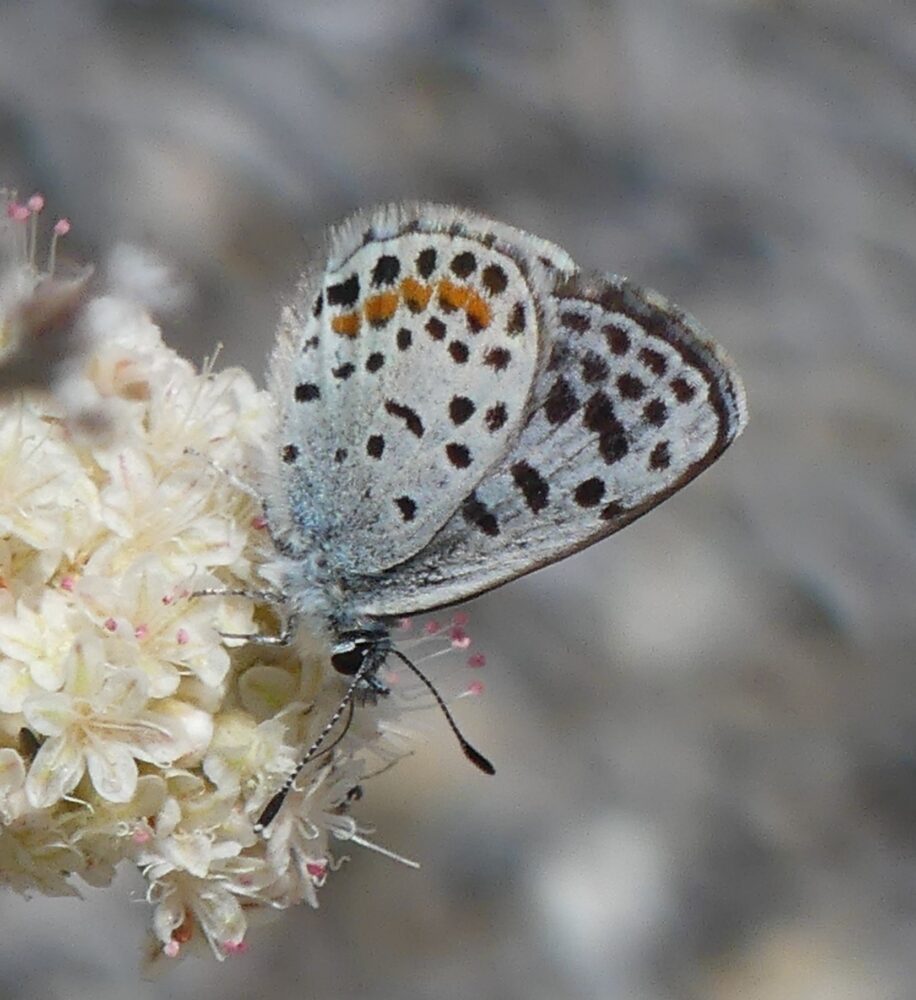
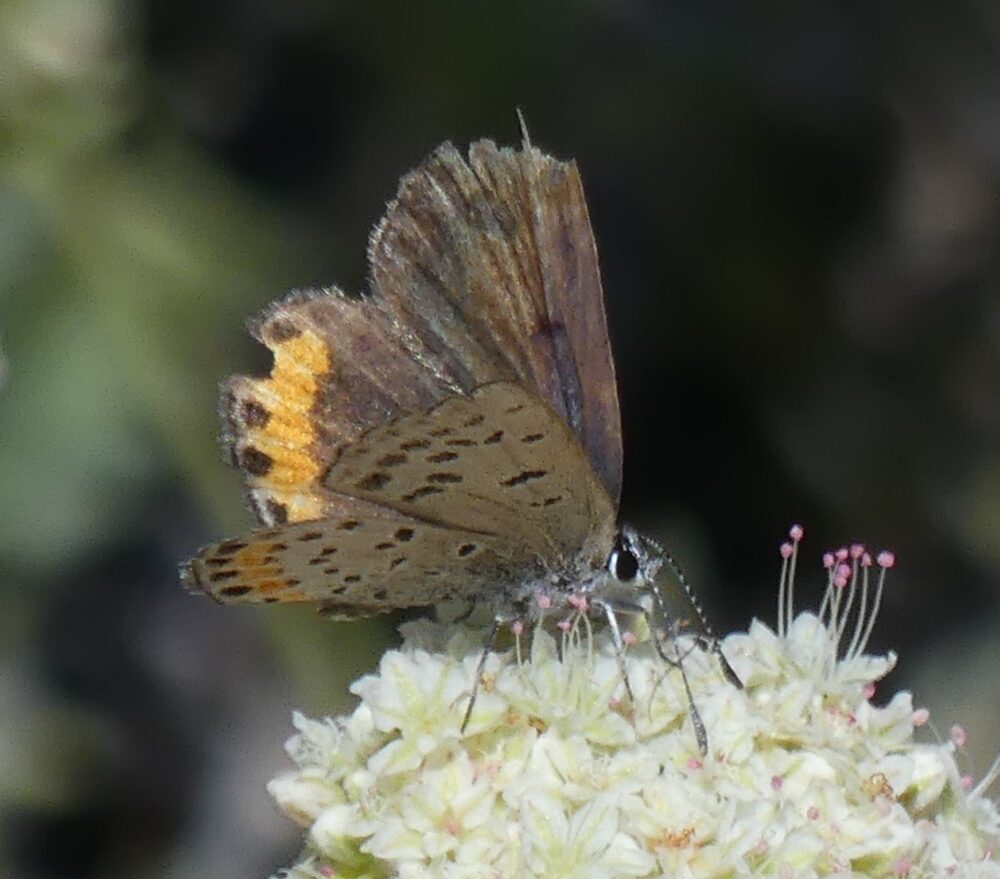
My second prize that day was nectaring on that same buckwheat. A little larger than the Bernardino Dotted-Blue, Gold-hunter’s Hairstreaks appeared as tan triangles against the white inflorescences. Two lifers in one day was very cool.
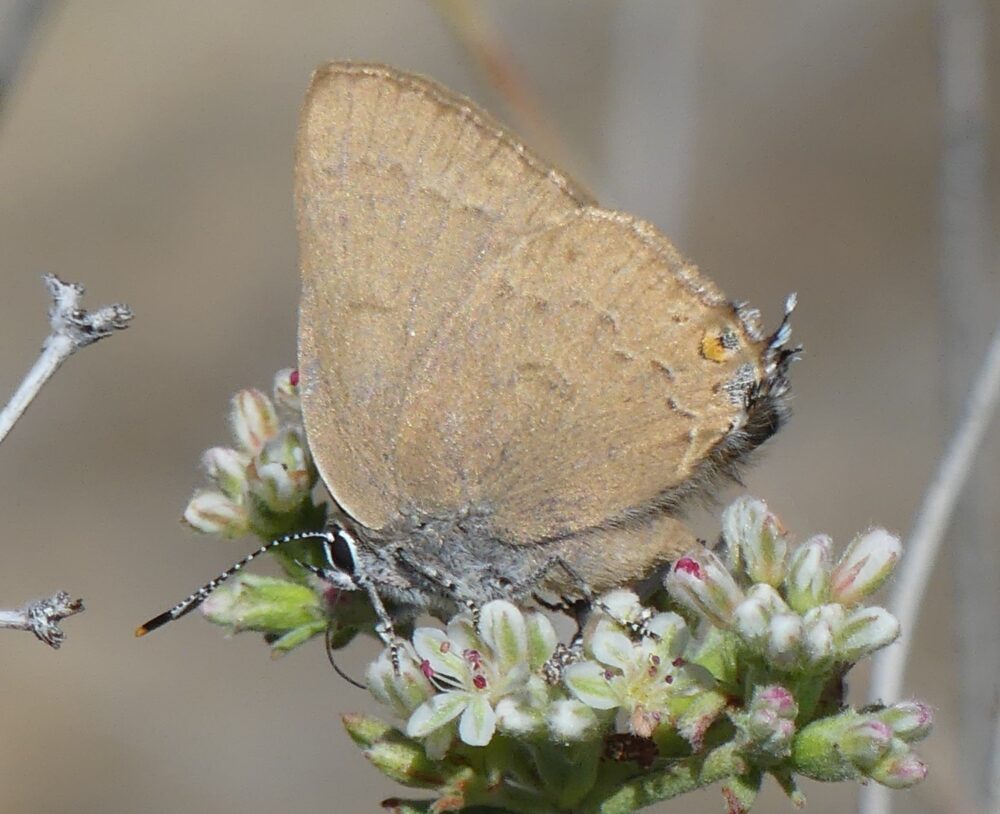
Three days later Marcy and I were back at our home base – Hal and Ronna’s place in San Diego. Between a couple of beach days, we squeezed in a nice hike on a nice day at the Los Peñasquitos Canyon Preserve. Among the dozen or so species we encountered there, California Ringlet may have been the most numerous. The California version, especially the upperside is much paler, grayer than our version which is more orange. When I first spotted them I had to double-check they were not cabbage whites!
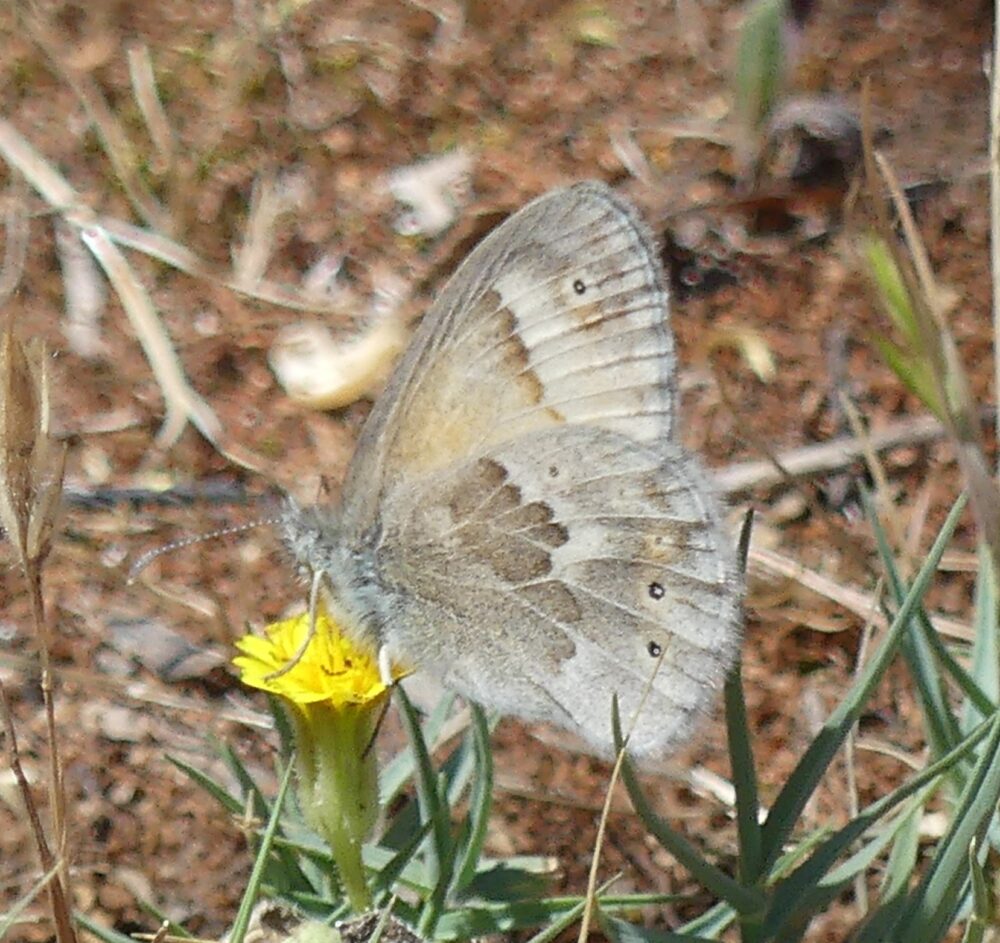
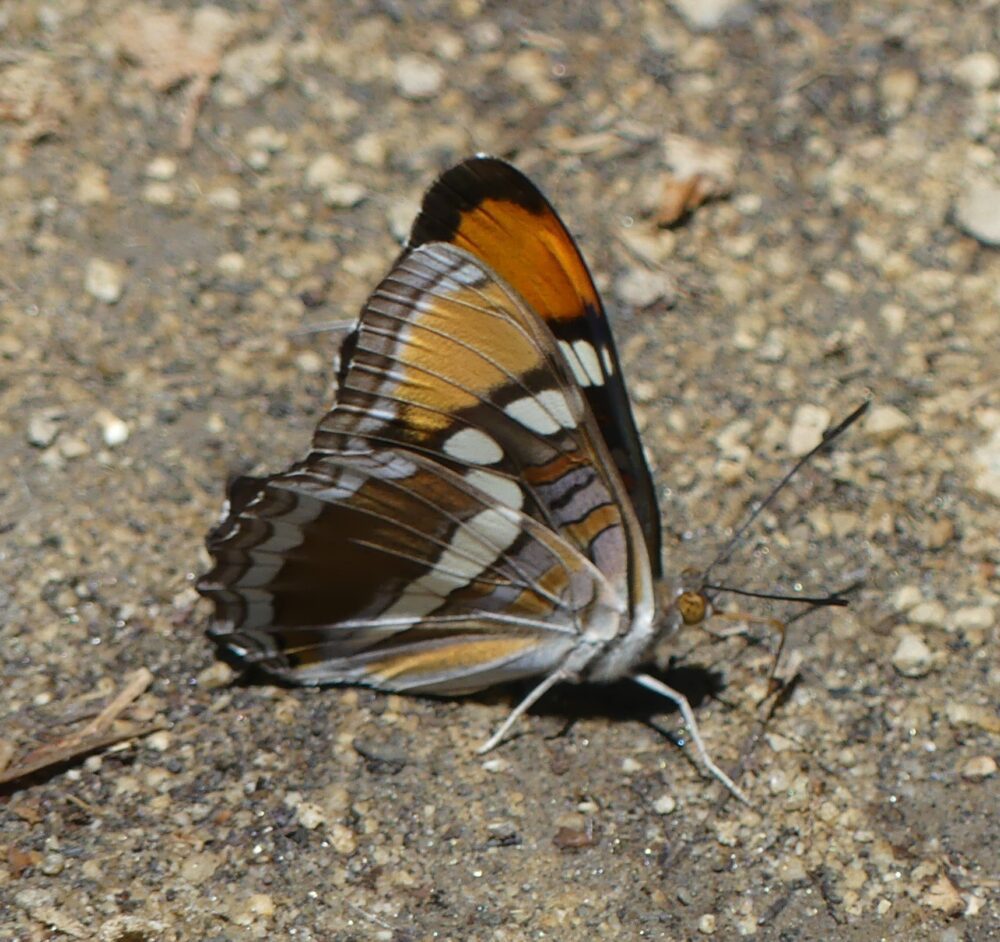
And there was this familiar friend, er, cousin of a familiar friend. Remember when we New Mexicans called our sisters California Sisters? Ours are now Arizona Sisters, but the ones in California are still California sisters. It’s hard to tell them apart at first glance.
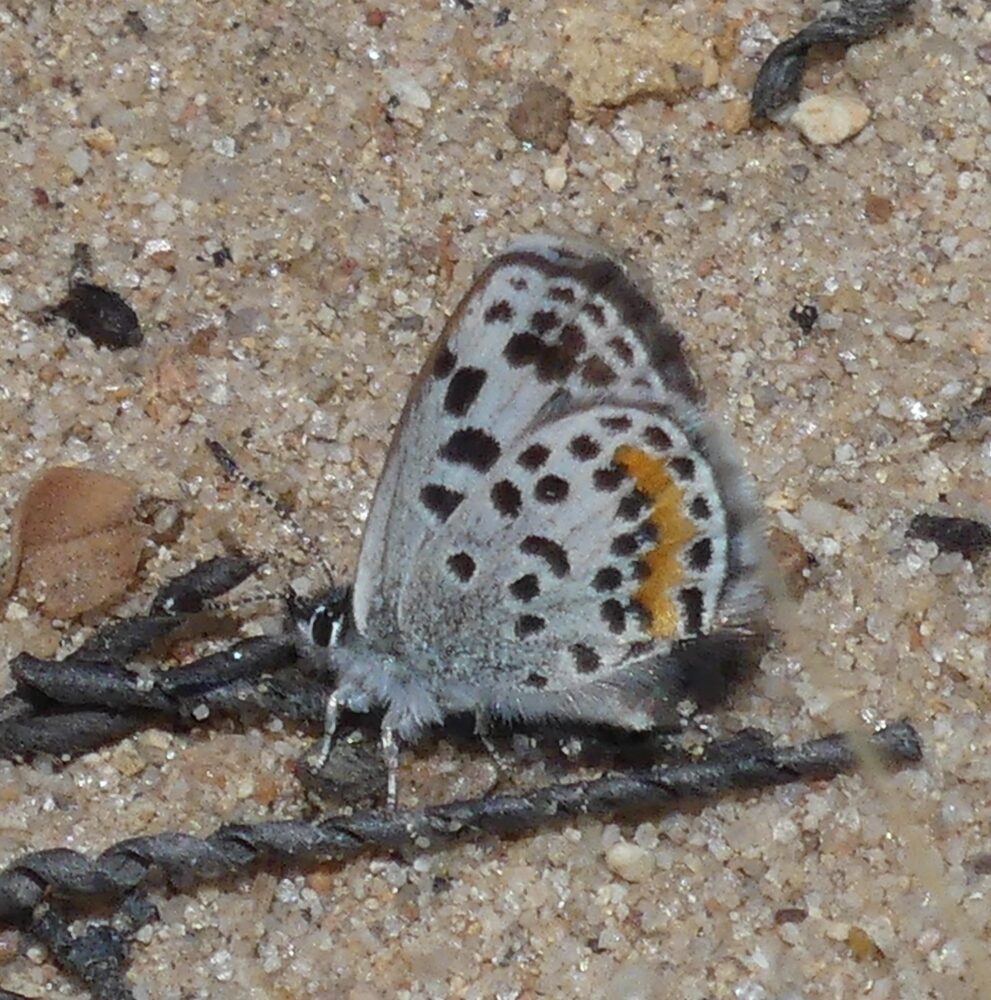
This Preserve had plenty of the same wild buckwheat we saw at Palm Desert. I expected to see the same dotted-blues and was not disappointed. The image below shows a probable male (sorry no upperside image) at wet sand. That same buckwheat also produced a metalmark, but I only saw one and failed to get a presentable image.
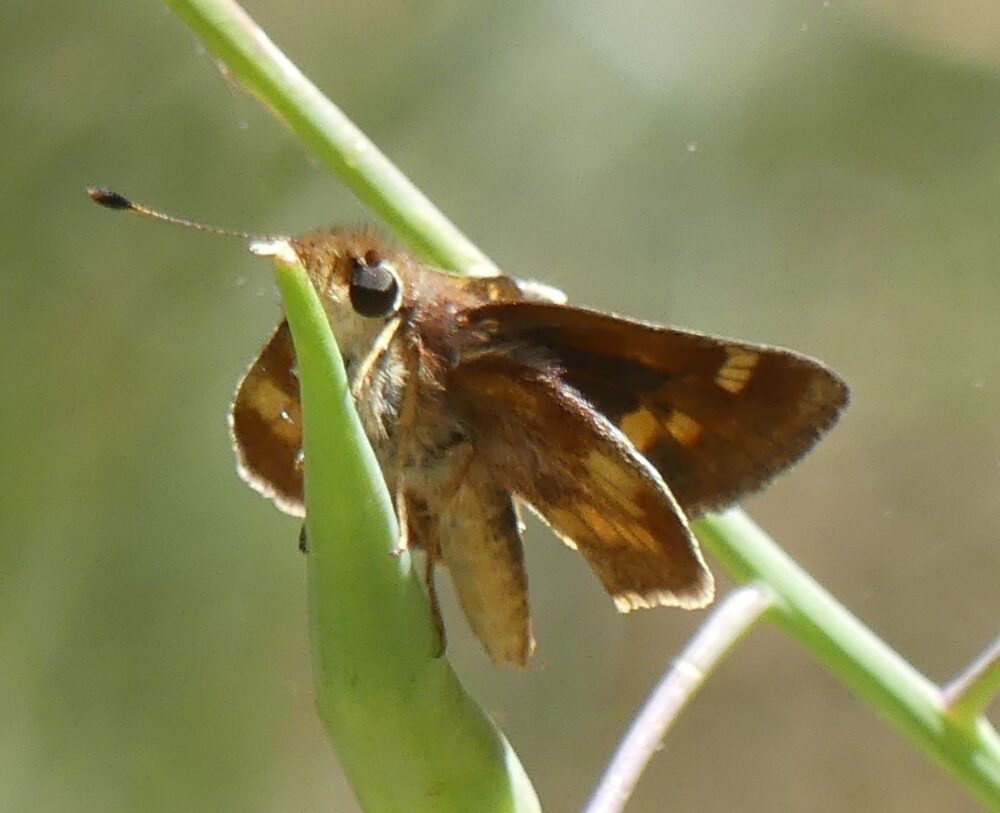
One of the more puzzling butterflies we saw here was the skipper below. We saw several, but for much of the day none offered decent photo opportunities. It was a bit larger than most folded-wing skippers. Finally, one posed long enough that I was able to click off some frames, but I had to get down on my knees (ouch) to get a sufficient view of the underside to confirm an ID. I saw this species once in NM 30 years ago, in the Bootheel, but it seems more routine in southern California.
Back in New Mexico, I was pleased to be able to meet up with Marc Bailey, of Los Alamos, on May 10 to try to re-find Uhler’s Arctic in the Jemez Mountains. We were not successful, but if that species were easy to find there it would have been seen a lot more than one time. So, we began the process, and along the way saw some nice spring montane butterflies.
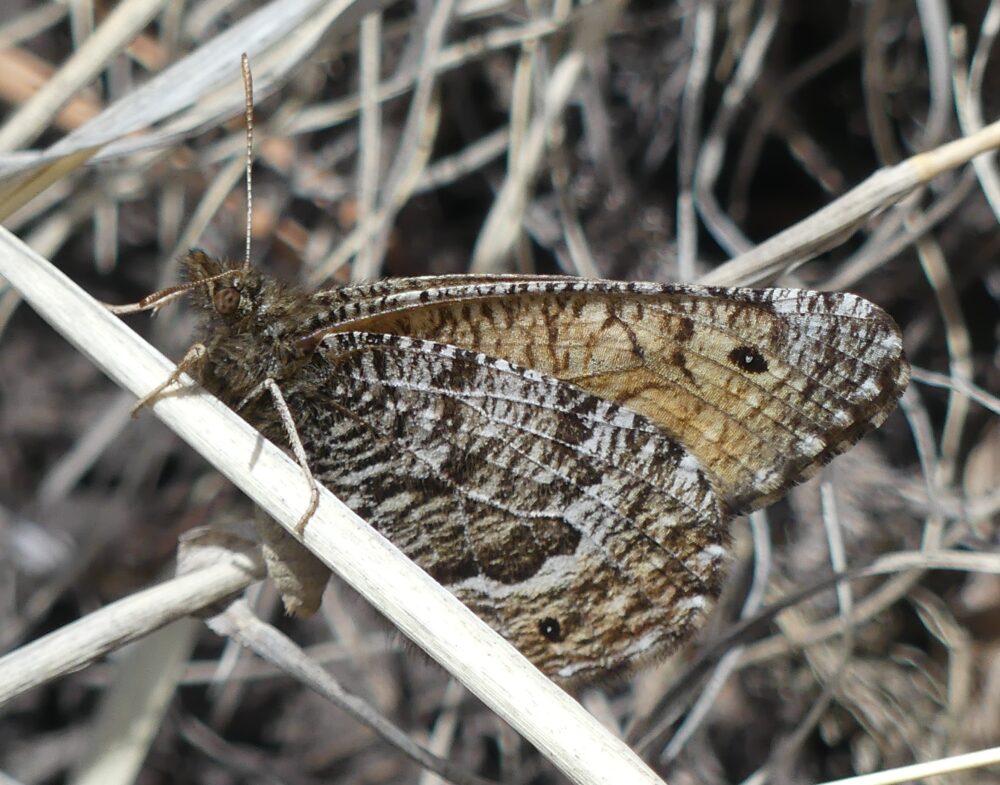
Speaking of Arctics, we did see the familiar arctic whose name we are unsure of (below). We’ve been calling it Chryxus Arctic for many decades, but experts in Colorado think it is not Chryxus, but Alticordillera. They may be correct. The two species are nearly identical; eventually we will figure it out. Until then, we have a new early record for this butterfly in New Mexico.
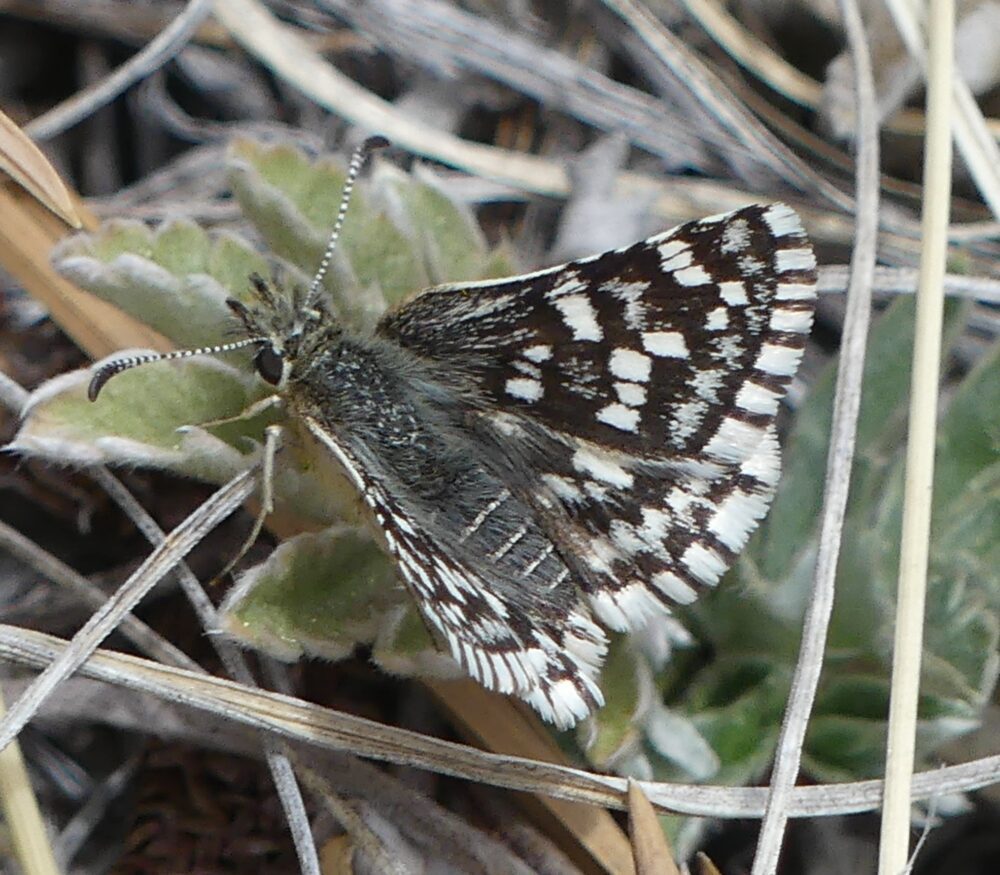
We saw a number of Dobra Cloudywings, often on hilltops where they were too busy to allow photography. Mountain Checkered-skippers are tiny and hard to see, but at least they are willing to sit and be documented, so they get all the good press.
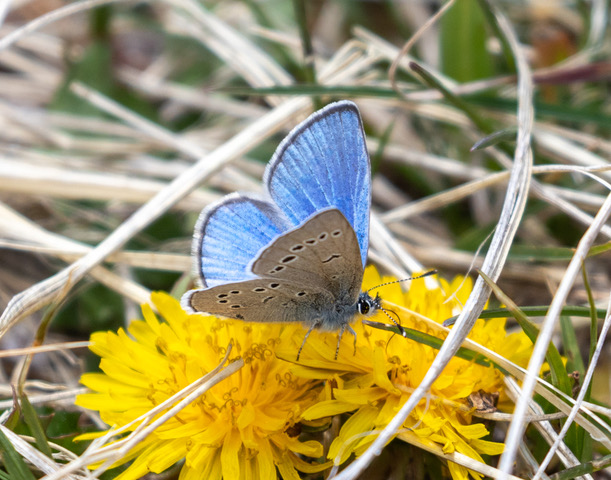
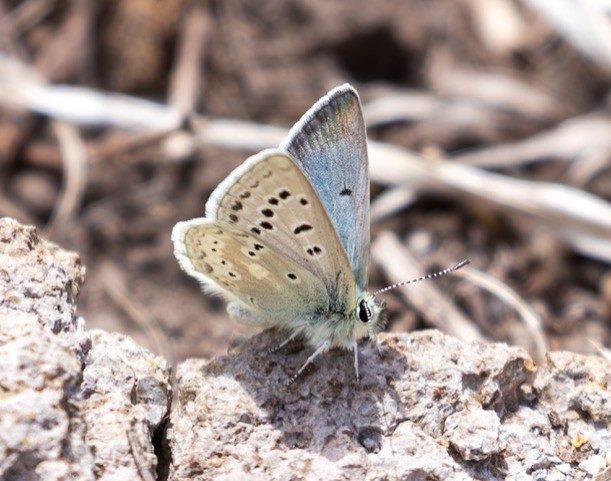
Is there anything lovelier than a male Silvery Blue on a spring dandelion? I seriously doubt it. But High Mountain Blues and Azures certainly give them a run for their money.
It’s good to be home :^)
These blues are absolutely gorgeous. I’m motivated to try to photograph the ones frequenting my flowers. What do you use to photograph them?
The butterflies I saw early here in Raton that I mostly posted on iNaturalist, were Milbert’s tortoiseshell, some painted ladies, and duskywings starting at the end of March. Then a stray red admiral, now several silver-spotted skippers, which I haven’t seen in town much before.
I saw the white California Ringlet at Camp Pendleton when I went through infantry training and radio school back in 1968. I managed to catch a few with my hands and those specimens now reside at the Illinois Natural History Survey with the rest of my pinned collection. Very different from our Ochre Ringlet!
Steve…some interesting very early records…especially O. chryxus/calais altacordillera. The earliest record for the High Mountain Blue (I like that name for the southern Rocky Mountains instead of “Arctic Blue”) in Colorado is May 2nd. Re: Pigmy Blues at Santa Fe…surprising how tough is this little butterfly! The longest observation I have made right here in my Montrose, Colorado backyard is December 3 several years ago with a very long Fall. With the crazy warm March none showed up here this year (that I saw anyway) until May 2nd…and not a new early record for the yard (previous April 30). And Steve…Based on the solid hindwing band and spot pattern on the underside, I think the very worn female you photographed on the Eriogonum in S. Cal. is one of the lupine blues (acmon (or lupini?)…it does not look like it matches the male E. bernardino at all in newly emerged condition. Take care, Mike
Thank you, Steve and Greg, for great tales and tails!
Laura (aka the raptor lady)
I’m amazed by the excellent quality of the photographs and the overall scope of these magnificent reports.
I met Steve, my cousin, when campaigning for Bill Richardson many years ago. I just got an email from David Cary who is working on a family genealogy for Clarence who asked Steve to contact him at davidmcary36@yahoo.com
Thanks again for your excellent and illuminating reports.