
© Steve Cary, June 30, 2026
Butterfly season is in full swing, June has been a busy month, and I hope in a good way for you. Before I get into my stories I want to share this link regarding Silvery Blue butterflies which was shared with me:
https://presidio.gov/about/press/bringing-silvery-blue-butterflies-to-the-presidio
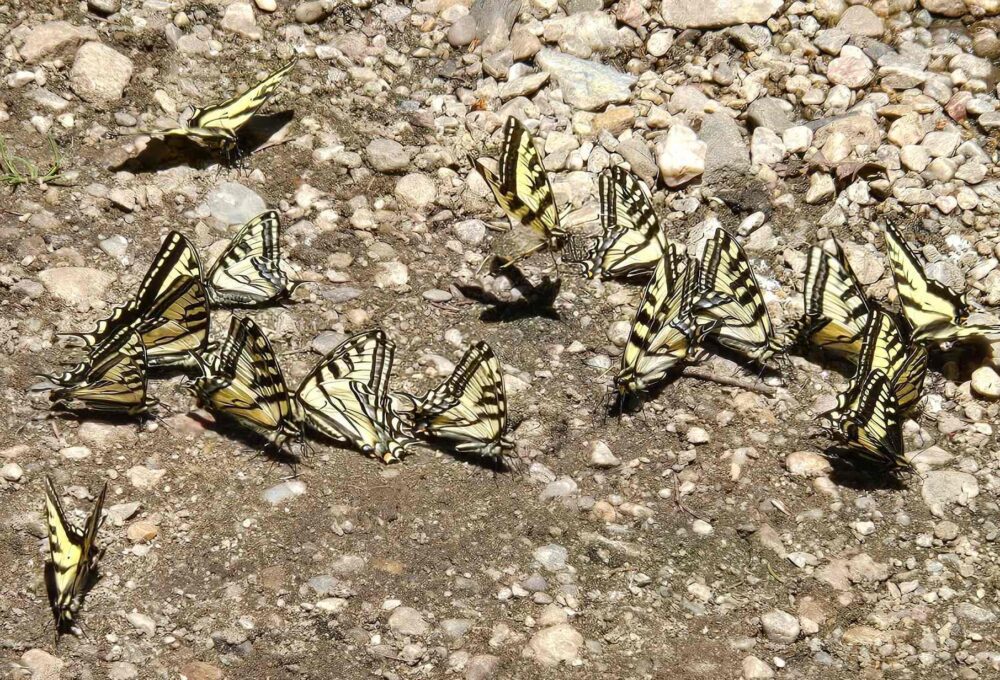
This image and remarks were shared with me by Karen Garcia, from Santa Barbara Campground in the Sangre de Cristos. “Actually we must’ve seen hundreds, maybe thousands of Swallowtails everywhere.” There are at least three species represented: Western Tiger, Two-tailed Tiger and Anise in lower right corner.
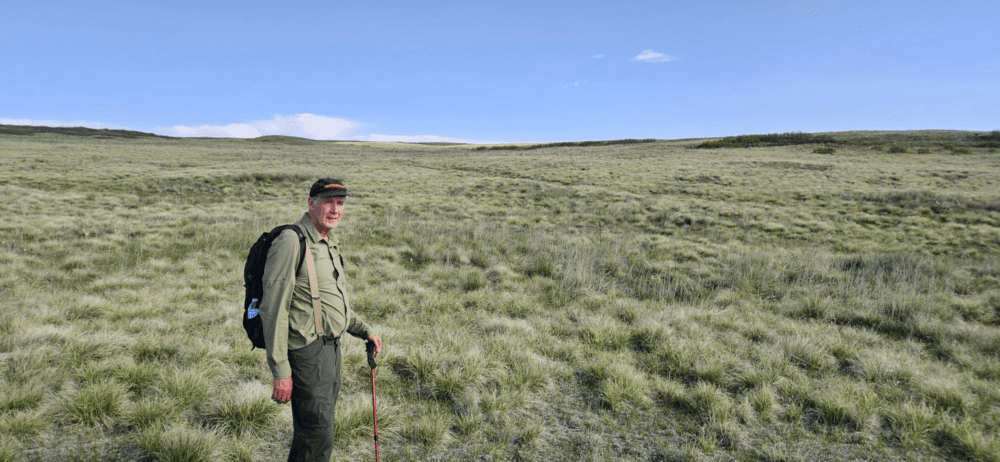
Mother Mesa. On June 6, my friend Charles and I had the opportunity to hike up onto Fisher’s Peak Mesa, which lies just over the Colorado border a few miles east of Raton. New Mexico has several important basalt-capped mesas of the same geologic era and origin in that area: Bartlett, Barela, Horse, Little Horse, Johnson, to name some of the more familiar. To me, Fisher’s Peak Mesa is the “Mother Mesa” because it is higher than all the others – up to 9500 feet elevation – and seemingly a point of origin for the other lava flows. Fisher’s Peak Mesa (FPM) lies within Colorado’s James M. John Wildlife Area, adjacent to that state’s Dorothey Lake Wildlife Area, and Colorado’s new Fisher’s Peak State Park, as well as New Mexico’s Sugarite Canyon State Park and New Mexico’s new Bartlett Mesa Wildlife Management Area. It’s a tremendous aggregation of lands being managed for conservation purposes and available for recreational uses. Grasslands are among our most endangered ecosystems and these grasslands are terrific examples.
We began our outing by going to the base of the dam at Dorothey Lake. A trailhead kiosk there had a map all the information we needed (see below). We would ascend the Mesa via Trail C and that route worked reasonably well. Some minor local wayfinding was necessary, due to erosion or fallen trees, but nothing out of the ordinary. If you go, be sure to check out the osprey nest above Lake Dorothey.
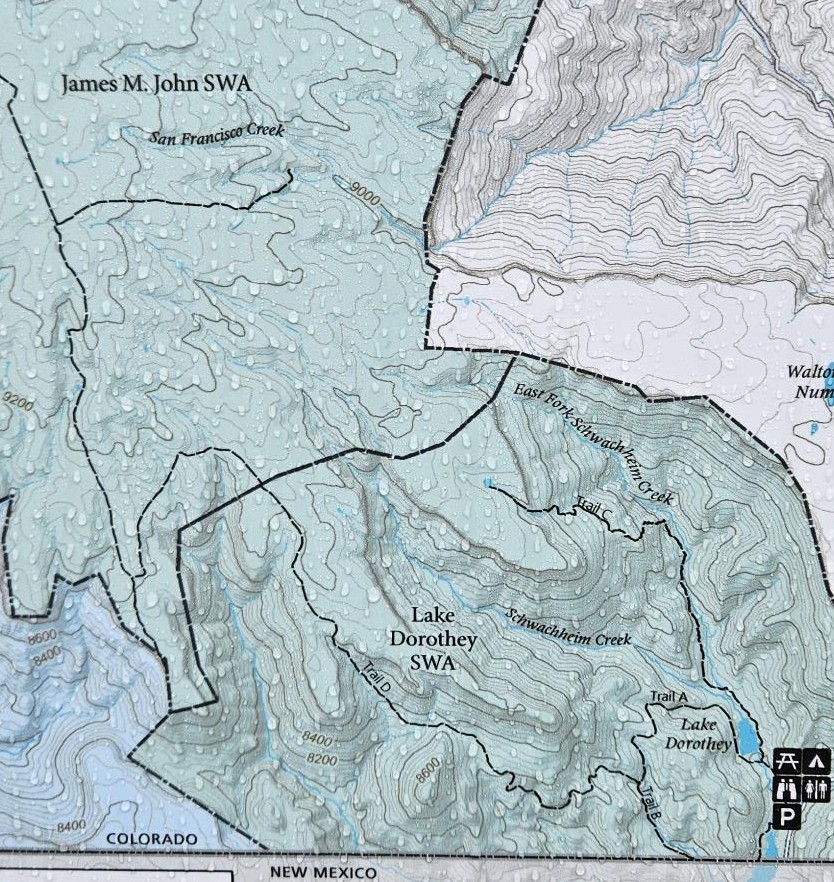
We regularly checked Gaia, AllTrails and our photo of the kiosk map to be sure of our location. We definitely did not want to lose our bearings up there!
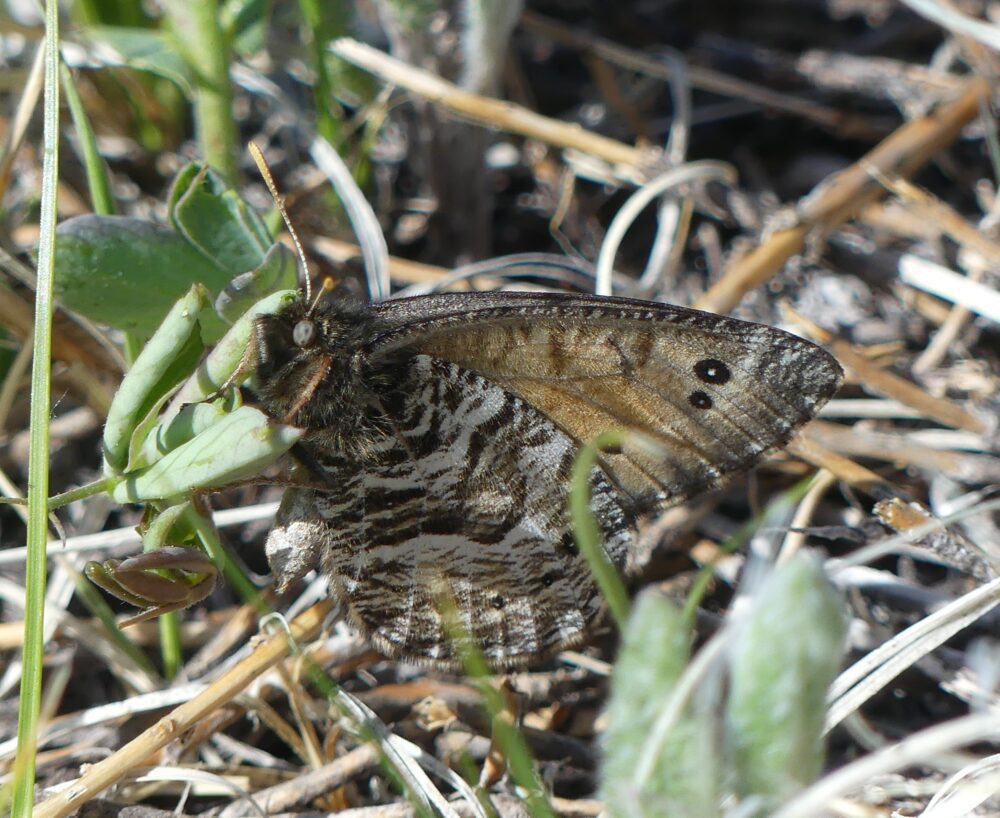
One main butterfly target for me on FPM was Capulin Mountain Alberta Arctic (Oeneis alberta capulinensis). Frankly, I knew I was there too late to see it because its flight typically ends in May and it ended even earlier this spring. Nevertheless, I could not stop myself from looking and sure enough there was one arctica variety about in decent numbers. I initially talked myself into thinking it was Alberta, but subsequent comparisons with field guides after I got home persuaded me otherwise. It was Uhler’s Arctic, which is also a very nice one to see.
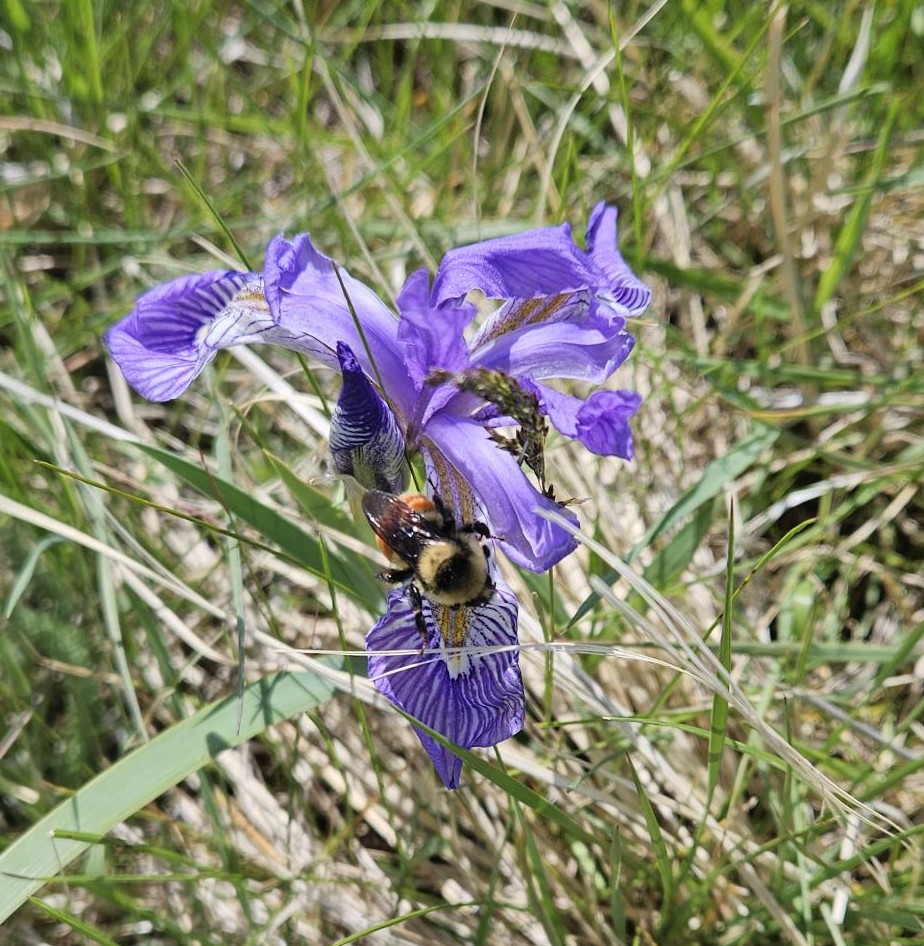
Overall, butterflies were not super-abundant, so we were freed to observe other interesting grassland organisms including this bumblebee below.
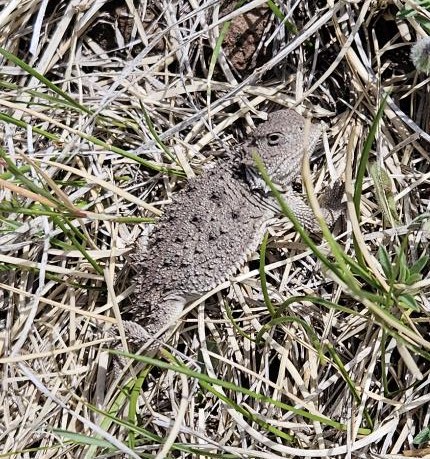
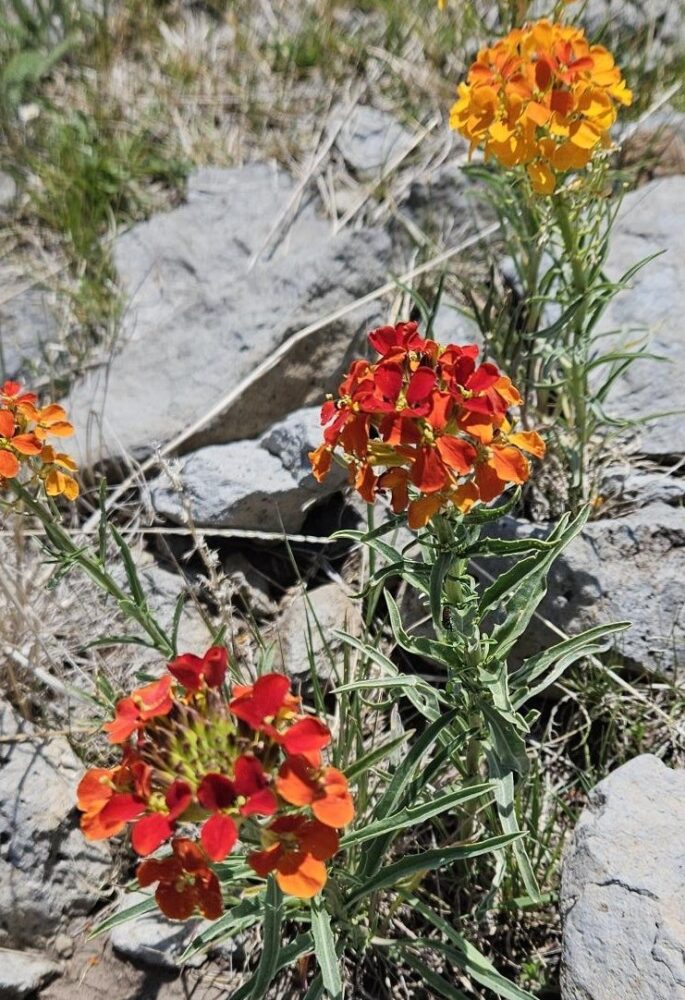
Navigating across square miles of grass-covered basalt was an interesting experience. There was topography in the form of ridges and drainages at small scales, all of which seemed as if they would converge at a location to our north-west. There were trees and shrubs locally, but they only underscored the dominance of grasses and forbs. As I scanned for bouncing bits of color that might be butterflies, Charles was open to seeing more subtle creatures, including this little one.
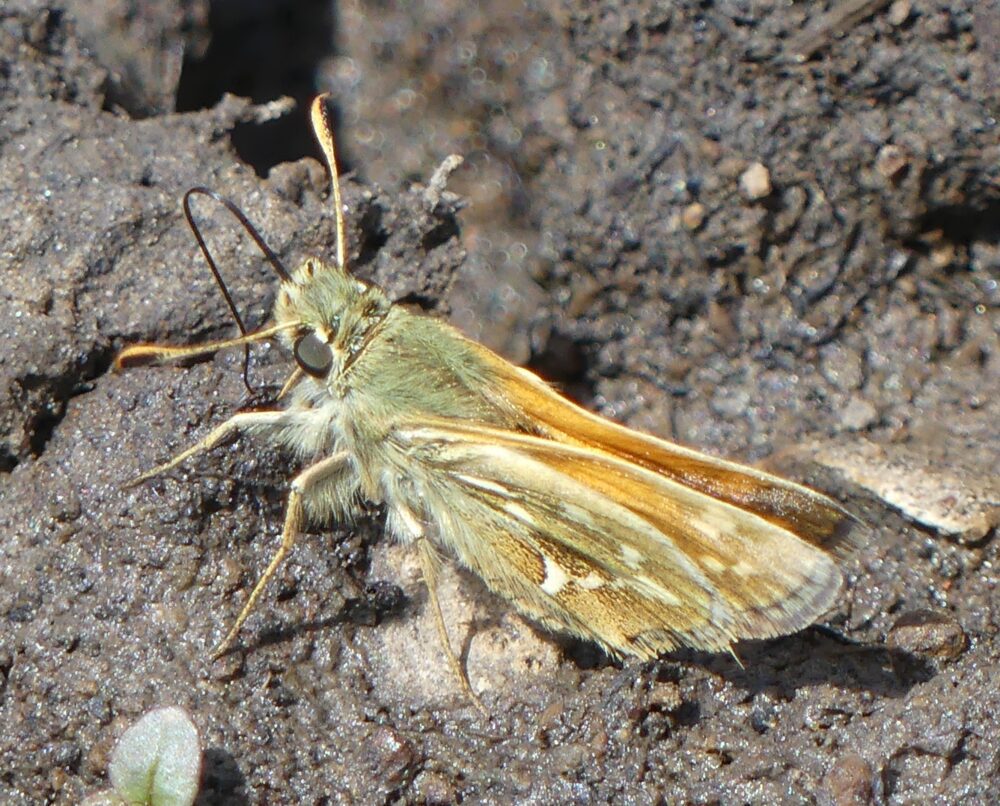
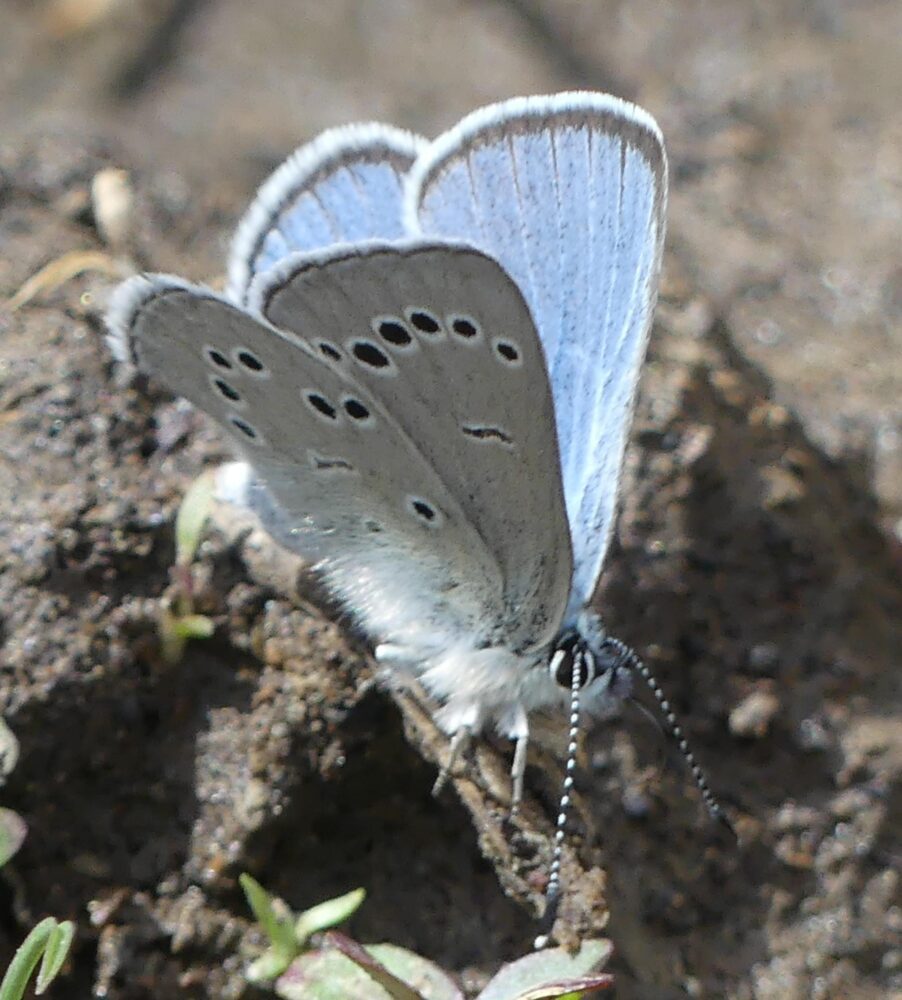
We gradually accumulated a decent butterfly list exceeding 20 species. Most of those were seen at one spot in early afternoon where the vague road we were following descended into a low drainage and created a mudhole. At that mudhole we saw 10 species, most siphoning electrolytes, including Nevada Skipper, Draco Skipper and 5 different species of blues. Others, such as Silver-spotted Skipper and Queen Alexandra’s Sulphur, patrolled the adjacent wet meadow. It was a bit of an eye-opener for me because it demonstrated that there are different habitats on the top of the mesa. It’s not simply an expanse of cool, dry grasslands with a few shrubs and trees thrown in. Drainages, however weakly developed in erosion-resistant basalt, guided runoff and snowmelt toward mesa edges, sometimes in lengthy reaches that are seasonally damp or wet. Those habitats favor different plants and different butterflies.
We periodically watched the skies for any signs of trouble. The last place we wanted to experience a hailstorm was on a flattish mesa three miles from any topographic cover. Most of the morning cloud development had been minor and far enough to our west that we did not feel concerned.
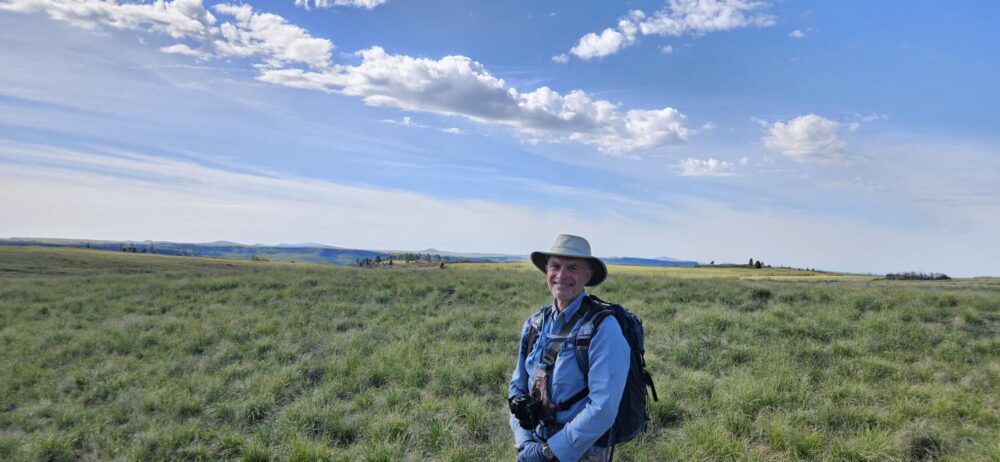
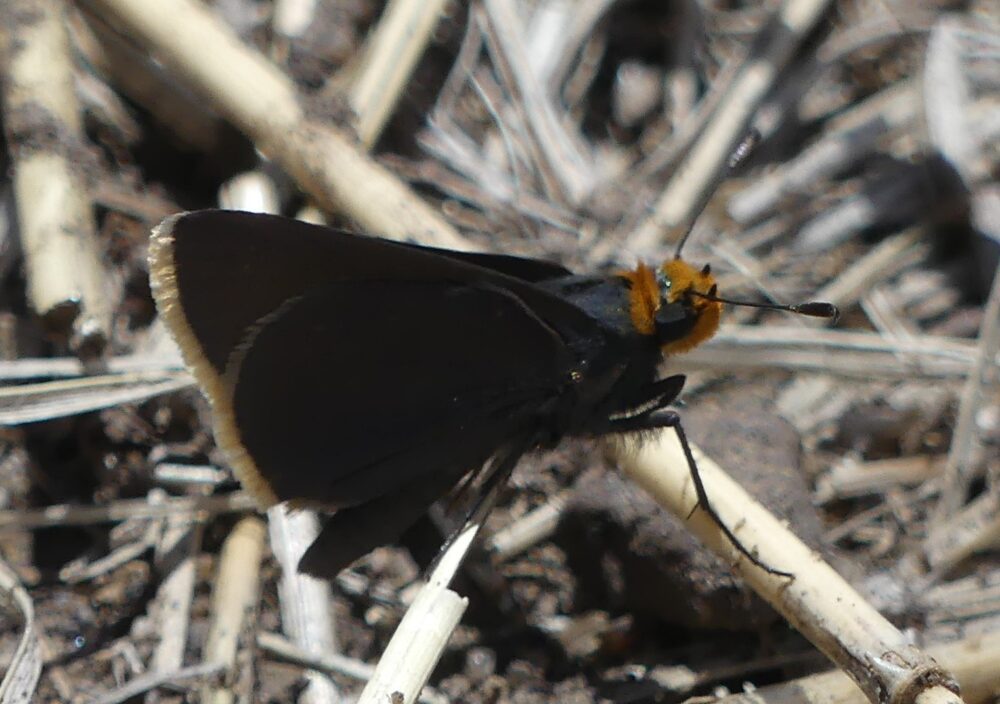
That changed at about noon when heavy, darkening clouds began to eat into our sun. We navigated our way toward the south edge of the mesa in search of Trail D. As it turns out, Trail D is actually a low-imprint dirt road that angles off the rim and down into the watershed of Segerstrom Creek, which heads in Colorado and drains southeast toward Lake Maloya in Sugarite Canyon State Park, NM. Although weather on that leg of our journey was not always favorable for butterflying, we did see several Orange-headed Roadside-skippers during our descent.
We walked about 11 miles and arrived back at our parked vehicle as the first raindrops hit the windshield. An excellent day!
The James John and Lake Dorothey wildlife areas are open to the public for much of the year, but check websites in advance for closures, permits, fees, or other factors that may affect your visit (e.g., James M John SWA | Colorado Parks and Wildlife)
Santa Fe Baldy. One joy of butterflying in New Mexico is the amazing variety of butterfly experiences available. One important example involves tundra species which, though widespread during past glacial times, currently find themselves stranded on our highest peaks, often many miles from sister populations. Our best examples are on summit complexes like Wheeler Peak and the various Truchas Peaks, all of which exceed 13,000 feet elevation. In the immediate neighborhood of Santa Fe, the best we can do is Santa Fe Baldy, which tops out at about 12,600 ft and has a very small contingent of “tundra” butterfly species. The most interesting is Polixenes Arctic (Oeneis polixenes) in its very southernmost colony.
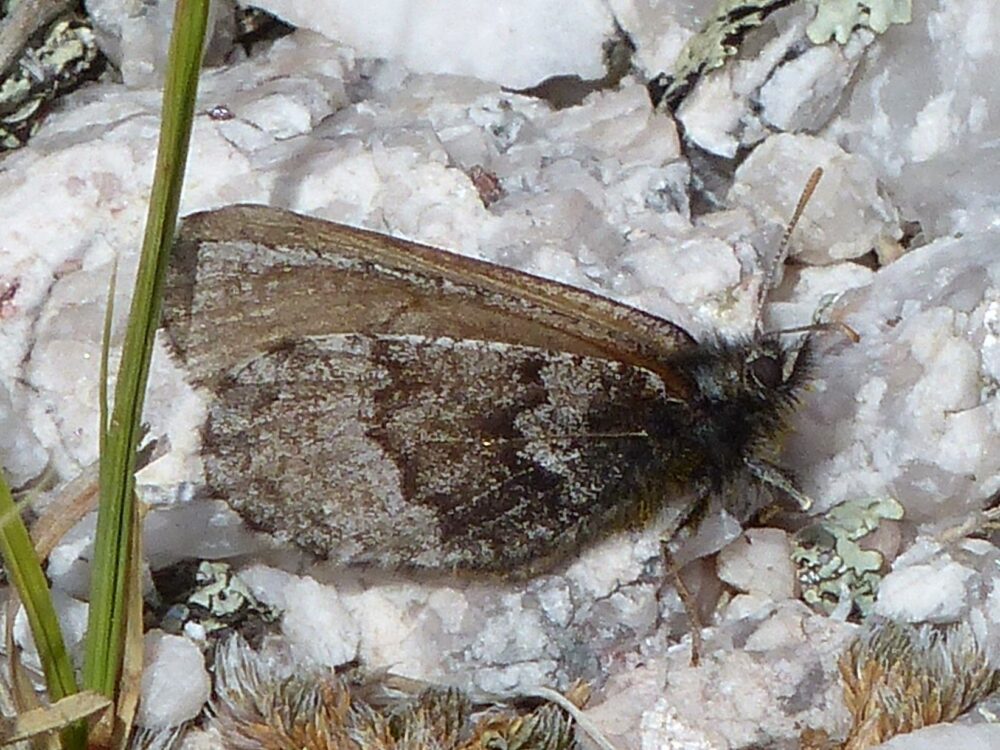
A tradition of scientists climbing Baldy to look for interesting butterflies goes back almost a century. In the mid-1930s, Dr. Alexander Klots spent parts of two summers in the mountains above Santa Fe and Pecos. Of his party’s July 1935 ascent of Baldy, Klots (1937)* reported as follows: “Along the trail up from Cowles . . . one passes heavy Canadian Zone coniferous and aspen forest, with small, grassy meadows or “parks.” Timberline on Santa Fe Baldy occurs quite abruptly at about 11,700 ft., . . . [a] small lake that lies within the . . . cirque of the peak. . . steep, grassy or boulder-strewn slopes lead upward for several hundred feet rise in elevation to the long, curved, barren ridge of the peak. A noteworthy series of Oeneis, many of them quite worn, was taken on the very top of this ridge by Mr. Richard Whitmer of our party. The species has been determined as O. brucei Edw. by Mr. dosPassos.” Here in 2026, we treat brucei as a subspecies of O. polixenes, and this was its first documented occurrence in New Mexico.
To my knowledge, the next party to document Polixenes on Santa Fe Baldy was led by Dr. Kent Wilson in July 1966. At that time, Wilson was Chairman of the Science Department at Santa Fe Preparatory School. Through the Lepidopterists Society he learned about fellow New Mexico Society member Mike Toliver, who was then a high school senior in Albuquerque and a promising, up-and-coming butterfly scientist. The two decided on a multi-day outing into the Sangre de Cristos above Santa Fe. Among other accomplishments, they found Polixenes, reconfirming it after no one reported seeing it for three decades, as well as Rocky Mountain Parnassian. Wilson soon left New Mexico but went on to become a prominent expert on Swallowtails (Papilionidae). And we all know that Mike continues his passion for New Mexico butterflies
I have lived in Santa Fe since 1980 and have checked on the Santa Fe Baldy Polixenes from time to time. That colony became a priority for me as global warming became too obvious to ignore. I looked in on the colony on July 5, 2008, making the ascent with friends John, Randy and Paige. Since then, I have made several additional attempts to check on it over the years, often with friends or colleagues. Jonathan Batkin and I visited Baldy on August 4, 2013, but that was too late for Polixenes. Hans Hartse and I summited Baldy on June 9, 2016, but that was too early for Polixenes. Jonathan and I had a do-over on June 29, 2016, and we finally hit it right.
2026 presented another opportunity. My friend Hans and I arrived at the Ski Santa Fe parking lot (10,300 ft) at about 6:00 AM on June 18. Carrying plenty of food and water, camera, insect net, dog and dog treats, we set out. The first 5 miles is mostly along the Winsor Trail, aka Santa Fe National Forest Trail #254. We reached the saddle (11,650′) by 9:30. This is where hikers can choose to ascend to Baldy, just on our left, or descend to Lake Katherine and even continue east down Winsor Creek toward the Pecos River, where Klots began his adventure more than 90 years ago.
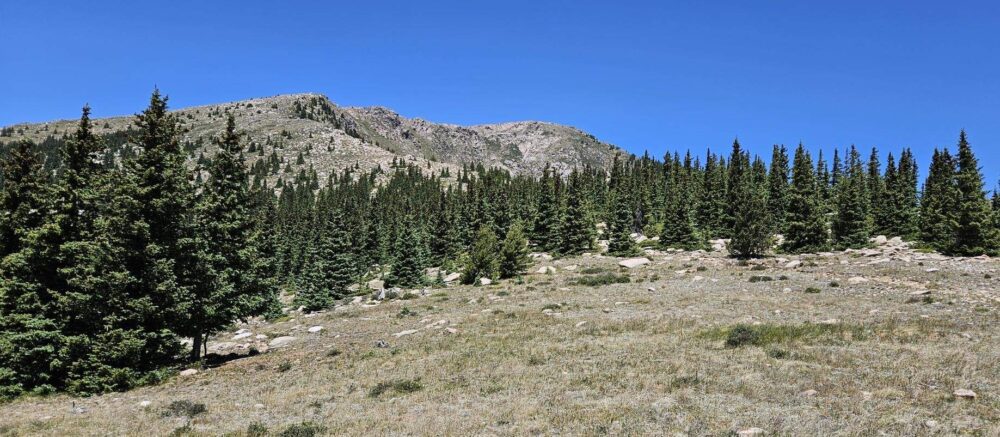
It was sunny, warm, the sky was piercingly blue, and butterflies were getting active. Arctic Blues and Chryxus Arctics seemed the most numerous at the saddle, with an occasional Draco Skipper. These are standard residents of northern New Mexico mountains at this elevation this time of year. I also spotted a Queen – very out of place, but they are capable flyers and regular wanderers. I chased a smallish dark skipper which finally stopped and showed itself to be a cloudywing, but Dobra or Rocky Mountain I could not tell.
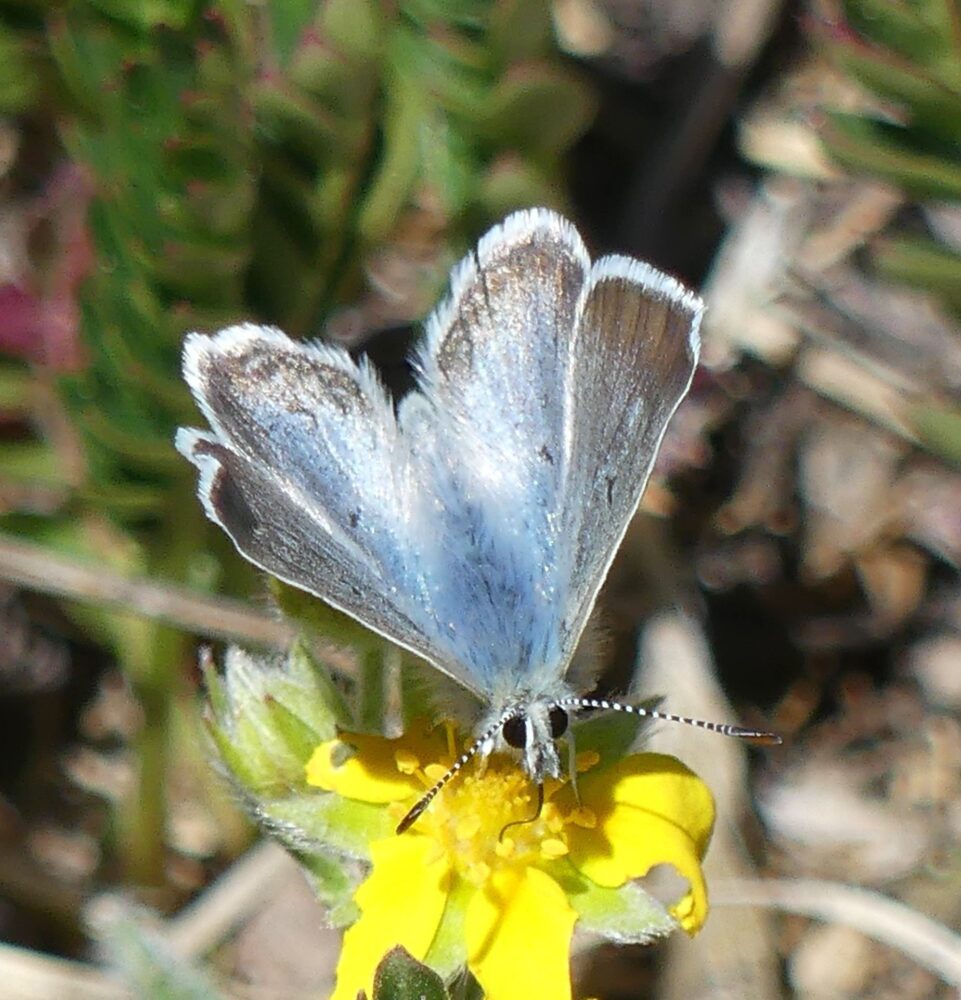
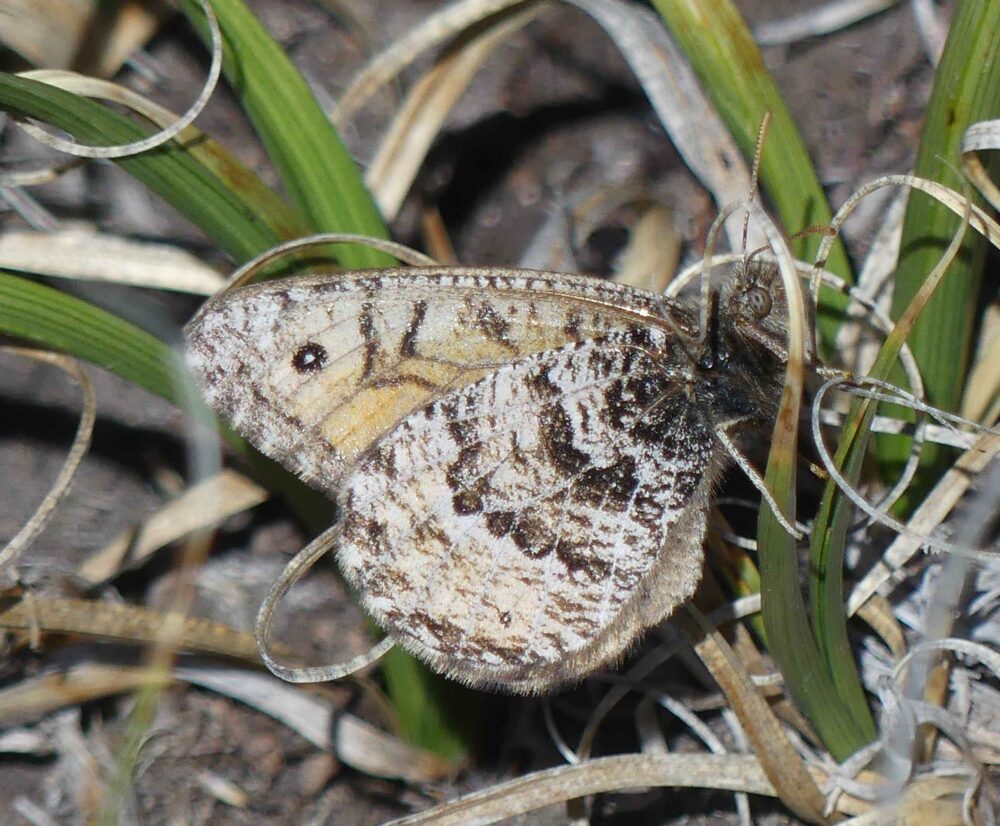
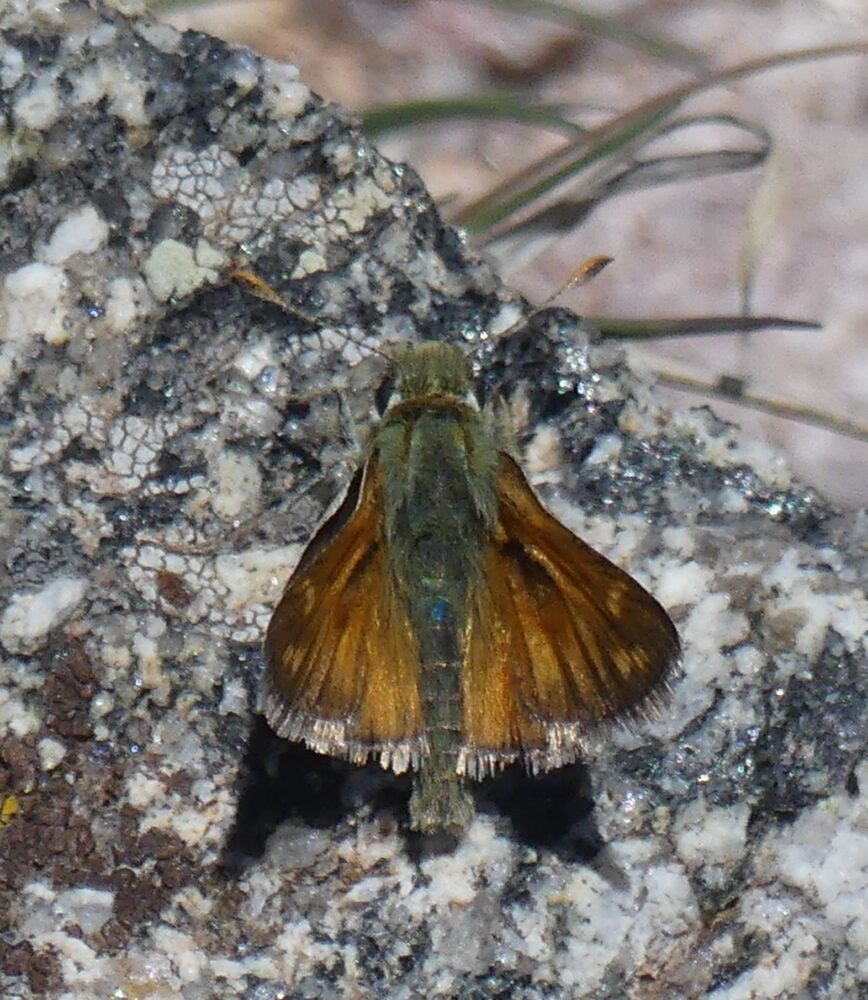
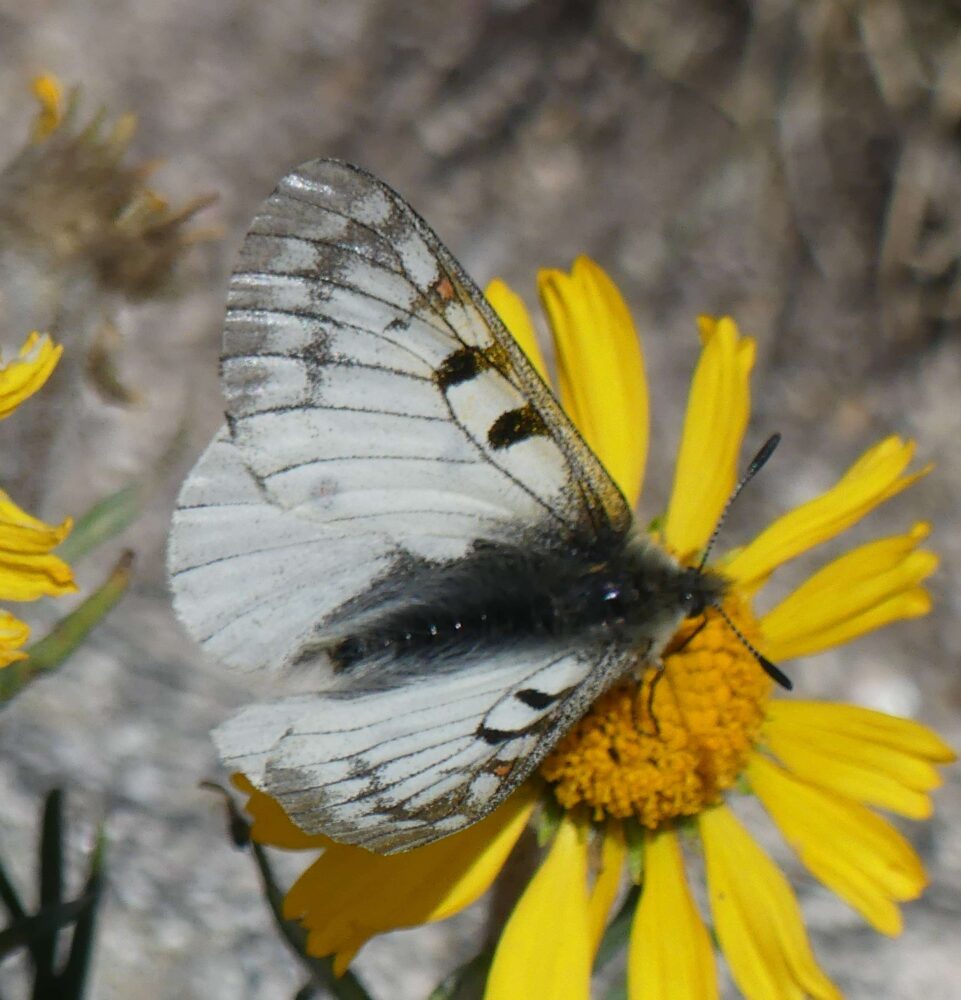
From the saddle to Baldy summit is nothing but up, 1000 feet in less than a mile; steep, grassy and boulder-strewn, just as Klots described. All conditions were favorable as we began our slow, steady ascent. As usual, I could not stay on the trail because the butterflies did not do so. A large white butterfly had to be a Parnassian: it was too small to be a “white” and it flew in a distinctive manner, tacking methodically along the topographic contour seeking potential mates; when I approached, it headed straight uphill and I could not follow. It is always fun to see that unique high elevation specialist; before day’s end we saw perhaps 40. The morning continued to warm and butterflies became more numerous. Arctics became routine sights, flying into and out of grassy patches along the slope; so far, they were all the tawny-colored Chryxus.
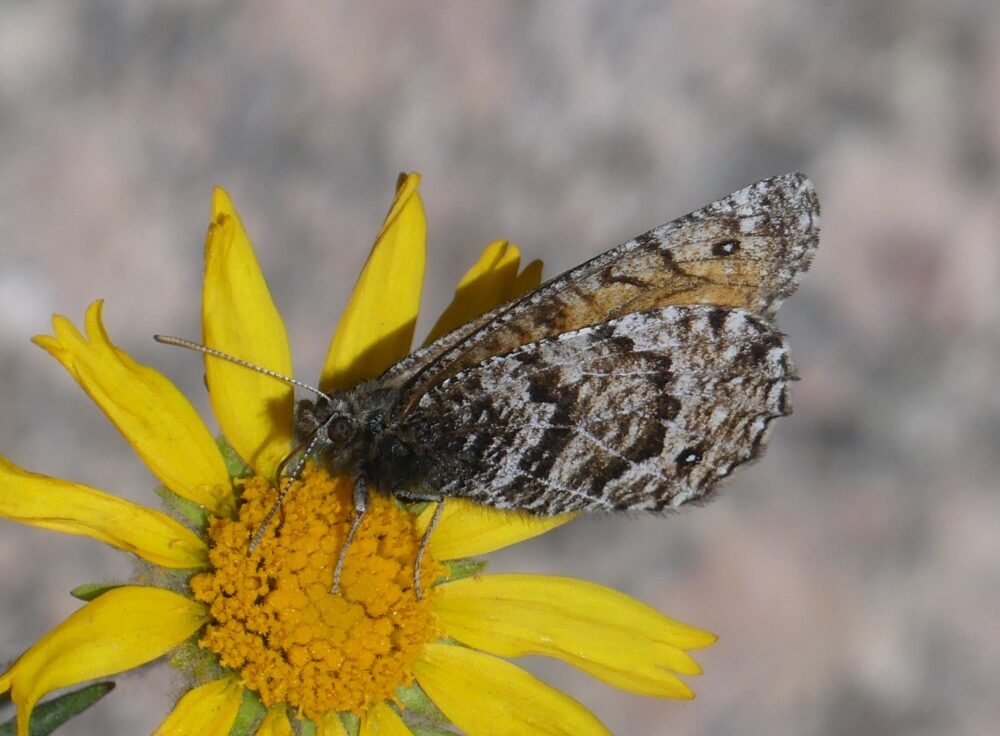
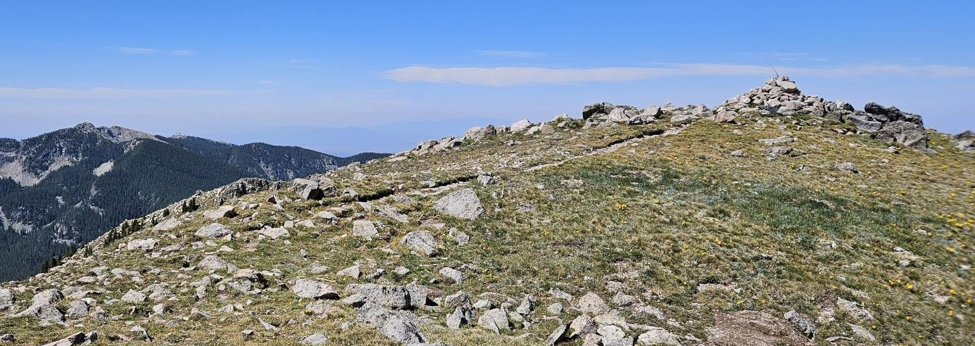
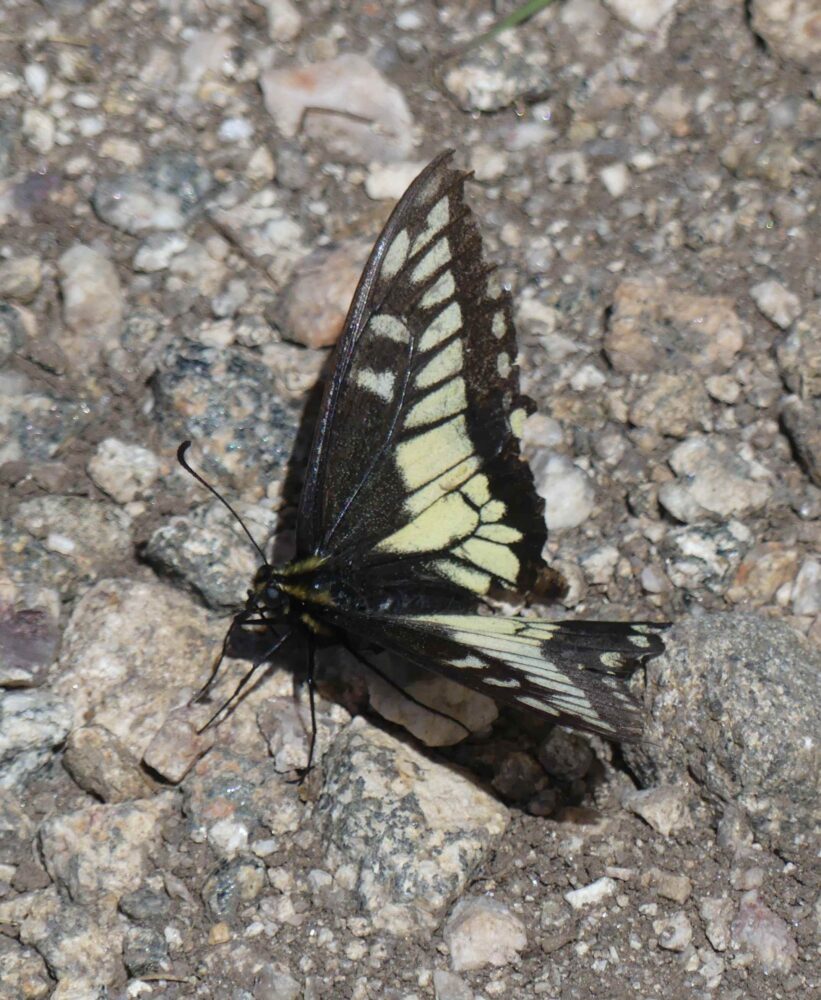
It was 10:30, a bright, warm, sunny morning, and I had not seen so many butterflies anywhere else in New Mexico this year to date. All hikers who passed us on the way up had summitted and now passed us again on their walk down. When we arrived at the summit, we had the place to ourselves, just us and a building wind. A cairn at the very top created a space of dead air. On the ground in that calm window, we found a solitary male Anise Swallowtail; worn and faded, basking for all he was worth.
Most of the nectar and most butterflies were on the western arch of the summit. The wind blew right up that slope from the west, but butterflies just dealt with it. My first Polixenes came along relatively quick. Darting up from the grassy and into the wind, it dodged about, checked to see if any females noticed, and finally landed on a lichen-studded, sun-warmed boulder. Looking uphill toward it, the sun was in my face and it was lateral basking, giving me “the edge” as they say, so not a great photo op. That predicament repeated itself several times over the course of an hour. One finally settled in the grass and charitably let me snap some pics. I saw 20-25 Polixenes up there, all within the upper 200 feet of elevation. Compared to the tawny/tan Chryxus, Polixenes were dirty gray, almost translucent in flight.
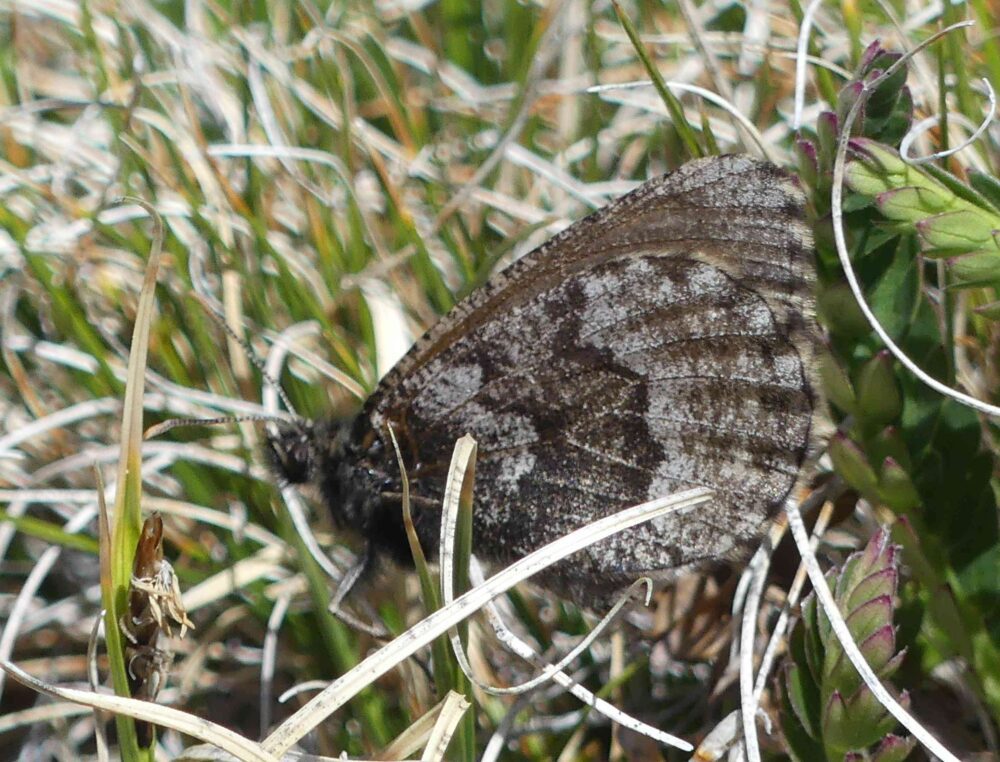
Other members of the high elevation butterfly suite included Mormon (or Bischoff’s) Fritillary, Milbert’s Tortoiseshell, Parnassians, plenty of Arctic Blues and Draco Skippers, and a surprising abundance of Chryxus Arctics. There were no Variable Checkerspots and no Melissa Arctics, which has always been the case on Santa Fe Baldy, unlike other very high spots such as Wheeler Peak and Baldy Mountain, farther to the north.
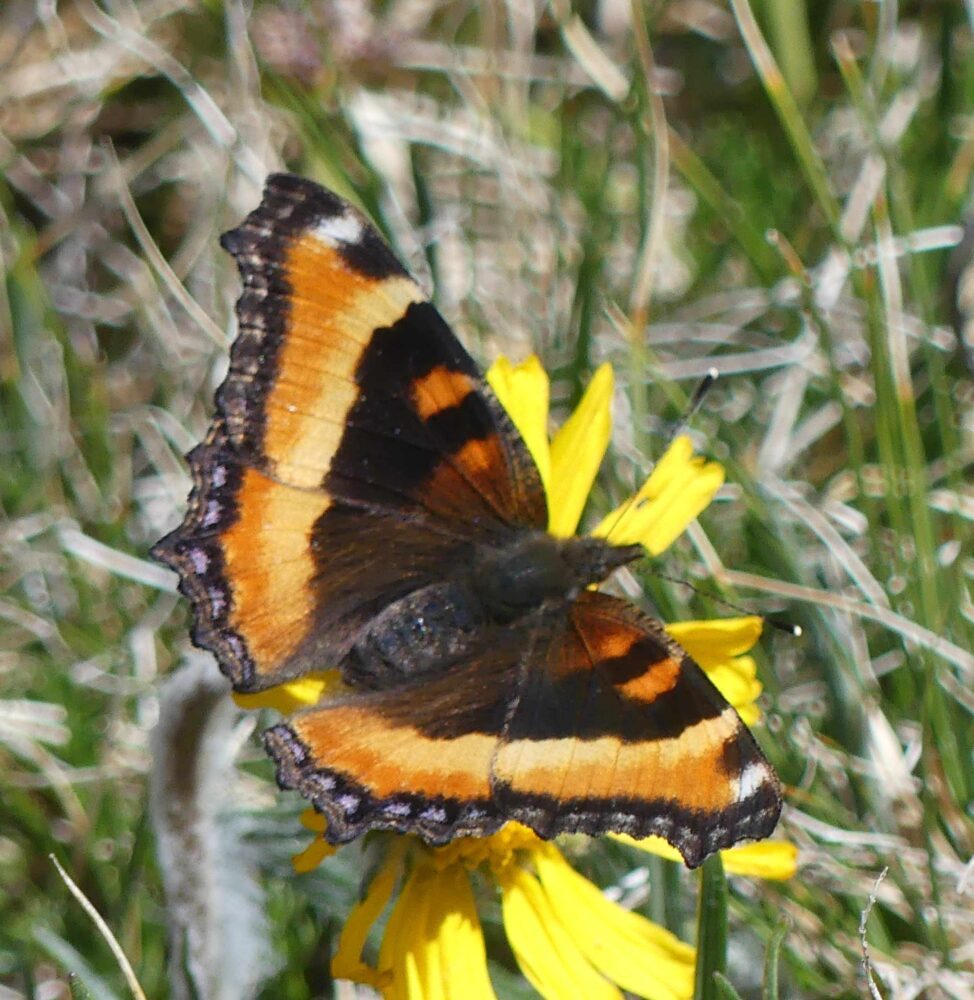
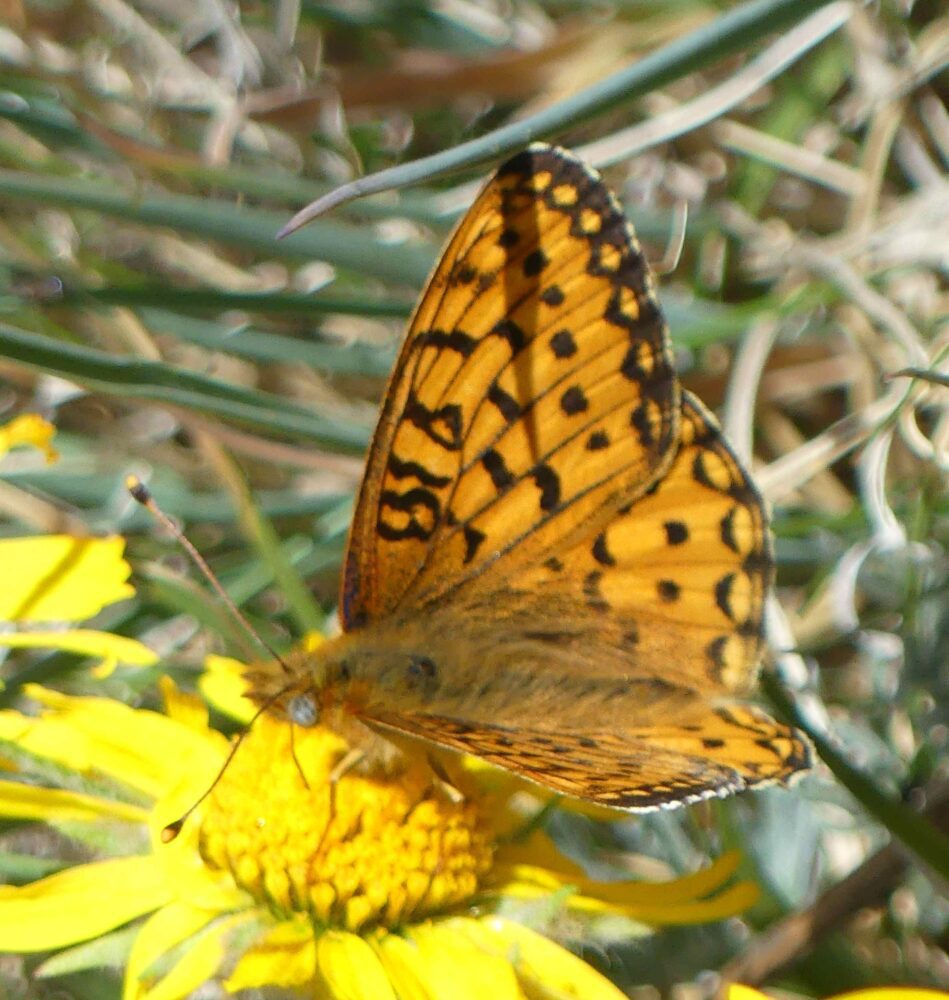
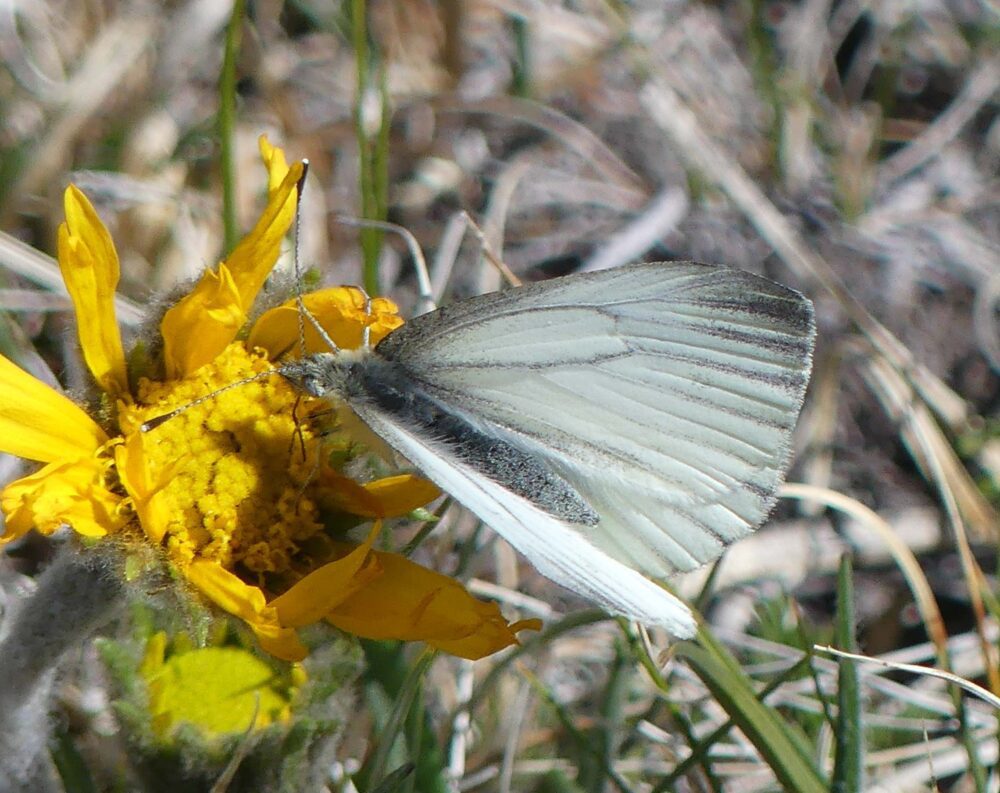
Among the modest surprises were a single Northwestern Fritillary, one Green Comma and one or two Margined Whites, all a bit uphill from their normal habitats downslope to the west, which was recovering from a semi-recent wildfire. None of these species routinely live on hilltops, but a bit of random wandering is not surprising on a windy day. Throw in a Painted Lady (a formidable hilltopper) and that was the summit list on this day.
For as long as the Polixenes colony at Baldy has been known, it has had sole custody of the summit – the only Oeneis species up there. As Klots (1937) said, none of the Polixenes “were seen at all below the very crest of the ridge.” That remains true today: one must be almost at the very summit to see them. In comparison, Chryxus has not been regarded as a super high elevation species in NM, typically seen from 9500 to 11,000 feet, compared to 12,000 feet and up like Melissa Arctic, Polixenes Arctic, Lustrous Copper or Magdalena Alpine. Relative to Santa Fe Baldy, Chryxus historically had custody of the saddle and not many were seen higher up the mountain. But in 2026, Polixenes was not the only Arctic at the summit. Chryxus was routine to abundant from saddle to summit. The summit area had more Chryxus than Polixenes and I am concerned that maybe they will overwhelm and crowd out Polixenes. An altered climate may not directly eliminate Polixenes from Baldy, but the warmer climate may allow Chryxus to be present in numbers all the way to the top. In this altered butterfly species mix, Chryxus may outcompete Polixenes for hostplants, nectar, and mate location space.
* Klots, Alexander B. 1937. Some Notes on Colias and Brenthis (Lepidoptera, Pieridæ and Nymphalidæ). Journal of the New York Entomological Society 45(3/4): 311-333. https://www.jstor.org/stable/25004706
Best wishes for a productive and fun summer!
Loved the blog Steve! Thank you.
thanks, John!
What a wonderfully informative posting! Thanks you, Steve.
You are most welcome, Sunnie. Glad you enjoyed it!
The lake Klots refers to is Lake Katherine, so named by J. Robert Oppenheimer in honor of his friend, Katherine Page. At least, that’s the story in the Pulitzer Prize-winning book.
a terrific historical tidbit – thanks!
Looks like a great hike with lots of opportunity to see butterflies! Thanks for sharing.
Very informative high(er) elevation synopsis along the northern border with CO, Steve! You have a talent for ‘telling the story’ that makes it enjoyable to read by blending in field images, discussing your companions, and describing the habitats sought/encountered. Your approach to collect field information/make in-the-field decisions and then wrap it all together so we all learn how to better plan our own field visits is appreciated! Thanks, Jim