
Article by KokHeong McNaughton, photos by Cathy Larson
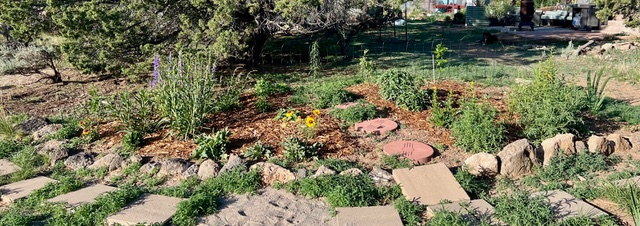
We are pleased to feature Cathy Larson’s pollinator garden in Pajarito Acres in this issue of The Buzz.
Cathy grew up in the mountains of Colorado where she developed her love of nature exploring the wilderness. She spent over two decades building wireless networks, but more importantly, she became a wildlife photographer in her spare time. She has photographed everything from ground nesting bees to grizzly bears, butterflies to bald eagles. She retired to Pajarito Acres where she discovered a resilient wildlife population full of different pollinators, birds, and even bighorn sheep and bears. It gives her joy to convert the land around her house to a haven for pollinators. She was one of the recipients of Bee City’s first Backyard Pollinator Kits in 2024 and recently graduated from the NMSU’ Master Gardeners program.
Q: How long have you had the Pajarito Acres property and what was it like when you purchased it?
We have been here in Pajarito Acres since November of 2019. The back yard had some dying forsythias and Russian Sage in barrels. The rest of the property was heavily trimmed to the dirt, a little native grass, a lot of sagebrush and cactus, juniper, and small pinons with a few larger ones in areas where they received water. In 2020 I started clearing an area to build a vegetable garden. Plants were in very low supply due to Covid so it was a project I could do without needing too much in supplies.
Q: What made you consider a pollinator garden?
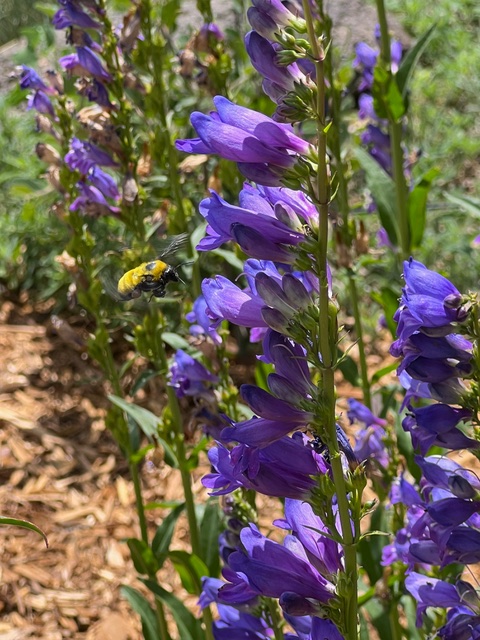
That first year I found a native mallow blooming. It was tiny so I put a little fence around it so it wouldn’t get trampled. Then I found a tiny James’ Penstemon (Penstemon jamesii), with 3 blooms and I also protected it. A large bumblebee found that little penstemon flower and I guess my desire to establish flowers and pollinators on this particular property was born with those two tiny native flowers and that one bumblebee. Talk about the drive to survive in a tough environment! I knew natives and well adapted plants could thrive here with some care so I started researching and observing. I have ALWAYS loved nature, from the insects to the birds to the mammals to the plants, and I believe the healthiest gardens are those that provide something for all things. It doesn’t mean I plant things and joyfully watch the deer eat them to the ground though, so we did build a 6-foot latilla fence around part of the property so we could have flowers.
Q: What are some of the things you had to do to “start from scratch”?
I have been a gardener for many decades, starting with a small garden at our home in White Rock over 40 years ago. I had experienced a major challenge with gardens in Seattle due to the heavy clay soil that is full of round rocks known as glacial till. Even though this property was about as opposite as can be from the heavy soil in Seattle the challenge is the same. You have to start with a good base so I pick patches to cultivate and clear them of sagebrush, cacti, and weeds first. I am a firm believer that almost all native soil needs organic matter added to it, especially if all the top soil is gone due to clearing all living things and allowing the wind to carry the good soil away, as was the case in much of our current yard. After clearing, I added about 2 inches of good compost, dug it into the native soil, and raked them smooth. Next, I outlined the new bed with rocks or bricks so that I could better see the space I was working with. Then I planted!
Q: Do you have an irrigation system? If so, what type of irrigation do you use?
For the pollinator garden I have been using an overheard sprinkler as needed as I actually like the act of watering. It is a very Zen thing to go out in the morning and move sprinklers or hand water container plants. It gives me an opportunity to see how they are all doing and to enjoy the many pollinators that come and visit. I let the blanket flowers and Maximilian sunflowers tell me when it is time. They start looking a little puny when they want some water and the first two years, if it wasn’t raining, I only had to do this every 2 weeks or so. This year has been a challenge though, with no snow or rain and early heat so I am going to add 1/2” drip lines with emitters every 12” through the Bee City pollinator garden. I have done this in other areas and a long soak with a drip line every 10 days or so in these very dry conditions help the xeric plants thrive while using water very efficiently.
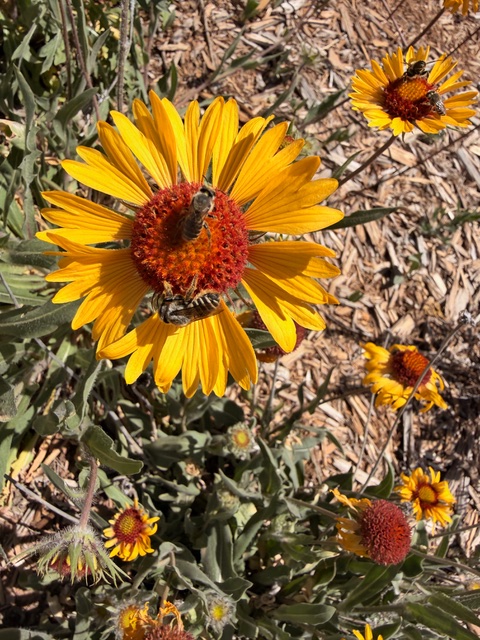
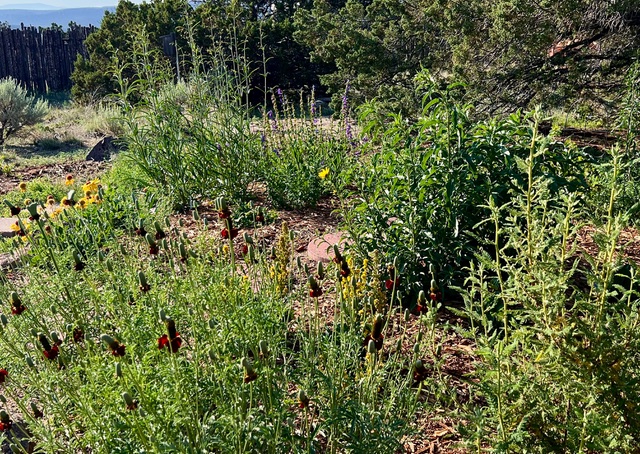
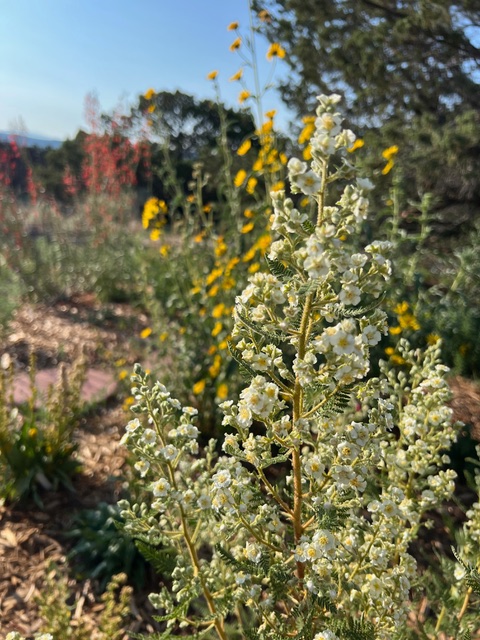
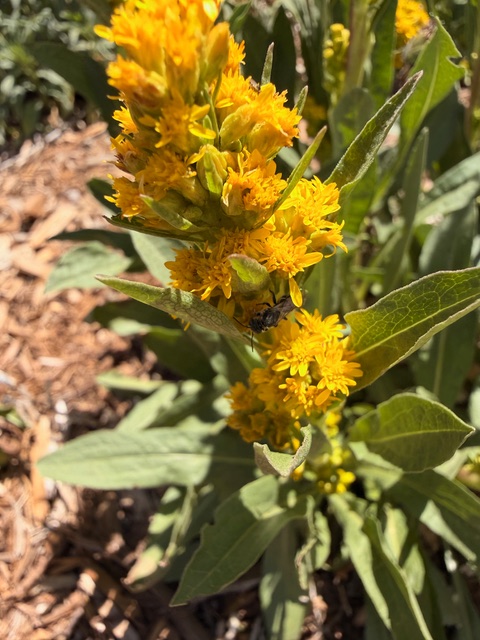
Q: Out of those plants that you received in your pollinator kit, what did well and what didn’t? What are your favorites? Most of the pollinator kit plants are thriving. Blanket flowers and Mexican hats are huge and multiplying as I don’t deadhead until the following spring to allow birds to enjoy the seeds and new plants to grow from the dispersed seeds. This year the blanket flowers had days where there were at least 50 bees visiting them and the buzzing sound was so loud it made me smile. The scarlet buglers get huge every year. I don’t know what I am doing to make them grow so big but last year they exceeded 3 feet tall and this year they may just approach that again! The early Columbines are a welcome look to warmer days. The firecracker penstemons don’t seem to be thriving and I am starting to wonder if they are too close to the Maximilian sunflowers so I may try moving them when monsoons kick in. The prairie clover acted dead the entire first year but finally one of 3 plants came up and bloomed last summer. This year a second plant is showing minor signs of life. I did lose one of the Mexican hats and one firecracker penstemon. I have filled in some gaps with an aster and a desert penstemon to extend bloom time and to provide additional diversity. I have a new garden started in an area on the other side of the path from the bee city garden where I will provide additional pollinator friendly plants.
Beautiful ! Keep on!
Wonderful article, Thank you, Cathy and KokHeong for providing such a beautiful yard, great pictures and informative article on our local plants. I know Cathy has done a lot of research and experimentation over the last couple of years trying to find trees and shrubs that do well in our dryer hotter climate after losing a lot of piñons and pines to drought related bark beetle infestation. Maybe a follow-up idea?