
Article by Angela Prada. Photos by richardskolnikphotography.com
Studying bees in your backyard is a fascinating way to learn about native pollinators. With just a bit of patience, watching these busy insects move from flower to flower reveals an intricate ecosystem at work. The bees’ gentle hum, unique behaviors, and surprising diversity turn an ordinary yard into a beautiful science classroom . Over time, patterns emerge—the plants certain bees prefer, the times they’re most active—and what begins as simple curiosity often grows into a deep appreciation for the essential role bees play in sustaining life around us.
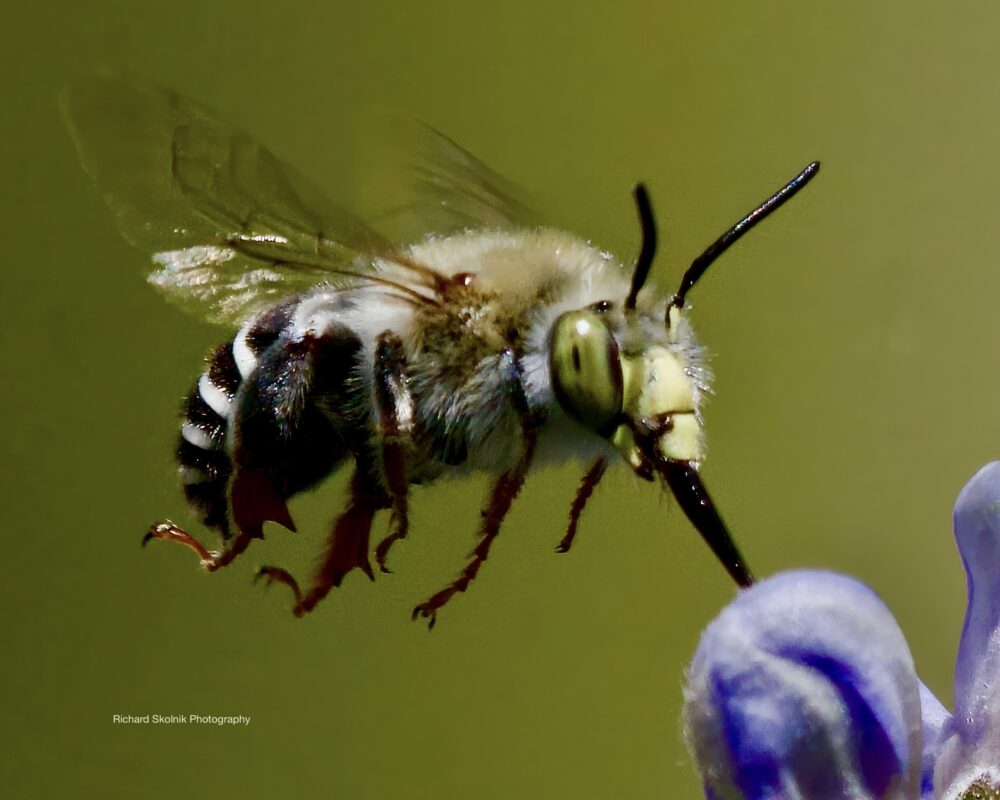
Understanding bees begins with knowing their basic anatomy, life cycles, and behavior, then observing them in the field by visiting gardens, meadows, or apiaries and taking notes. Flower preferences, time of day, weather conditions, and activity will help determine the type of bee. Specialist bees collect pollen from specific plants and have seasonal activity tied to bloom periods, while generalist bees forage widely across many flower types. Bees are resilient and opportunistic; when provided with diverse forage and suitable nesting sites, they multiply quickly and play an essential role in enabling plant reproduction to support the production of fruits, vegetables, spices, and alfalfa for feeding livestock. Native flowers with a variety of colors, shapes, and bloom time offer ideal forage and will attract many bee species.
Bees can be categorized based on how they function in ecosystems. Honeybees and bumblebees are social and live in colonies with queens, workers, and drones. Solitary bees like mason, leafcutter, and carpenter bees have one female building and provisioning her own nest. Semi-social/communal bees share nest entrances without a defined queen, as seen in some sweat bees. Bees can also be grouped by nesting type and require undisturbed nesting sites to survive. Cavity nesters use hollow stems or tubes found naturally in the landscape and on structures, ground nesters dig tunnels in soil, and wood nesters excavate soft wood.
The classification of bees into their respective taxonomic families is based on physical traits such as size, color, hairiness, and how they carry pollen (either in pollen baskets on the hind legs or on specialized hairs under the abdomen). Bee families include Apidae (honeybees, bumblebees), Megachilidae (mason and leafcutter bees), Andrenidae (miner bees), Halictidae (sweat bees), and Colletidae (plasterer bees), and Melittidae, the oldest and least diverse species of North American bee families.
Accurate identification requires extra attention to specific body parts and structures that vary among families and species. The head provides important clues, including the shape of the eyes, length of the antennae, and structure of the mandibles, which differ between groups like carpenter bees and leafcutter bees. The thorax and abdomen often show diagnostic markings such as color bands, metallic coloration, or hair placement. One of the most important identification features is the pollen-carrying structures. Honeybees and bumblebees have pollen baskets (corbiculae) on their hind legs, while mason and leafcutter bees carry pollen on specialized hairs (scopa) located on the underside of the abdomen. Wing venation patterns are also key to distinguishing families. Other features such as the shape and length of the tongue (proboscis), the presence of a carina (ridge) on the face, the structure of the propodeum (rear of the thorax), or the shape of the hind legs are often used by specialists when identifying bees under a microscope. Together, these body parts allow observers of all levels of expertise to determine which family a bee belongs to.
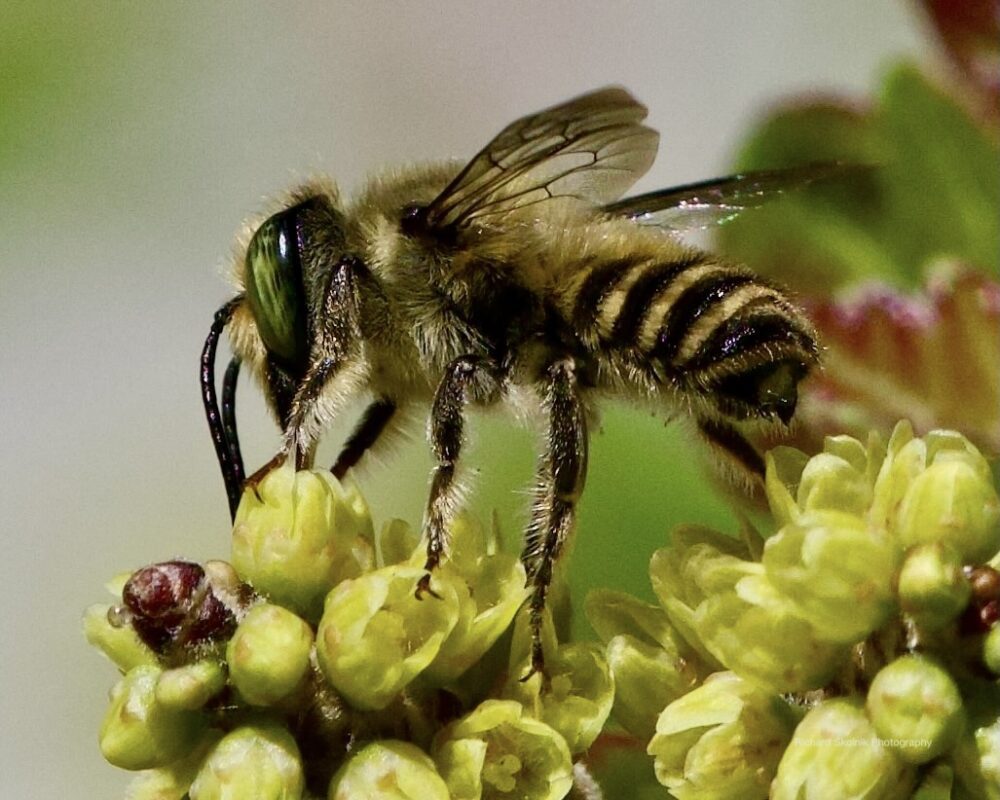
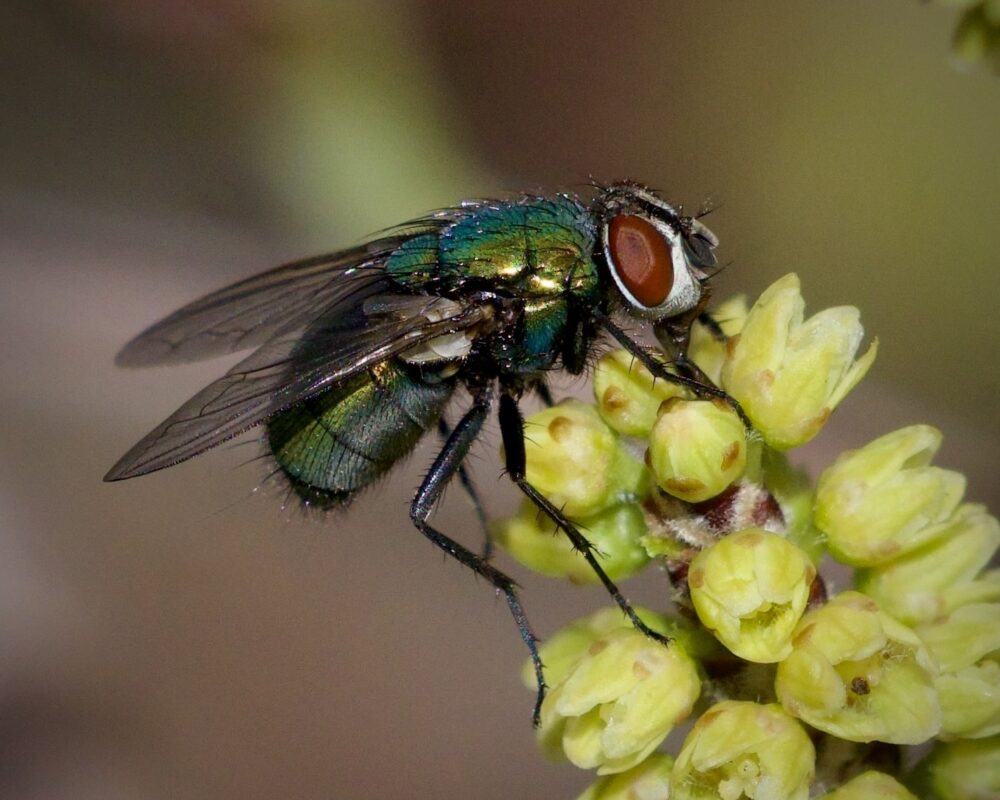
Studying bees requires close observation, careful documentation, and the right tools to see important details. Because identification requires a microscope, a bee can be captured and refrigerated, then safely examined and will fully recover shortly after warming up. Scientists also use the kill and mount method for collecting and studying specimens in detail. Macro-lens photography using rapid-fire settings and/or a fast shutter speed is another effective approach to capture clear images while in flight.
In the end, studying bees offers more than simple enjoyment—it helps cultivate a habit of careful, scientific observation that can connect you to the natural world. When you observe bees closely you can’t help but develop a deeper understanding of the bees and other native pollinators in your backyard.
Angela Prada is the Los Alamos County Extension Horticulture and 4-H Agent. She helps local residents, families, and organizations make informed, practical decisions related to environmental stewardship and youth development through educational programs and shared research-based resources. Find out more about the Los Alamos County Extension Office here.