
August 2026
First, a couple of announcements:
From regular reader and writer Krista Rudd: “I’m a dedicated watcher of the PBS television show EONS. This is a show made available to sustaining members of the NMPBS community. A few days ago, I watched a 7-minute short on EONS entitled: Beans and Bees (not Bats) gave us Butterflies. The topic was a pursuit to establish just when butterflies evolved from moths. These short programs are both enjoyable to watch and quite accessible to any audience interested in science. This particular episode is in Season 6, Episode 9. The presenters of these short programs are wonderfully good at dispelling the stereotypes many folks hold about Scientists!”
Thanks, Krista. That program was brief but very informative!
From regular reader, butterfly monitor and photographer Renee Robillard: “I assume you’ve seen this article: https://www.nature.com/articles/s41559-026-03117-y. I wonder if you’ve observed “range shift” in New Mexico butterflies recently, even anecdotally. There was a brief summary of the article in the Albuquerque Journal today, so someone may ask me about the study’s findings during my butterfly talk at Albuquerque Open Space on 8/22.”
Readers, after you read this very interesting Nature article, Renee’s 8/22 presentation is worth attending.
BONM announcement: Mike Toliver has repaired all the navigation links in BONM’s skipper pages. Thanks Mike!! The website should be back in its groove. Please dig into it and let me know if you discover otherwise.
Reports from Las Cruces area, text and images by Jim Von Loh. Hi Steve and everyone – I’ve not reported on butterflies lately because the species composition hasn’t changed much and there are few individuals in most places I visit often (yay- Painted Crescents are re-emerging along the Rio). A species like Queen transitioned from its early ‘raggedy-ann’ form to fresh and new while acacias and mimosas were flowering – now 1 or 2 females have been ovipositing when they locate a few milkweed leaves…Springs and seeps are dry again but where a little moist soil remained like in Achenbach Canyon there were a few Reakirt’s Blues, Orange Skipperlings, and a couple of brown skippers I still need to sort out. Mesilla Valley Bosque had a deluge last week so have completely closed the west side to visitors through the end of August – that’s where one of the largest milkweed stands occurs and usually is a reliable place to find Monarchs along with more typical species. Repeated mowing/shrubby willow removal/and some discing along the Rio Grande Recreational Trail has eliminated most milkweed stands and flowering plants.
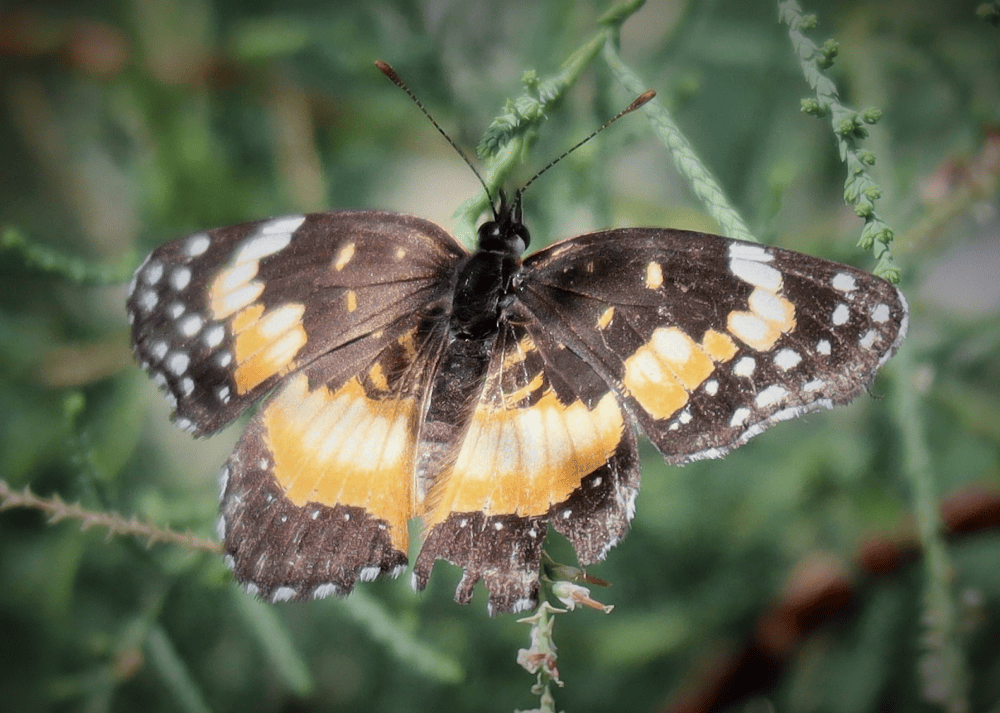
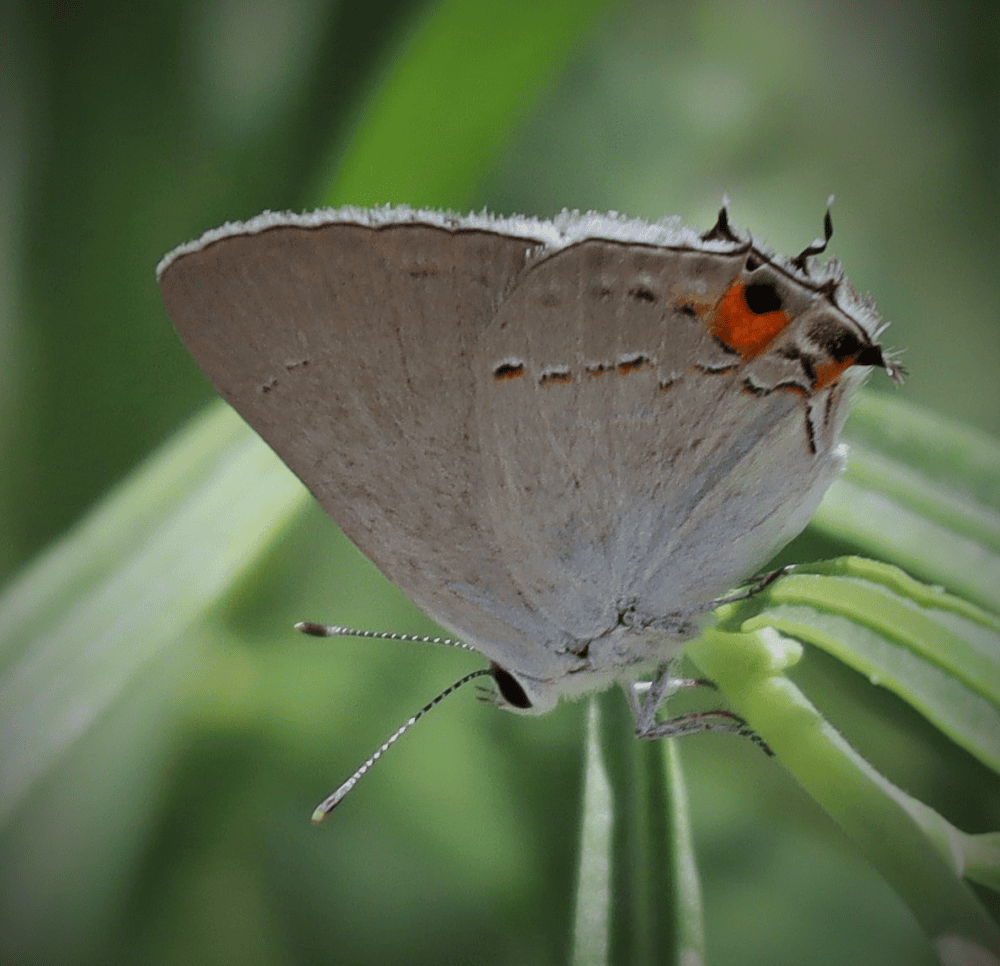
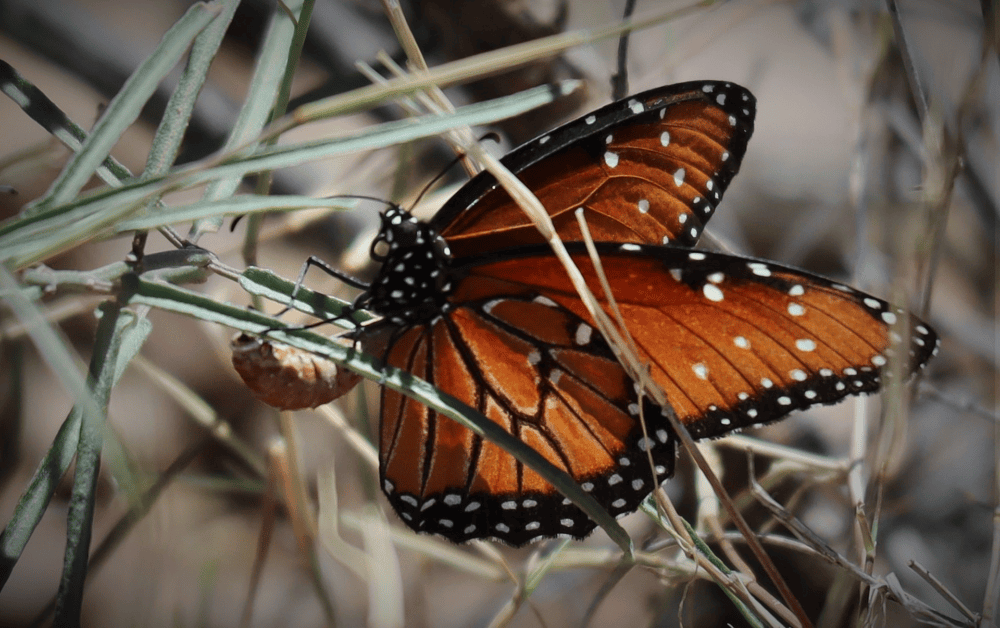
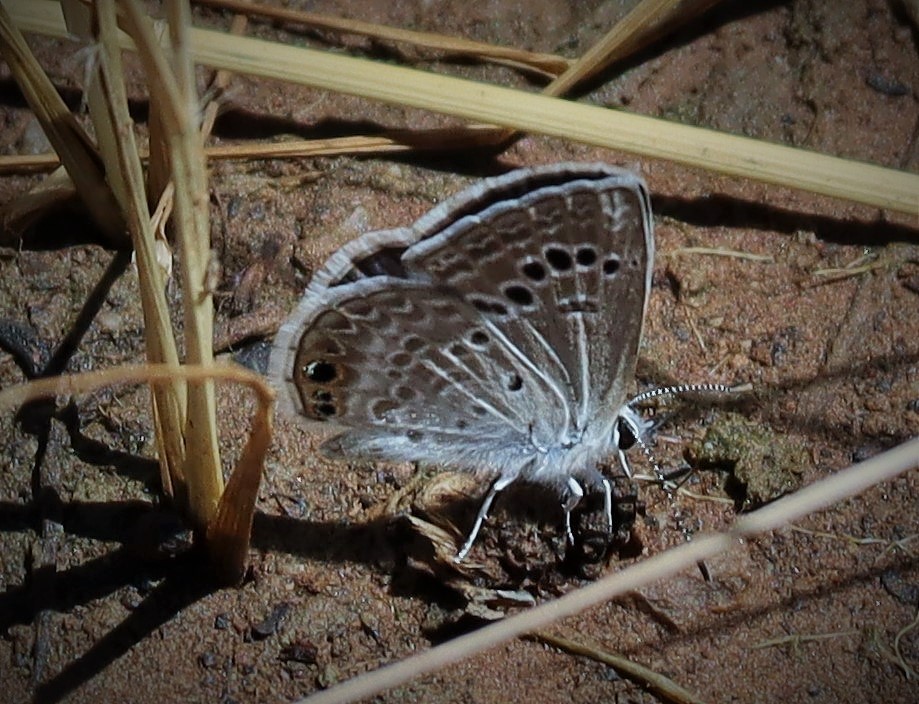
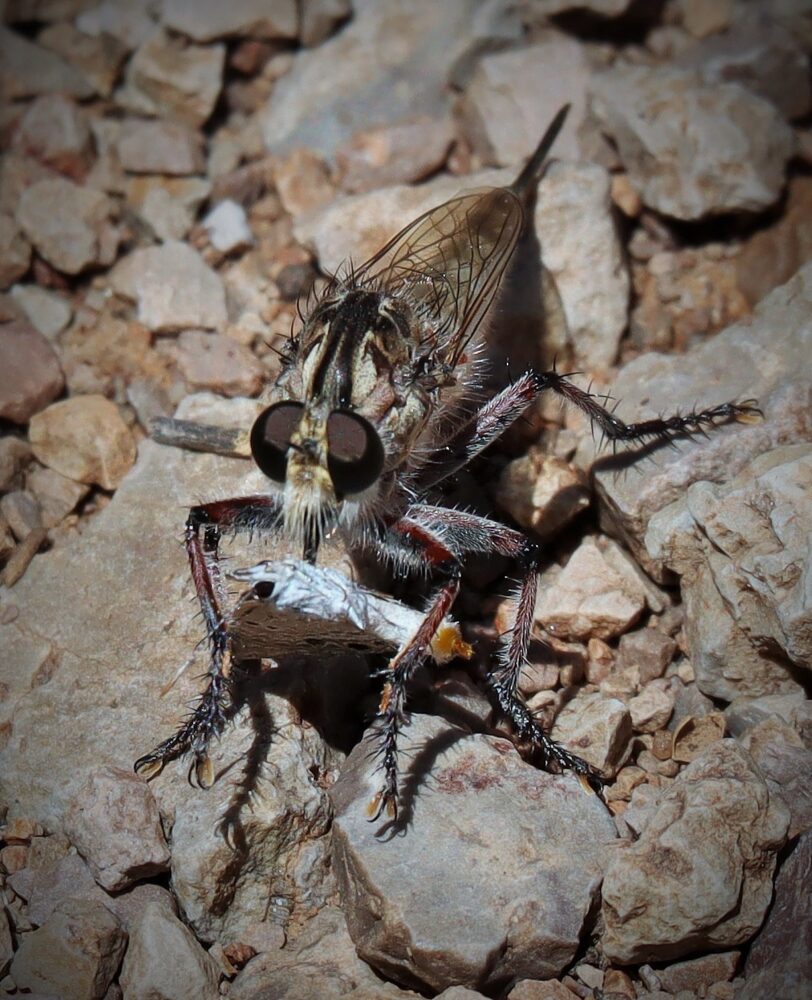
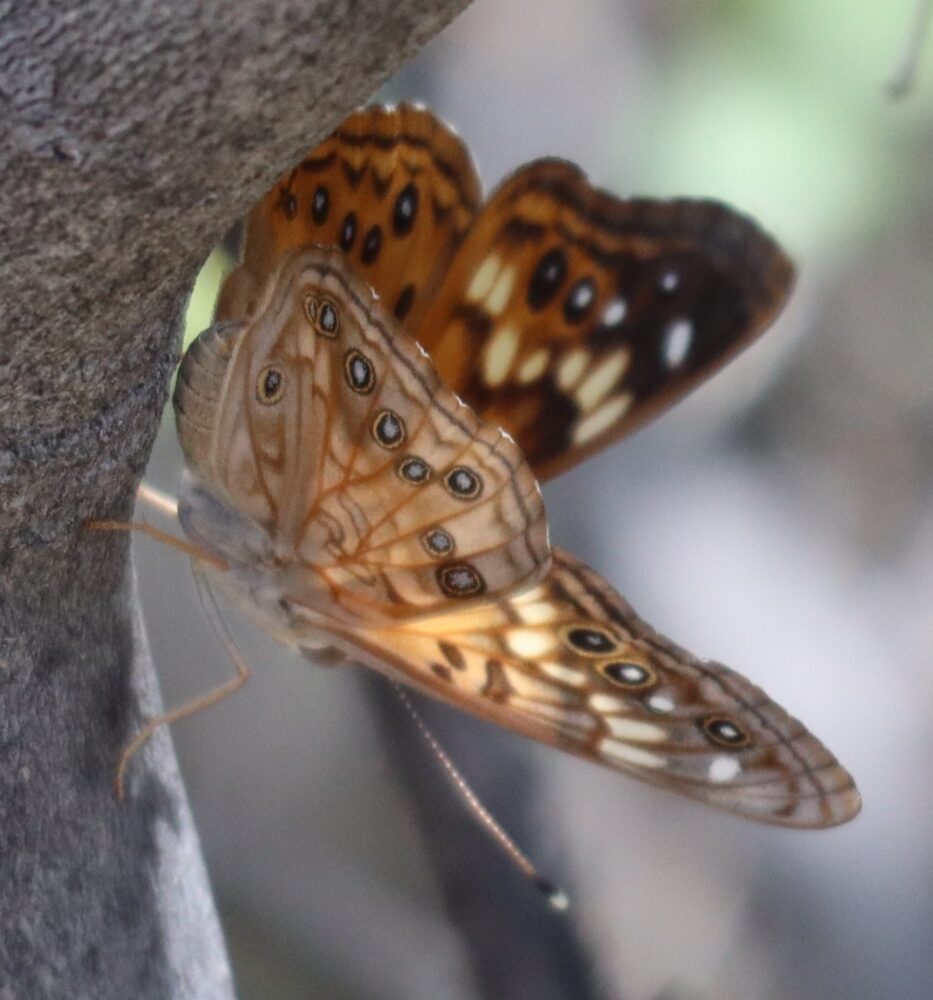
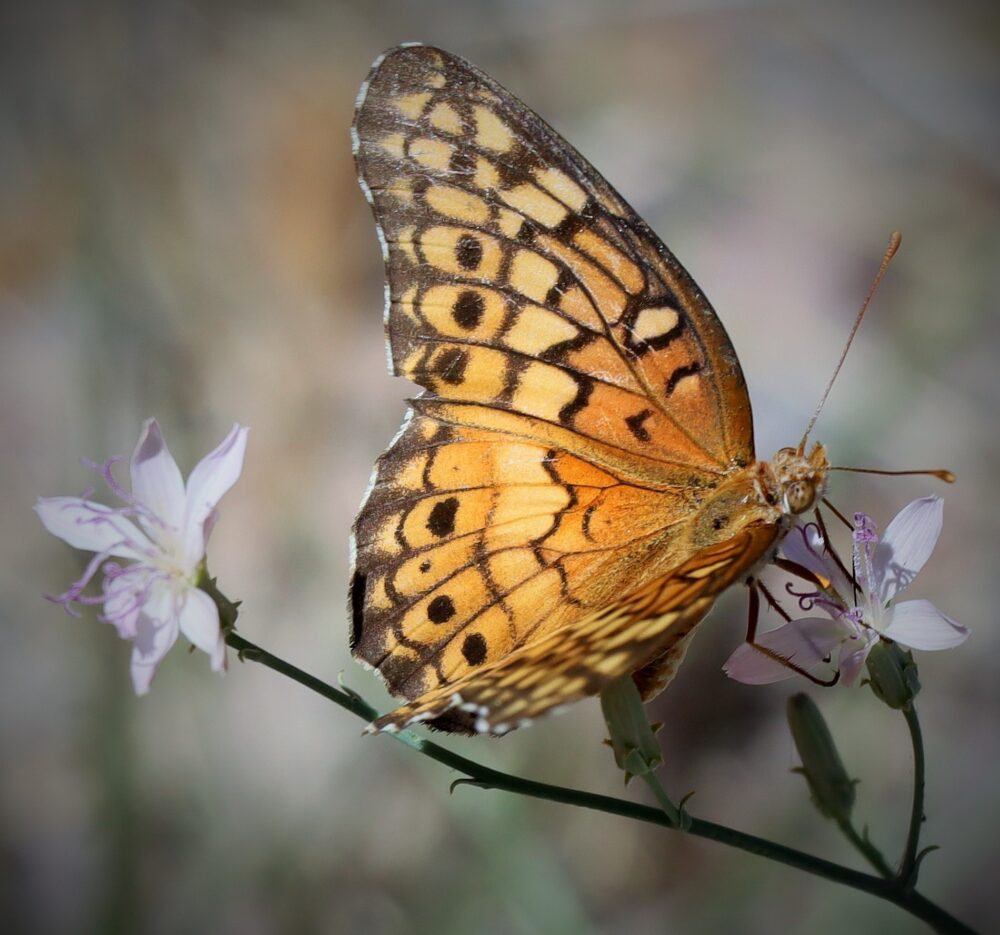
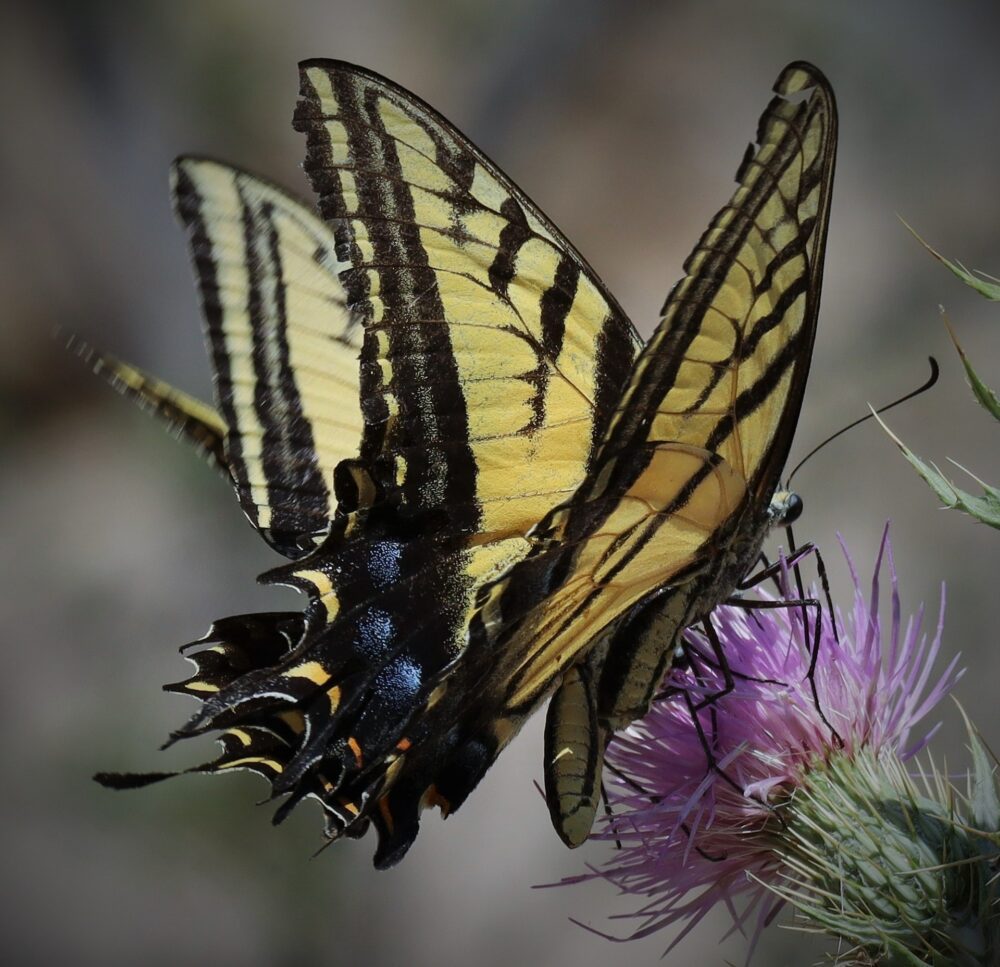
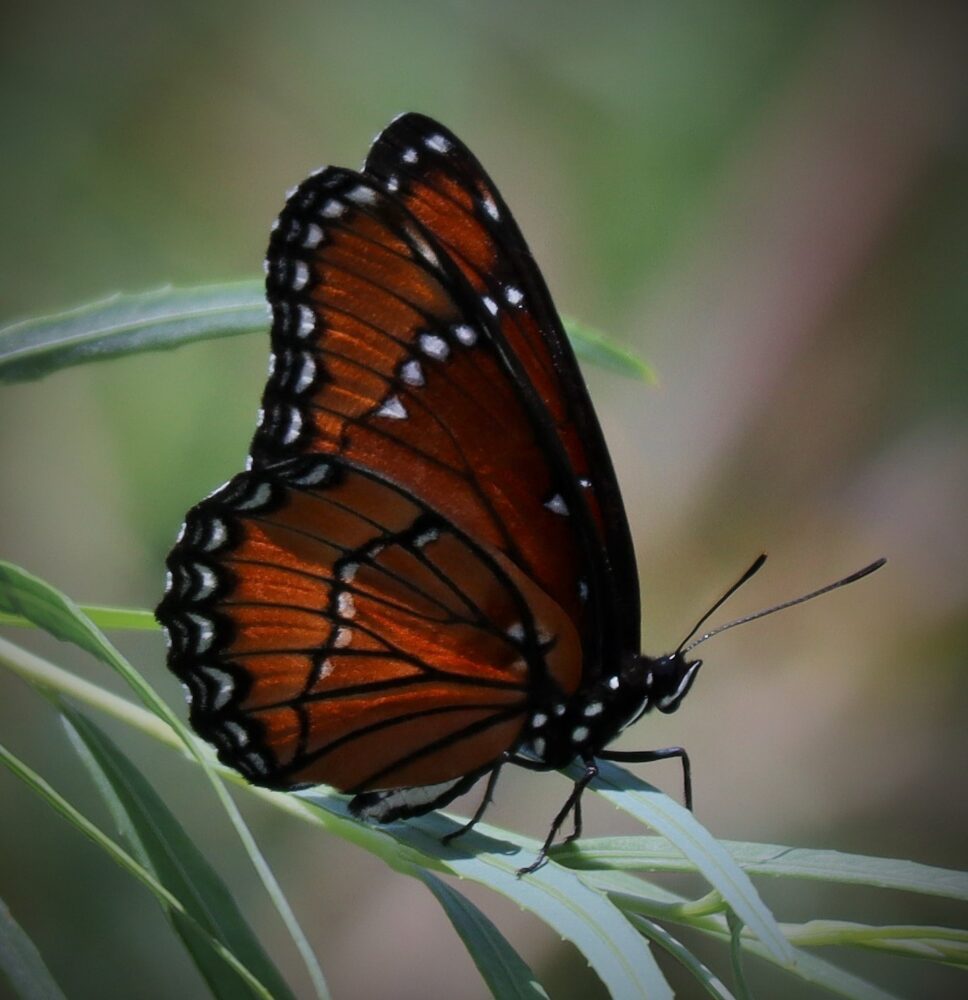
On the other hand, I track Odonate species and this late winter/spring/early summer with hot, windy, and and well-spaced thunderstorm conditions has been phenomenal with 5 species of dragonflies and 7 species of damselflies making new entry or reentry after many years into DAC and boosting our county species total to 63 – one of the top four counties statewide (with a couple of sighting IDs pending).
[Thanks for that luminous offering, Jim!]
Marta offered her comments on conditions in southern NM: “Our butterflies are not doing great. The monsoon has provided some heavy rains, but they come every couple of weeks or so with some serious triple-digit heat stretching on in between. The lowlands are parched. One can hike for a day and find four flower species, each represented by a twig or two, except maybe the buckwheat.”
The only place where things are pretty much normal are the highest elevations. Above 10,000 feet, the Garita Skipperlings are plentiful. A few Sulphurs to go with that, some Checkered Whites, a Duskywing or two. The only things missing are the Blues. Blues, the formerly ubiquitous Blues, are absent pretty much everywhere. When one shows up, it’s likely to be an Azure (or whatever they are called these days), or sometimes a Reakirt’s.
Cloudcroft and the Sacramentos have the cut-leaf coneflowers and their regular inhabitants – the Ladies, Fritillaries, and Tortoiseshells, along with Taxiles Skippers. But no odd additions to the basic repertoire. [and Gordon chimed in that mostly he got clouds in the Sacramentos.]
Marta offered this is a visual explanation why they see so few butterflies. “The monsoon is just not working out this year. It was supposed to be a strong one, and once in a while there is some stirring on the horizon, but it all remains depressingly hot.”
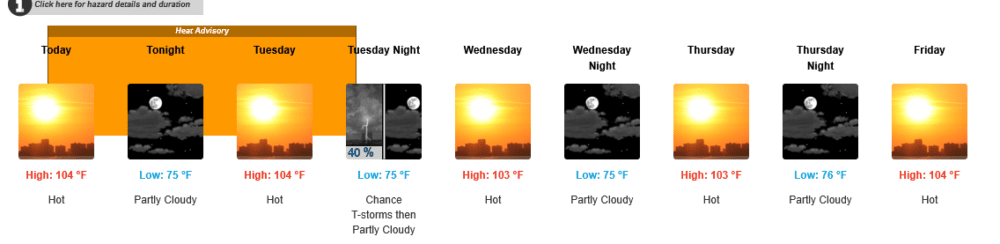
[to which all I can say is “ouch.” and this reminds me of how the month of June used to be.]
Rob concurred with Marta but concluded by “hoping that the rains continue and help cool things down. Maybe the end of summer/beginning of fall will perk up a bit.”
[And in that regard, I recall a recent year when exactly that happened. There was much suffering in spring, early summer, and even during the traditional monsoon months of July and August. But then repeated deluges came along in some combination of August, September and October from Carlsbad across through Dona Ana County. That is my monsoon forecast for the rest of this warm season. Carry an umbrella during September and October, maybe even late August. Remember, you heard it here first.]
now if you will forgive me, I need to vent a little. My life is gertting complicated. not asking anyone for advice, but maybe trying to rationalize ongoing changes in my butterfly life. I have spent 40 plus years photographing butterflies, working, stalking to get good closeups as much as possible, and doing that for butterfly species that many people never see. My current rig (a Panasonic Lumix) is not terribly fancy and years old, but it has worked well for me. It does not link to anything, so I end up with hundreds of mostly good images that then need to be managed. I label each one and place them all in files on my computer. Files (photos) are organized taxonomically down to subspecies, then by date and locality so I can find everything. I feel I am good at all that, and doing that is a familiar habit with consistent rewards. But changes are afoot.
Online connectivity and GPS capability are now highly prized. My good camera has neither. If I want to upload those high-quality images to iNaturalist or BAMONA, I have to do that manually from home. However, I do have a smartphone. It’s not fancy or recent, its the camera is not great, but I can snap so-so pics with it and use the iNat app to upload an observation. In a matter of minutes my observation has become data and has become part of a global citizen science network. That’s pretty great! All these photos are still on my phone . . .so far I have not added them to my personal photo files. They are in a bigger filing system in the ether and very easily viewed by me and anyone. Now when I am out butterflying, I have to decide . . . will I create a good picture which requires management effort at home? Or will I take a so-so photo and upload it instantly to the www?
Lastly, I have been offered, and have eagerly seized, opportunities to engage with students and scientists at UNM (Albuquerque) and NM Tech (Socorro). What are they up to? They are using DNA and massive data applications to resolve taxonomic disputes. They are working to identify NM butterflies of conservation concern, then assessing their population viability, stability and intermixing. These are all relevant, fantastic and fascinating topics. Resolving taxonomic mysteries offers me opportunities to revise BONM species accounts and to call butterflies by their correct names (what a notion) and of course I want to be involved. Sadly, my thousands of existing photos, not to mention those still to be made, are of no real use in those endeavors. My field experience and knowledge of butterflies statewide do come in very handy, but these new efforts demand different raw materials. Instead of photos they need specimens. Turns out you cannot get DNA from a photo. Now when in the field I also carry a net and accessories for capturing butterflies needed for research. I am entangled in a project to determine (untangle) genetic relationships among northern NM fritillaries we have been assigning to either Northwestern or Atlantis.
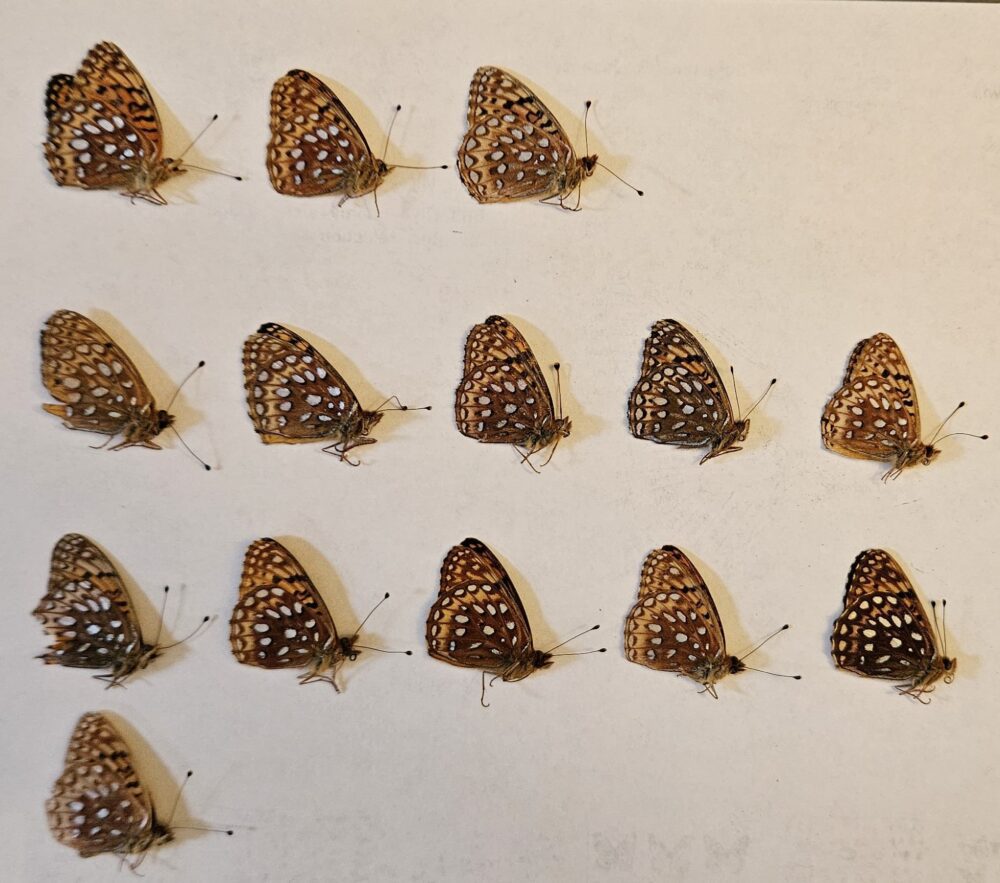
Now picture this: I’m on a butterfly outing, good camera around my neck, connected camera in my pocket, and the net in hand. What do I do when I see a butterfly of interest? Usually I fumble, drop something, curse loudly, then watch it fly away. Actually, I am becoming more decisive and directed. I only swing the net if I really need the bug. I’m not thrilled about killing butterflies, but I can do it when a scientist needs a specimen. If no specimen is needed, I set the net aside slowly, carefully slide my phone out of my pocket and try to do the iNat thing. I am getting better. Plus, you can do it for bugs that are not butterflies.
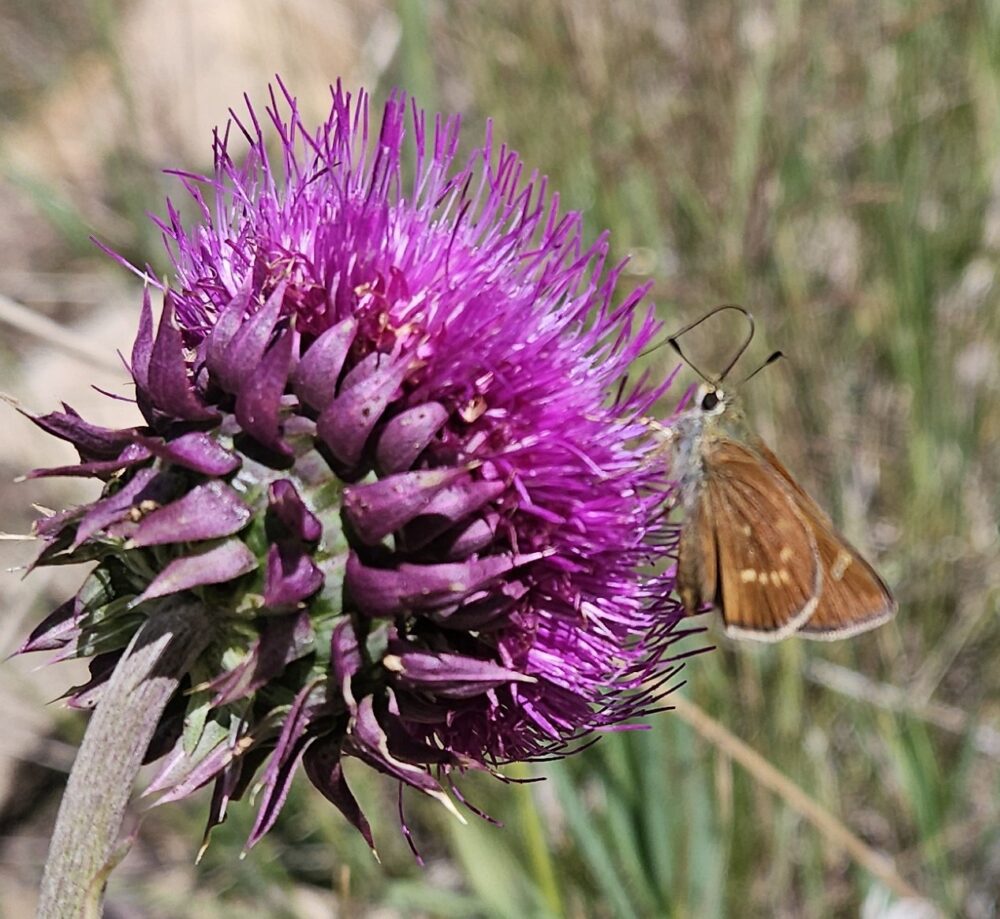
Bottomline, I am not doing any of these three approaches particularly well. I am not making much use of my good camera, at all. My decades-old rituals are fading away: downloading photos when I get home, scrolling through and reviewing them on my large computer monitor, deleting 90% of them, placing the remainder in files on my computer’s hard drive. All that takes time. I still keep a spiral-bound field notebook, especially to note species for which I got no photos, and to note worthwhile observations as best I can remember. I miss taking good butterfly photos, but I have so many it hardly makes sense to take more. Progress is a two-edged sword, but I am very excited to be slaying old dragons with new tricks. And yes, I suppose I could get a “good” camera that has GPS and internet connectivity.
Don’t forget, rains are coming. Eventually.
Awesome blog! Thanks, Steve…
Laura
(the raptor lady)
thanks, Raptor Lady!
Hi Steve. Tim Long here from Wild Rivers. It was an unexpected treat to get to see you here at Wild Rivers if only briefly this past summer. As always, I enjoy getting and reading your butterfly blog. It’s an inspiring read. Today I was looking through the Institute for Applied Ecology’s website and I found the article by Emily Rees, The Skipper and the Gorge, August 2026. It was wonderful to go through her writing and recalling much of the same RnD that you had told me during our 2 hikes down Big Arsenic with John (?), several years ago. As an interpretive ranger at Wild Rivers, I take great pride in relating to visitors the unique butterfly species we have in this tiny section of the Rio Grande. I printed up Emily’s article; this gives me some updated “fodder” to work with in my interpretation. However, she speaks so much Latin! I’m needing to look up common names. Thank you, Steve, for all the great work you have done and continue to do. I hope we have the pleasure of seeing you again soon at Wild Rivers.
Steve. One quick question: Emily Rees referred to the skipper as THE QUESTA SKIPPER (Ochlodes yuma anasazi). In my time visiting with you in the past, the skipper was referred to as the Anasazi Skipper. Is the Questa Skipper the new common name? If this is indeed the case, I know the gente of Questa would very much appreciate knowing there is a unique species of butterfly localized here named after the village and the people. Many thanks.